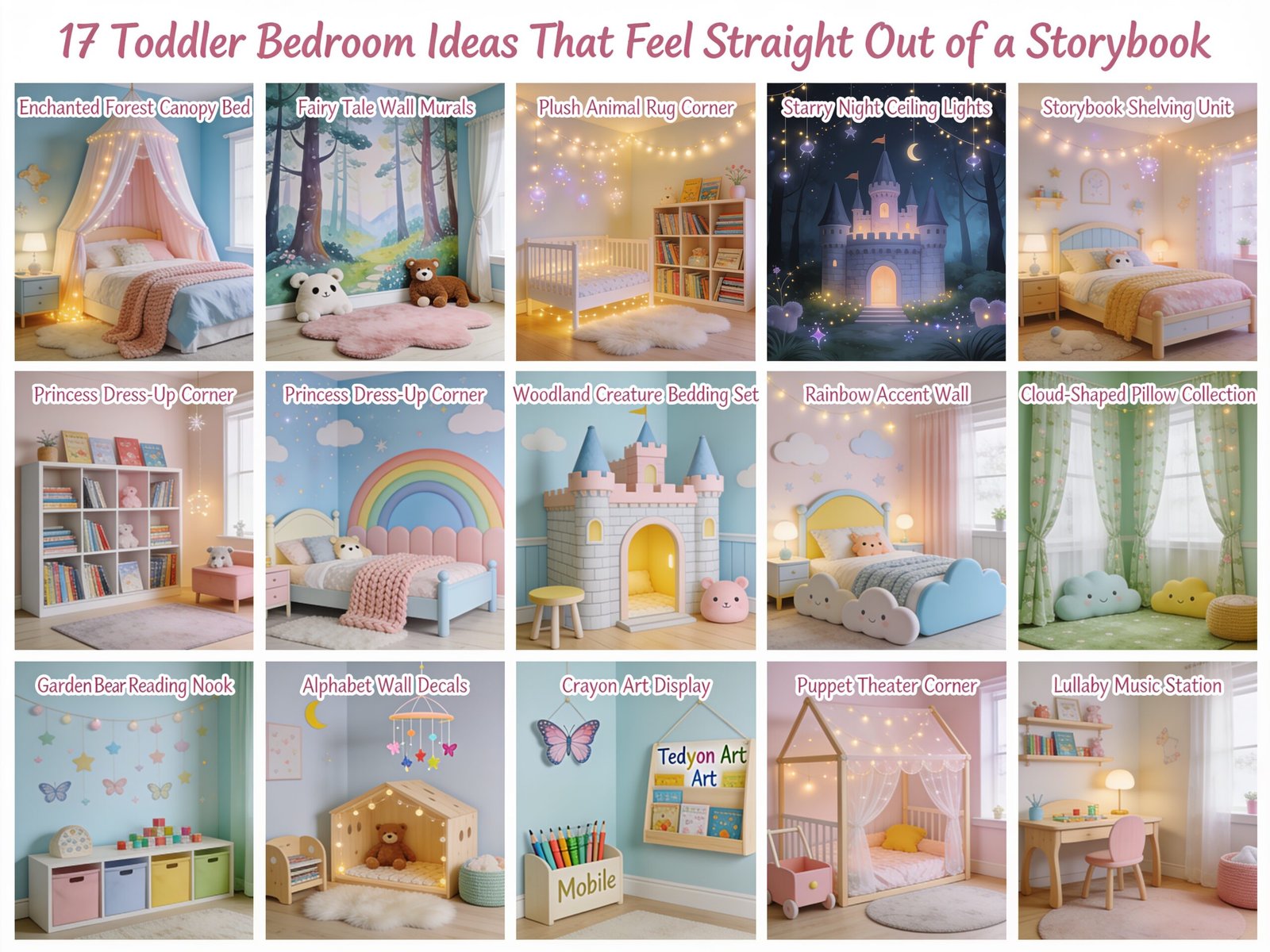
A toddler bedroom can be much more than a place to sleep. At this age, one small room can become a castle, forest, reading hideaway, playroom, and peaceful retreat, sometimes all before breakfast.
The best toddler bedroom ideas balance that imagination with everyday life. You want enough magic to make your child excited about the room, but you also need storage that works, furniture that suits their size, and a sleep area that does not feel overstimulating.
The good news is that creating a storybook toddler bedroom does not require filling every wall with cartoon characters. In fact, rooms often feel more timeless when you borrow the mood of a favorite story instead of copying an entire theme.
Think woodland murals, tiny libraries, warm lighting, cottage details, cloud ceilings, soft rugs, house-shaped beds, and little unexpected touches that invite imagination.
Before you start, browse our 5 Bedroom Ideas for Kids That Spark Creativity Fast for even more ways to combine color, storage, furniture, and personality.
Before Decorating: Make the Magic Toddler-Friendly
Once children become mobile, their bedroom needs to work differently from a nursery.
The U.S. Consumer Product Safety Commission recommends securing furniture such as dressers and bookcases because young children can pull, climb, or fall against them. Window cords should also be kept inaccessible, and appropriate window guards can help reduce fall risks.
If you are transitioning from a crib, the American Academy of Pediatrics notes that climbing out of the crib can be a sign that it is time to reconsider the sleep setup. Maintaining the familiar bedtime routine during the transition can also make the change easier.
The CPSC defines regulated toddler beds as beds designed for children at least 15 months old and up to 50 pounds, so always follow the instructions and limits of the specific bed you purchase.
You can find additional guidance in the CPSC childproofing guide and the AAP’s guide to moving from a crib to a big-kid bed.
With the basics covered, it is time for the fun part.
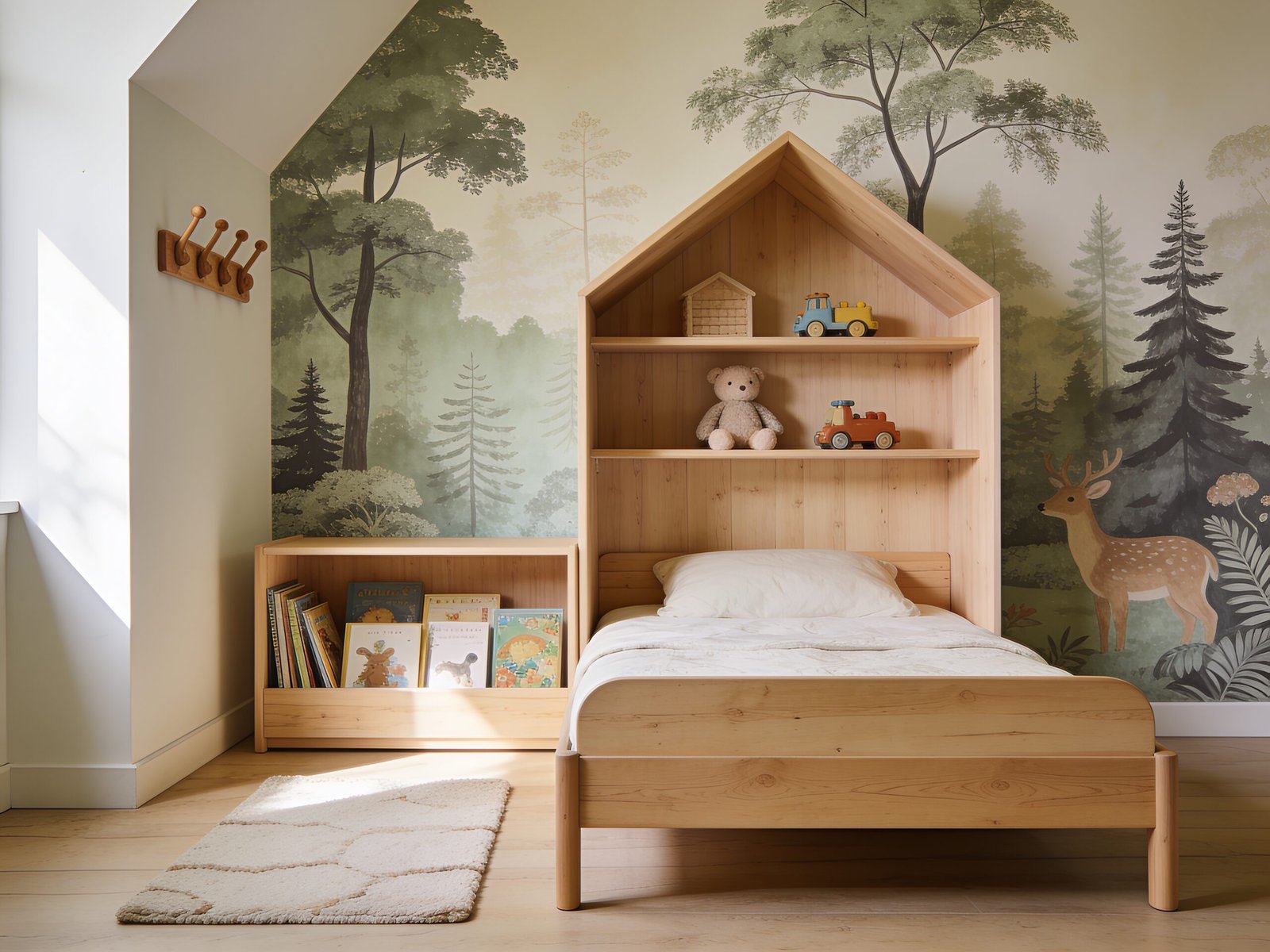
1. Create an Enchanted Woodland Toddler Room
Few themes capture storybook charm as easily as a forest.
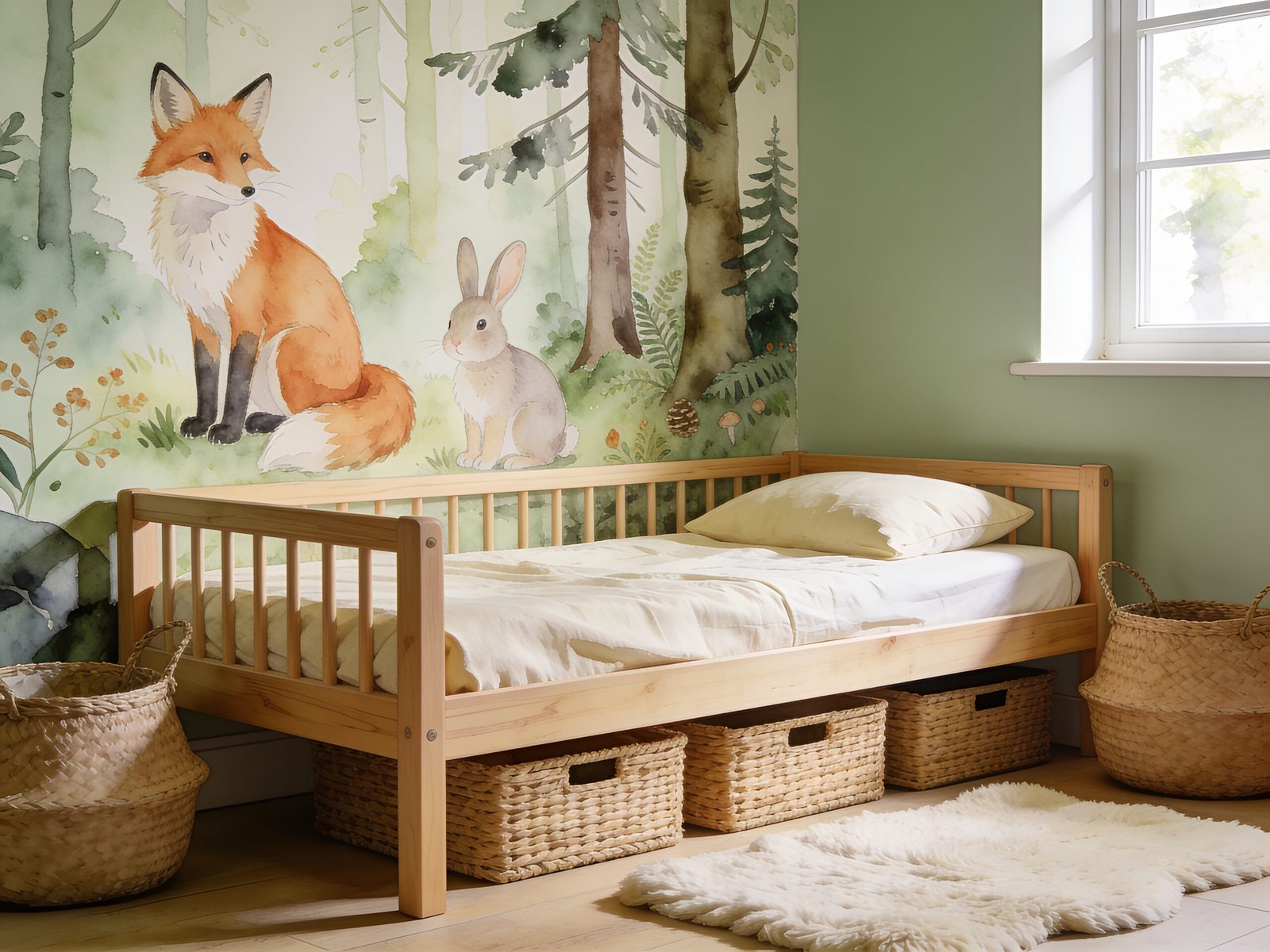
Start with soft sage, moss green, mushroom beige, and warm cream. Instead of filling the room with dozens of forest accessories, make one wall the main event with a watercolor-style woodland mural featuring gentle trees, ferns, tiny mushrooms, rabbits, deer, or foxes.
Pair it with a simple natural wood bed and woven baskets.
Keep bedding quieter than the mural. Cream sheets, a muted green quilt, and one animal-shaped cushion are enough.
A small tree-stump-style table or woodland night light can finish the idea without making the room feel like a themed attraction.
Best for: nature-loving toddlers and gender-neutral rooms.
2. Turn the Bed Into a Tiny Storybook Cottage
A house-shaped or cottage-inspired bed instantly gives a toddler room a playful focal point.
You do not need an elaborate custom structure. Even a simple low wooden house-frame bed creates the outline of a miniature home.
Style the wall behind it with delicate vines, tiny flowers, painted birds, or removable wallpaper. Add a small gingham or floral quilt for cottage charm.
The trick is keeping the frame itself simple. If the bed already has a strong shape, allow it to be the main decorative feature.
This also makes future updates easier. Change the bedding and wall art later, while keeping the same bed.
3. Build a “Once Upon a Time” Reading Nook
A dedicated toddler reading nook may become the most loved corner in the bedroom.
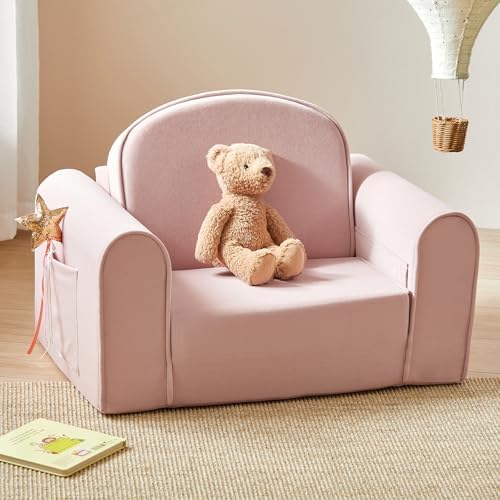
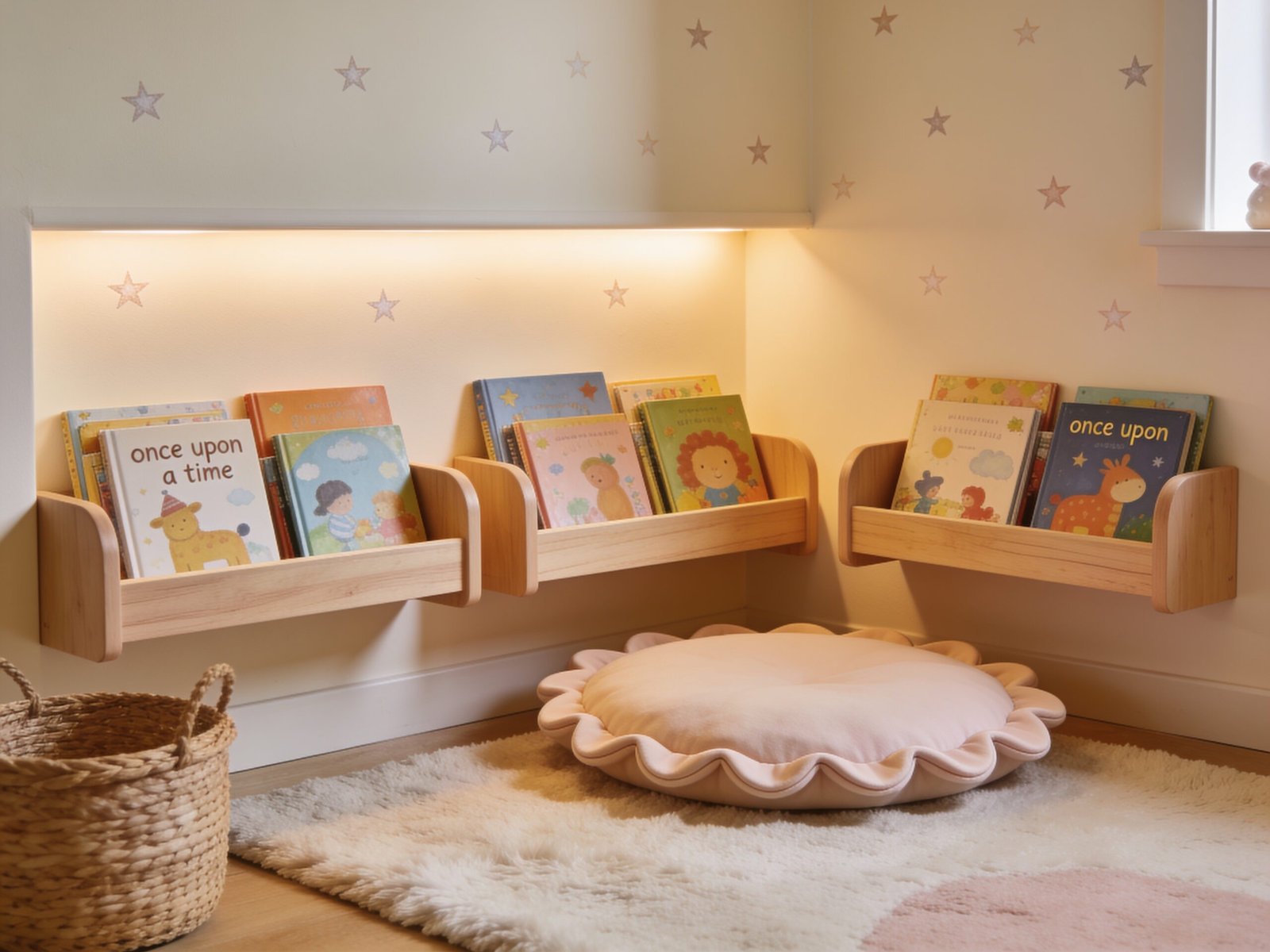
Choose a quiet corner and add a washable rug, floor cushion, small upholstered chair, or soft mat. Place a short selection of books nearby with their covers facing outward so children can easily recognize their favorites.
Instead of displaying every book they own, rotate a smaller collection.
That keeps the nook visually calm while making old books feel new again.
Add a warm wall-mounted light or safe lamp positioned where it cannot easily be pulled over.
The AAP recommends calm activities such as reading as part of a quiet bedtime routine, making a reading corner more than just decoration.
For more wall-focused inspiration, explore our DIY Kids’ Room Wall Art Projects.
4. Paint a Dreamy Storybook Mural
A mural can transform an ordinary bedroom faster than almost any other design choice.
Instead of a loud cartoon scene, choose something that can grow with your child:
- rolling hills
- wildflowers
- woodland trees
- clouds and stars
- mountains
- a distant castle
- an ocean horizon
Use soft, slightly muted colors so the mural feels atmospheric rather than overwhelming.
You can paint it yourself, hire an artist, use peel-and-stick wallpaper, or create a simplified landscape with broad painted shapes.
If you are painting the room, the EPA recommends using products intended for interiors and providing plenty of fresh-air ventilation. Its painting guidance notes that water-based paints generally emit fewer chemicals and lower levels of chemical vapors than oil-based alternatives.
See the EPA healthy painting guidance before starting a large indoor painting project.
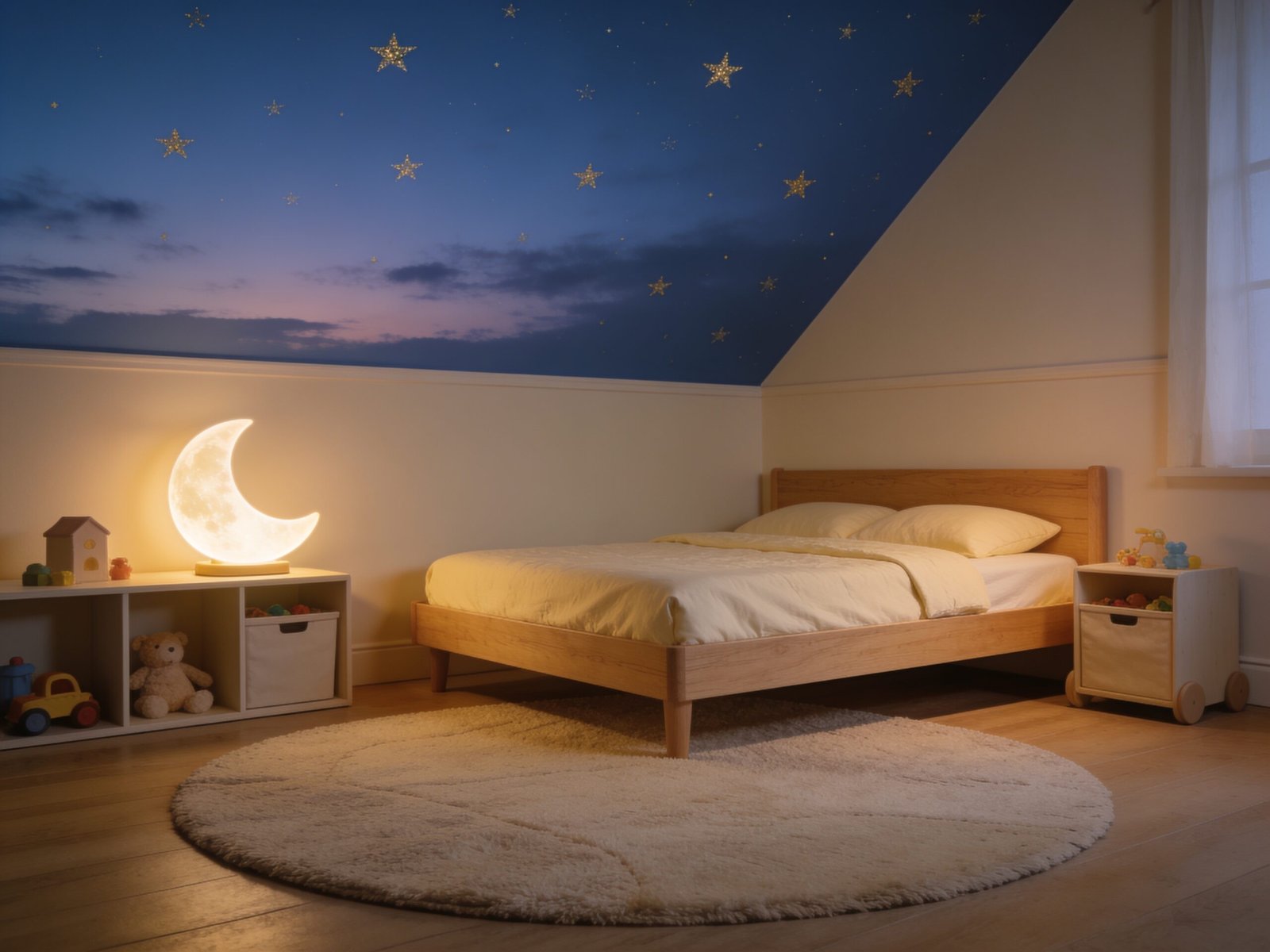
5. Create a Soft Cloud and Moon Bedroom
For a magical look that is still restful, look upward.
Use pale blue, lavender-gray, warm white, or barely-there blush walls. Add painted clouds, moon artwork, scattered stars, or a subtle celestial wallpaper panel behind the bed.
Instead of covering every surface with stars, repeat the theme in only two or three places.
For example:
- star wall decals
- one moon-shaped night light
- celestial artwork
The room will still communicate the theme without becoming visually busy.
Soft, indirect lighting works especially well here because the room should feel dreamy after sunset.
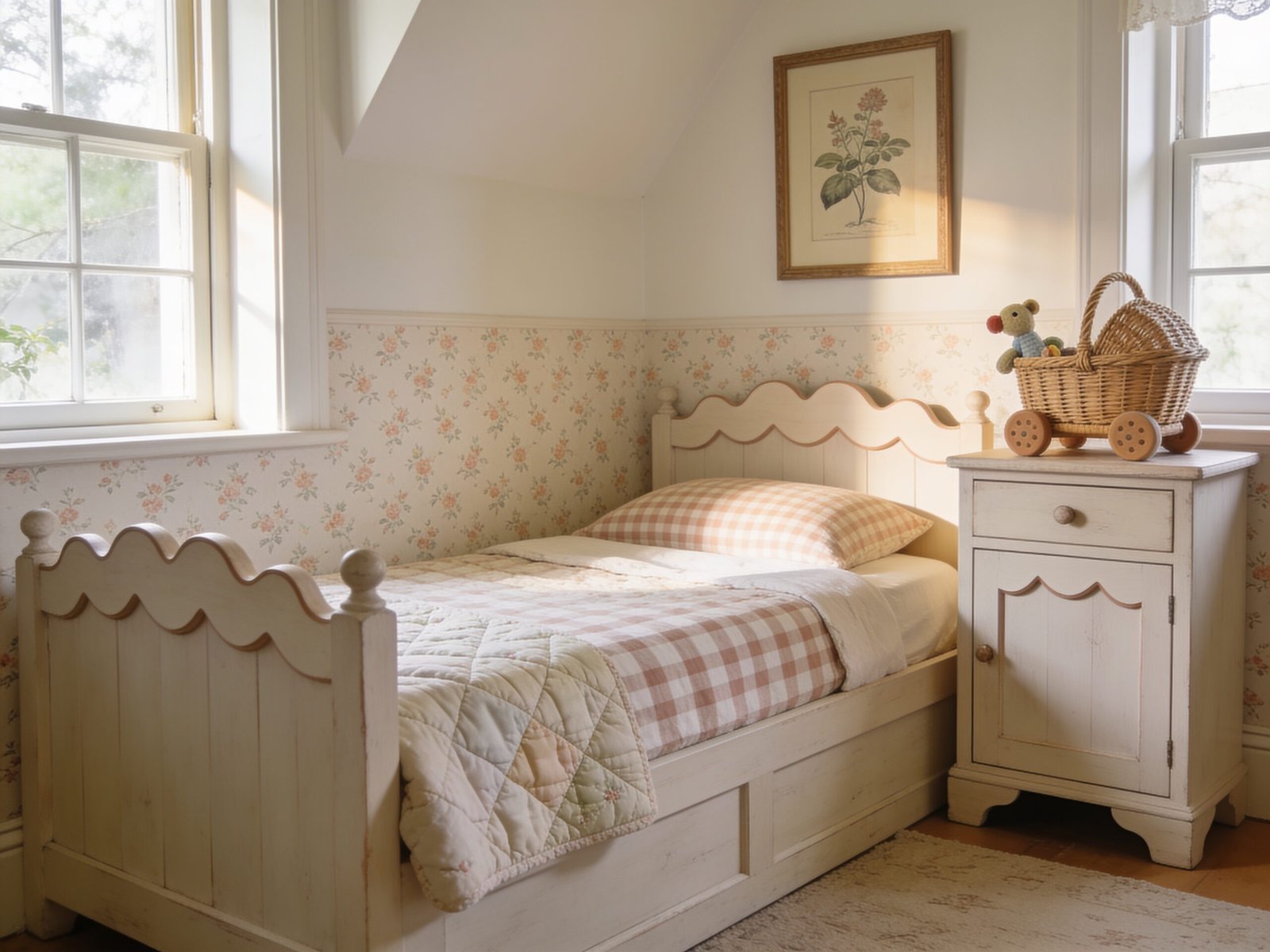
6. Try a Vintage Fairytale Cottage Theme
Storybook bedrooms do not need to look modern.
A vintage cottage room can feel as though it belongs in an illustrated children’s book.
Start with warm ivory walls and bring in:
- tiny floral prints
- scalloped details
- painted wood furniture
- gingham
- quilts
- wicker baskets
- antique-style picture frames
Use vintage-inspired pieces rather than valuable antiques within toddler reach.
A small floral wallpaper section behind the bed can provide enough pattern for the entire room.
7. Design a Magical Castle Room Without Going Overboard
A castle room sounds elaborate, but the strongest designs often use suggestion rather than literal architecture.
Paint a soft castle silhouette behind the bed or use a mural showing distant towers among hills and clouds.
Then add subtle royal details, perhaps a scalloped headboard, velvet cushion, tiny crown motif, or antique-brass-style wall light.
Avoid adding a castle to every object.
One dramatic backdrop plus a few carefully repeated colors usually looks more sophisticated than a room full of themed products.
8. Add a Tiny Canopy Reading Hideaway
A small canopy can turn an unused corner into a magical hideaway.
Place it over a reading cushion or play mat rather than automatically positioning it over the bed.
Inside, keep things simple with a few board books and one or two soft toys.
Because toddlers naturally pull, climb, and explore, any canopy or hanging decoration should be securely installed, positioned carefully, and kept free of long accessible cords or ties.
For a similar soft and dreamy design direction, our Best Color Schemes for Kids’ Rooms has more palette inspiration.
9. Turn the Ceiling Into the Night Sky
The ceiling is one of the most overlooked places in children’s rooms.
Paint it soft sky blue, deep muted navy, or warm dusk lavender and scatter small stars across it.
You could also create a simpler effect using a few carefully positioned star decals.
Because the ceiling design is visually separated from furniture and toys, it adds a sense of magic without consuming floor space.
That makes this one of the smartest small toddler bedroom ideas.
Keep the walls below fairly quiet so the ceiling remains special.
10. Create a Secret Garden Bedroom
For something softer than a woodland theme, turn the room into a garden.
Paint or wallpaper one wall with oversized wildflowers, leaves, butterflies, or climbing vines.
Keep the furniture neutral so the botanical pattern remains the focal point.
A palette of dusty rose, muted peach, sage, buttercream, and warm white works beautifully, but the idea does not need to feel traditionally feminine. Deeper greens, ochre, blue, and rust can create a more earthy version.
Carry the garden idea through with only a few details, such as flower-shaped knobs or botanical prints.
11. Make Toy Storage Part of the Story
Practical storage should not destroy the magic.
Use baskets, low cubbies, small bins, or drawers that match the room’s palette.
For example, woodland rooms could use woven baskets, while a coastal storybook room might use canvas bins.
Keep the system easy enough that a toddler can understand it.
Picture labels can show where blocks, animals, cars, dolls, or art supplies belong.
Most importantly, securely anchor furniture that could tip if climbed or pulled. The CPSC specifically advises anchoring dressers, bookcases, and other furniture that could fall on young children.
For more organization ideas, visit our Kids’ Room Decor collection.
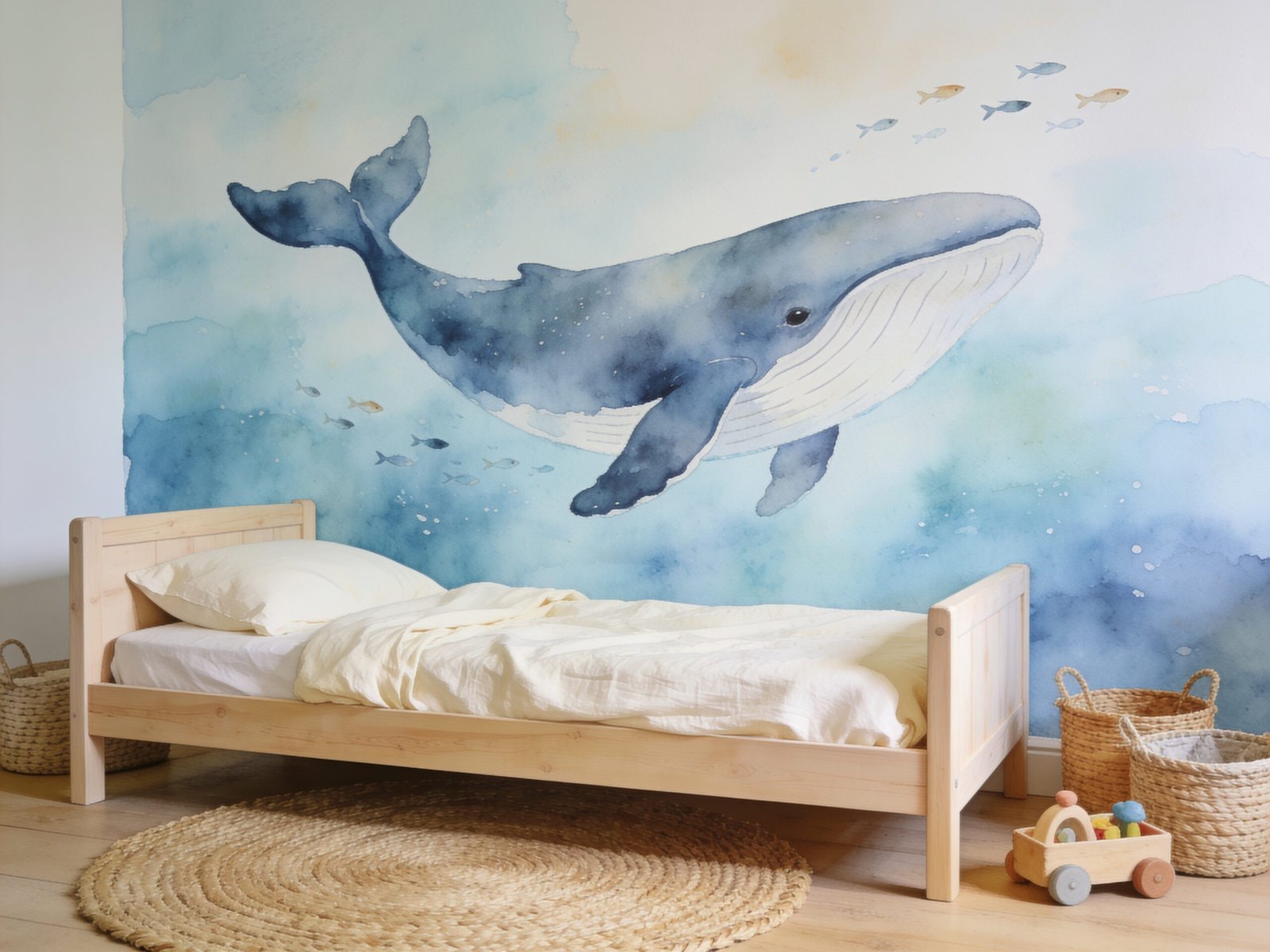
12. Build a Gentle Ocean Storybook Room
An underwater theme can be magical without becoming bright blue from floor to ceiling.
Start with soft sea-glass green, misty blue, sand, and cream.
Create one underwater mural with whales, tiny fish, coral, or gentle waves. Add a textured natural rug and pale wood furniture.
A whale-shaped cushion or shell-inspired lamp can provide a playful accent.
Avoid crowding the space with pirate ships, anchors, mermaids, fish, and boats at the same time. Choose one narrative.
Perhaps this is the quiet ocean at dawn rather than an entire aquarium gift shop.
13. Create a Tiny Adventure Explorer Room
Some toddlers would rather search for dragons than live in a castle.
For an adventure room, use warm earth tones such as olive, tan, rust, cream, and muted blue.
Add a simplified world map, mountain artwork, woodland animals, or vintage travel illustrations.
A small basket can become the “explorer kit” for toy binoculars, magnifying glasses, stuffed animals, or picture books about nature.
Keep the large furniture neutral so the explorer theme can easily become dinosaurs, space, sports, or something entirely different later.
14. Give a Small Toddler Bedroom Clear Zones
A small bedroom feels more functional when it has clearly defined purposes.
You do not need physical dividers. A rug or furniture placement can quietly separate the space into:
Sleep zone: bed and night light.
Reading zone: books and one comfortable seat.
Play zone: open floor area.
Storage zone: baskets, drawers, or cubbies.
Keeping the middle of the room relatively open can make even a modest bedroom feel larger.
This approach also prevents the bed from becoming the main play surface.
The AAP recommends keeping children’s beds primarily associated with sleeping rather than turning them into places for play and screens.
You can also find adaptable layouts in our Fun & Functional Kids’ Bedroom Ideas.
15. Use a Montessori-Inspired Storybook Layout
You can combine whimsical decor with Montessori toddler room principles.
Keep selected books, clothes, and toys where your child can reach and use them independently. Use a small amount of accessible storage rather than filling every wall.
Then add imagination above and around that simple foundation.
A botanical mural, house-shaped bed, woven rug, or storybook artwork can provide the decorative layer.
This combination works especially well because the lower part of the room stays practical and uncluttered while walls provide personality.
16. Let the Books Become the Decoration
Children’s books already contain some of the best illustrations in the house, so use them.
Install shallow front-facing book ledges and treat the covers almost like a rotating gallery wall.
Choose a mixture of colors that suit the bedroom palette, but do not worry about creating a perfectly coordinated display. A toddler room should still look like a child actually lives there.
Change the selection with seasons or interests.
Woodland books might appear in fall, snowy stories in winter, garden stories in spring, and seaside adventures in summer.
It is an easy way to refresh the room without buying new decor every few months.
17. Build a Room That Can Grow Beyond the Toddler Years
Perhaps the smartest storybook idea is designing the room so the “story” can change.
Spend more of your budget on pieces that can remain useful:
- a well-made dresser
- neutral shelving
- durable rug
- adaptable bed
- simple curtains
- quality lighting
Then create the fantasy through easier-to-change elements:
- artwork
- wallpaper
- bedding
- decals
- cushions
- baskets
- books
A woodland toddler room might become an explorer room at five and a nature-inspired bedroom at eight without replacing every major piece.
That makes the room more sustainable and usually more affordable.
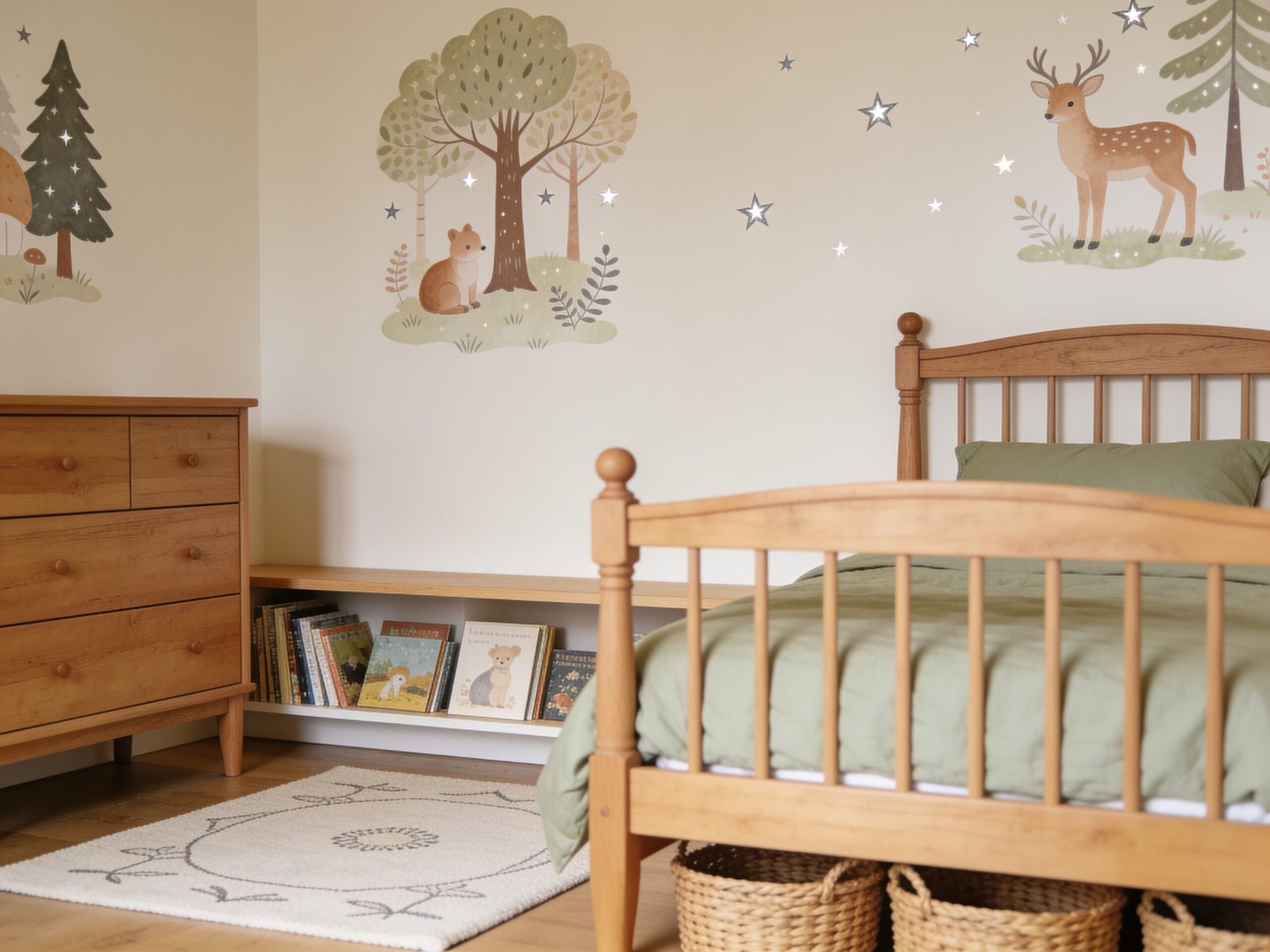
How to Make a Toddler Bedroom Feel Magical Without Clutter
The secret is restraint.
Choose one major storybook feature and let everything else support it.
For example:
Hero element: woodland mural
Supporting details: green quilt + woven baskets
Or:
Hero element: house-shaped bed
Supporting details: floral artwork + gingham bedding
Or:
Hero element: star ceiling
Supporting details: moon lamp + neutral bedding
This simple approach keeps the room visually connected.
It also means toys, books, and artwork collected over time have room to exist without making the space feel chaotic.
Best Colors for a Storybook Toddler Bedroom
Storybook rooms work especially well with colors that feel slightly softened rather than extremely saturated.
Try combinations such as:
- Sage + cream + warm oak
- Dusty blue + ivory + camel
- Blush + muted green + warm white
- Lavender-gray + butter yellow + cream
- Terracotta + olive + beige
- Sea-glass blue + sand + white
- Mushroom taupe + forest green + rust
Repeating two or three colors around the room makes different furniture and decor pieces feel intentional.
Toddler Bedroom Ideas FAQ
What should every toddler bedroom have?
Start with a safe sleeping area, practical clothing storage, accessible book or toy storage, open floor space, comfortable lighting, and properly secured furniture. Decorative pieces can then be layered around those essentials.
How can I make a toddler bedroom look magical on a budget?
Focus on one high-impact feature. Paint an inexpensive mural, add removable decals, display children’s books face-out, swap bedding, or paint existing furniture. You do not need custom-built furniture to create a storybook atmosphere.
What is the best theme for a toddler bedroom?
Themes that can evolve tend to last longest. Woodland, garden, ocean, celestial, cottage, and adventure themes are especially flexible because they can mature with the child.
How do you decorate a small toddler bedroom?
Keep large furniture simple, use walls for visual interest, maintain open floor space, and create zones rather than adding more furniture. A mural or decorative ceiling adds personality without taking up usable space.
Should toddler bedrooms have bright colors?
They can, but bright colors usually work best as accents. A calmer base with concentrated color in artwork, rugs, toys, or bedding can create personality without overwhelming the sleep area.
When should a child move to a toddler bed?
There is no single milestone that applies to every family. The AAP notes that climbing out of the crib can be a reason to consider transitioning, while CPSC-regulated toddler beds are intended for children at least 15 months old and within the manufacturer’s specified limits.
Final Thoughts
The most memorable toddler bedroom ideas are not necessarily the most expensive or elaborate.
They give children just enough detail to finish the story themselves.
A painted forest becomes an imaginary adventure. Three shelves of books become a tiny library. A cottage-shaped bed becomes a secret house. A starry ceiling becomes an entire nighttime sky.
Start with safety and function, choose one strong visual idea, and then layer in color, texture, books, and a few playful details.
That is usually all it takes to create a toddler bedroom that feels straight out of a storybook while still working beautifully in everyday family life.
Next Step
Choose your favorite idea from this list and save it for your next bedroom makeover. Then explore our Kids’ Room Decor ideas for more color palettes, wall projects, storage solutions, and children’s bedroom inspiration.