
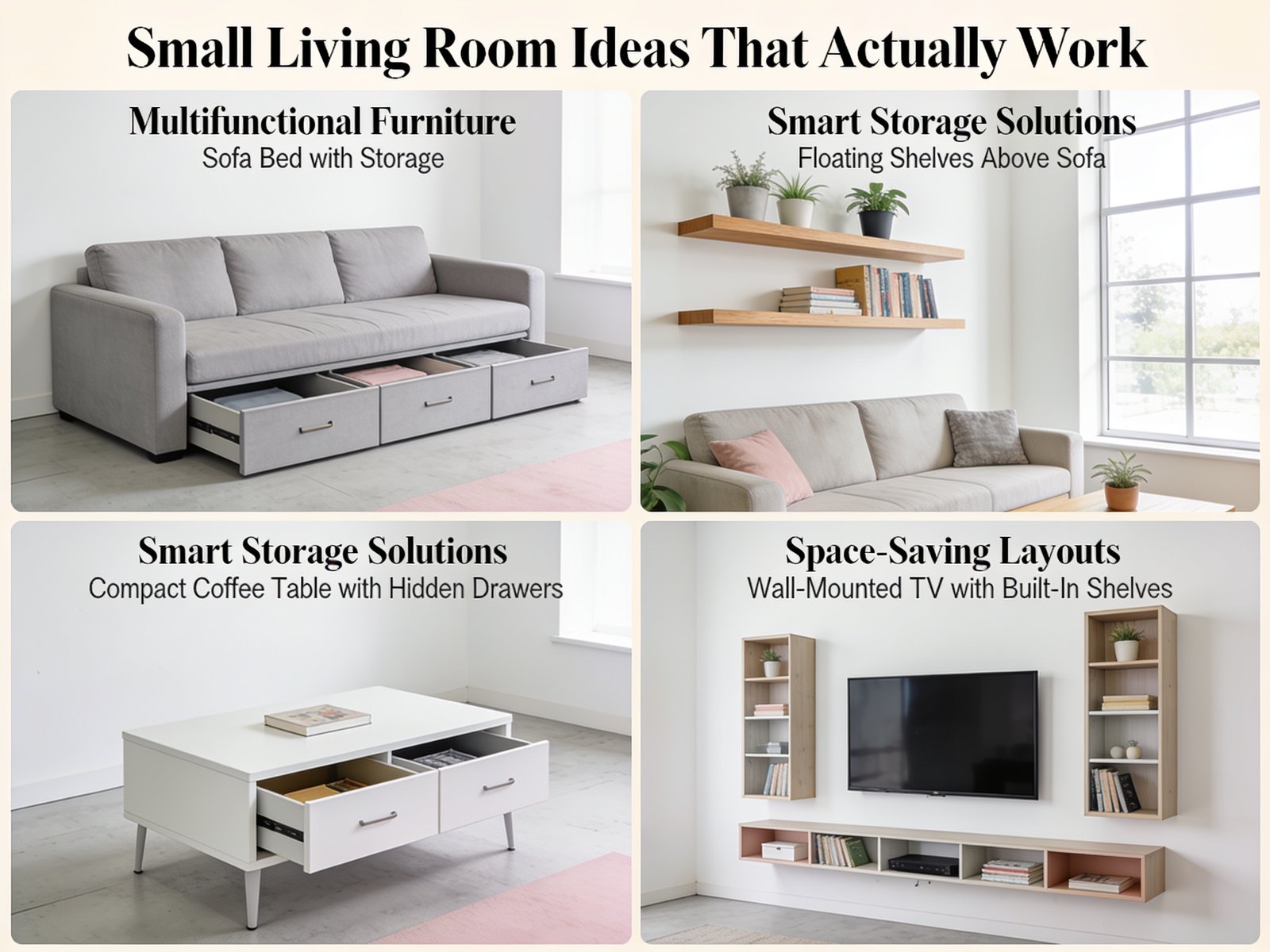
A small living room does not need to feel like a waiting room where every piece of furniture has been pushed against a wall.
The best small living room ideas are not really about making everything miniature. They are about deciding what deserves floor space, improving the way people move through the room, hiding everyday clutter, and using the walls more effectively.
A compact room can still have a comfortable sofa, useful storage, a TV, good lighting, personality, and enough seating for guests. The trick is making those elements work together instead of fighting for the same few square feet.
Architectural Digest points to scale and proportion as especially important in small spaces. It also shows that compact rooms do not have to be stripped of color, texture, art, or personality to work well.
Here are 17 practical ideas you can actually use.
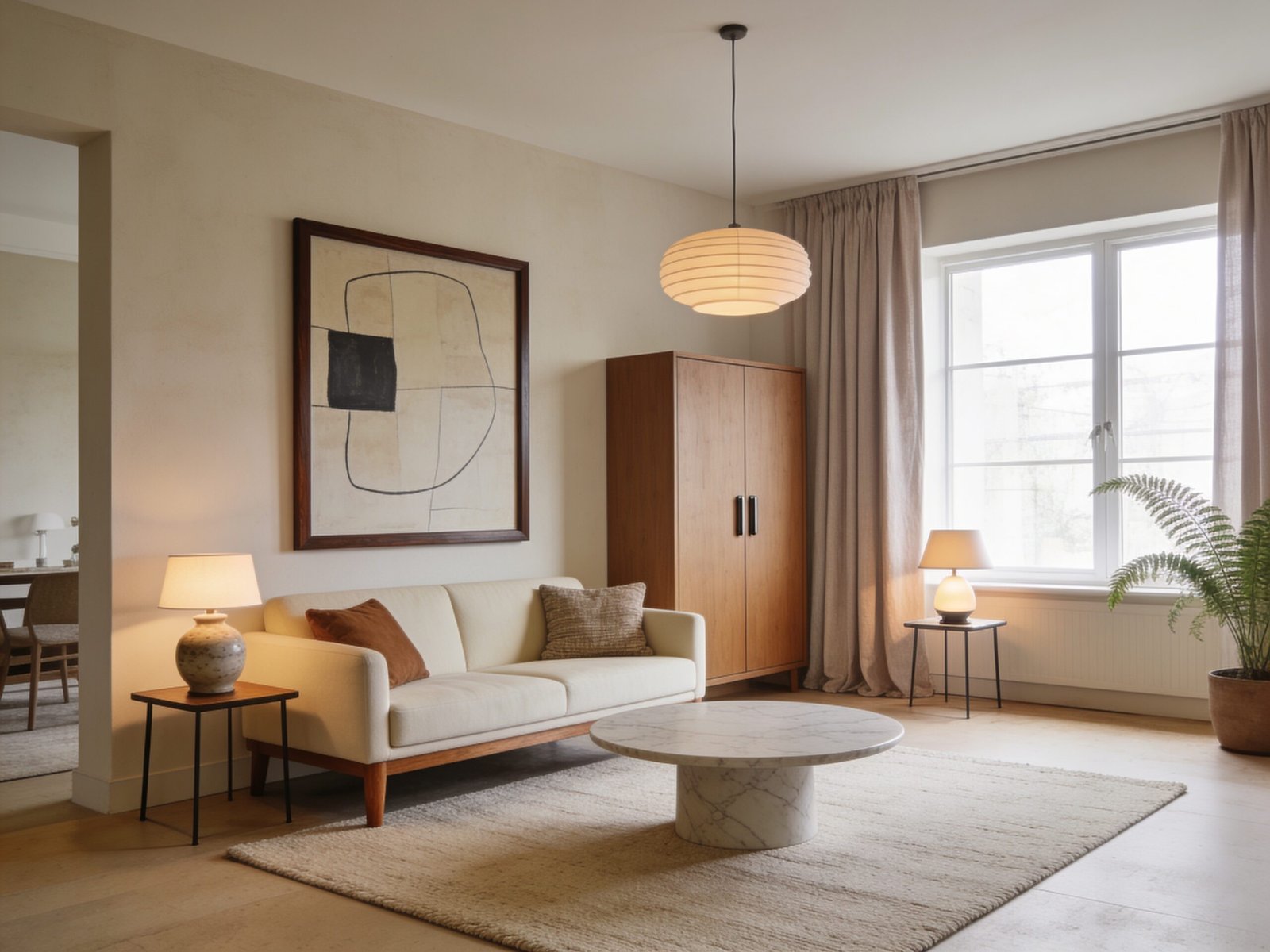
1. Decide What the Living Room Needs to Do
Before buying another basket, table, or decorative pillow, decide what the room actually needs to support.
Ask yourself:
- Is watching TV the main activity?
- Do you regularly entertain guests?
- Does the living room double as a home office?
- Do children need floor space?
- Do you need extra hidden storage?
- Is dining also happening in this room?
Trying to make a small living room do everything equally well usually creates clutter.
Instead, choose one primary function and one or two secondary functions.
For example, a living room might be primarily for relaxing and watching TV, with occasional laptop work. That does not require a permanent desk if a lift-top coffee table or slim console can handle the second job.
This simple decision makes every furniture choice easier.
2. Measure the Room Before Choosing Furniture
One of the biggest small-space mistakes happens before the furniture even arrives.
People measure the wall, find a sofa that technically fits, and buy it.
But furniture needs breathing room.
Measure:
- wall lengths
- windows
- doorways
- door swing
- radiators
- outlets
- existing furniture
- the path people use to cross the room
Then sketch the layout on paper or use painter’s tape on the floor to mark the footprint of larger pieces.
It takes ten minutes and can save you from living with a sofa that feels twice as large as it looked online.
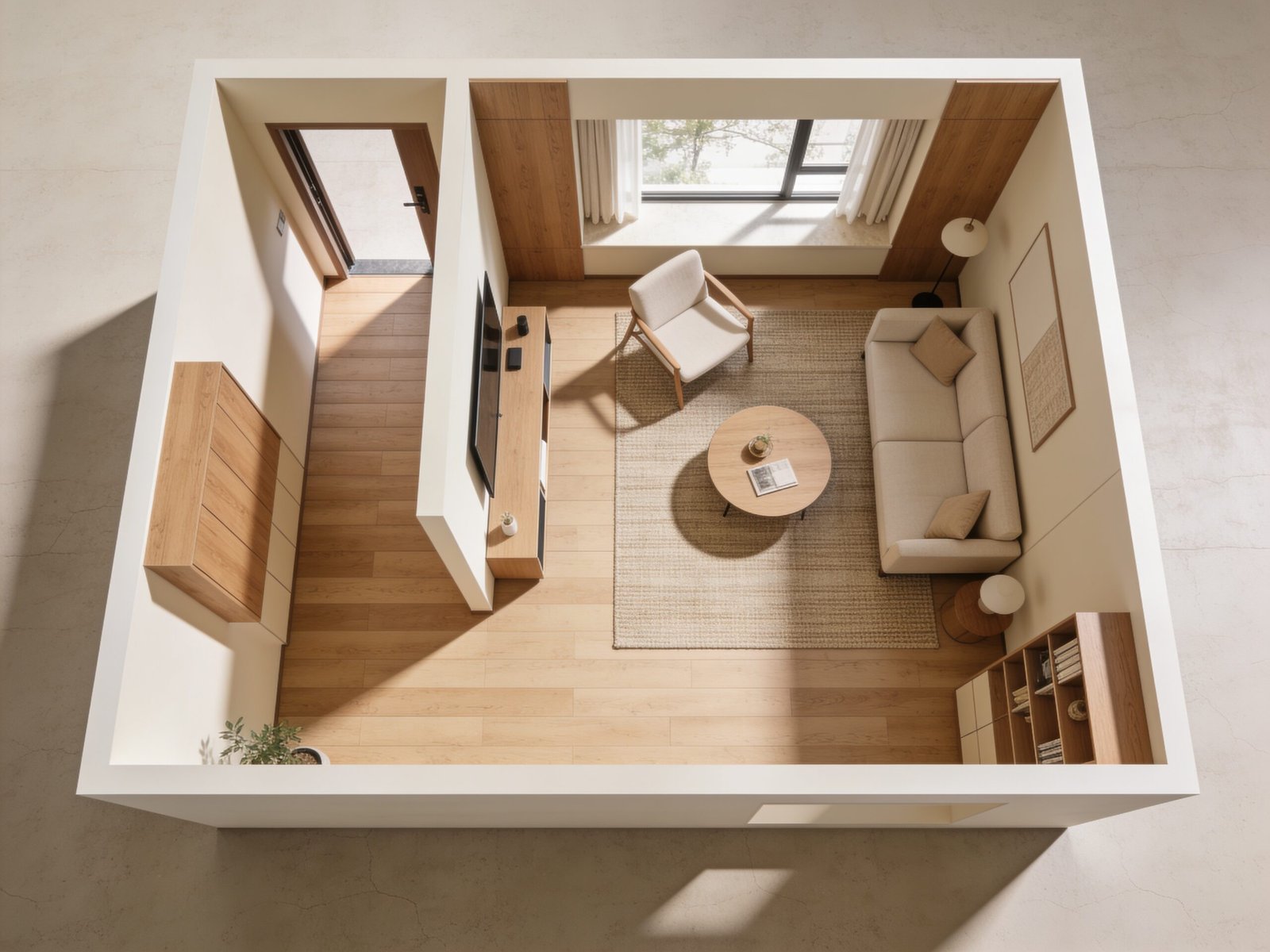
3. Protect One Clear Walking Route
Good small living room layout ideas start with movement.
You should be able to enter the room, reach the sofa, and walk toward another doorway or window without weaving around furniture.
Avoid placing a coffee table, oversized chair, plant stand, or ottoman directly in the main traffic path.
A room that is physically easy to walk through usually feels larger too.
This is one reason blindly pushing every piece against the wall does not always work. Sometimes floating a sofa slightly forward creates a clearer route behind or beside it.
4. Use Fewer Furniture Pieces, Not Necessarily Tiny Ones
A small living room filled with ten tiny furniture pieces can feel more crowded than one with four appropriately sized pieces.
A comfortable sofa, one movable chair, a useful table, and a storage cabinet may work better than a loveseat surrounded by multiple side tables, stools, shelves, and small chairs.
Recent designer advice also challenges the idea that every small room needs tiny furniture. Using fewer, well-proportioned pieces can create a calmer layout than filling the space with many miniature items.
The goal is not to buy the smallest furniture possible.
The goal is to reduce unnecessary furniture.
5. Choose Furniture With Visible Floor Beneath It
Furniture with legs can make a small room feel visually lighter because your eye continues underneath the piece.
Look for:
- sofas with raised legs
- open-base chairs
- slender side tables
- wall-mounted consoles
- narrow-legged coffee tables
You do not need every item to float above the floor, but mixing heavier pieces with visually lighter furniture prevents the room from feeling like a solid block of upholstery.
6. Make Furniture Work More Than One Job
Every piece that occupies valuable floor space should earn its place.
Useful multifunctional furniture for small spaces includes:
- storage ottomans
- lift-top coffee tables
- nesting tables
- sofa beds
- storage benches
- consoles that become desks
- stools that work as side tables
- modular seating
IKEA similarly recommends multipurpose furniture as a way to make small living areas more flexible.
If your living room also serves as an office, guest room, or dining area, these pieces can remove the need for an entire second set of furniture.
For more inspiration, see our guide to multi-functional furniture for studio apartments.
You can also explore our best foldable furniture for small spaces for pieces that can disappear when you do not need them.
7. Go Vertical Instead of Wider
When floor space runs out, look up.
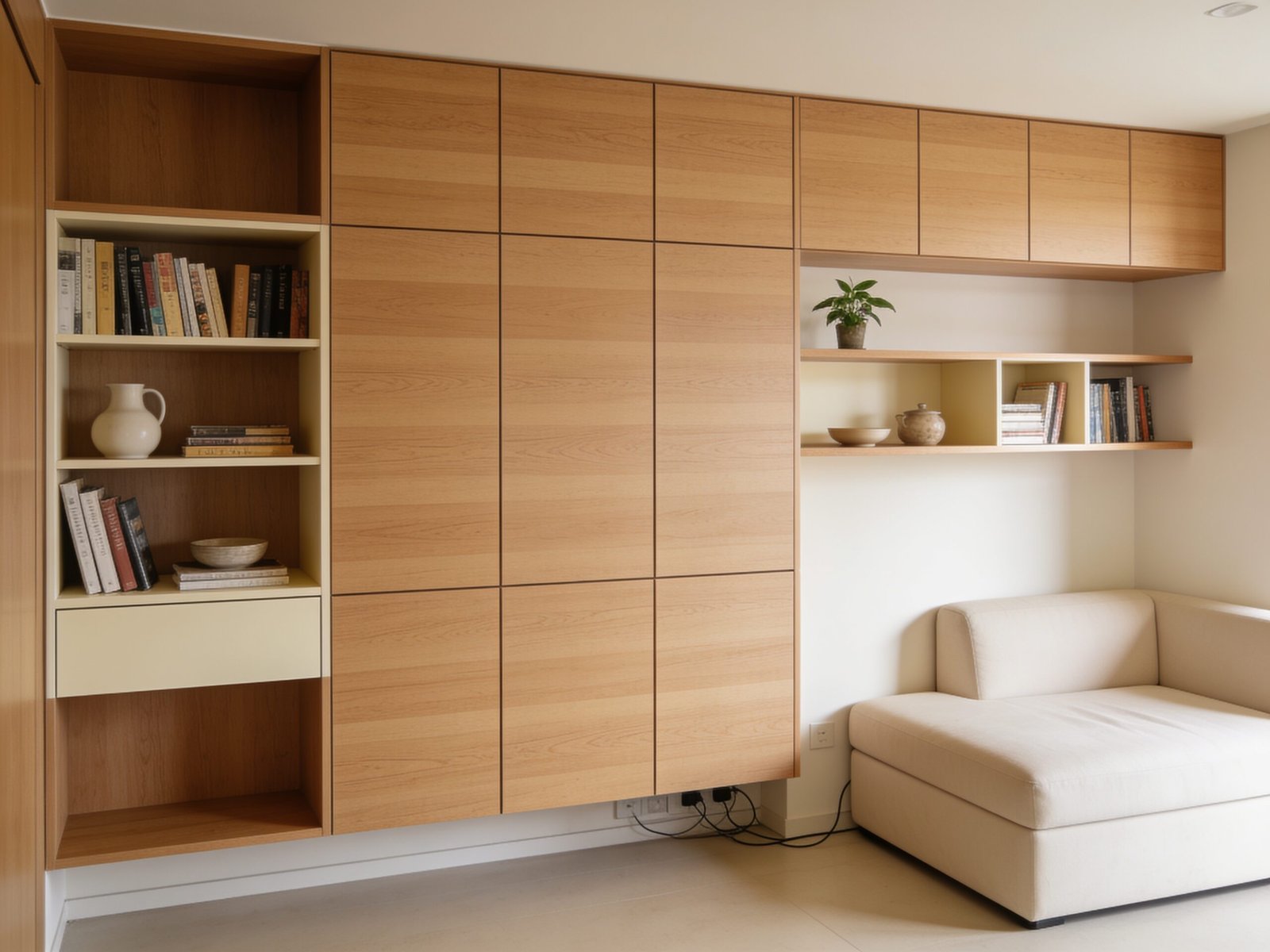
Tall shelving, wall-mounted cabinets, floating shelves, and narrow bookcases use space that would otherwise sit empty.
Vertical storage works especially well:
- above a TV console
- beside a window
- above a desk
- in a corner
- above the sofa
- around a doorway
Just do not fill every wall from floor to ceiling. One strong storage wall usually feels calmer than small shelving units scattered around the room.
If drilling is difficult because you rent, our guide to no-drill shelving solutions offers more renter-friendly ideas.
8. Mix Open and Closed Storage
Open shelves look lovely in photographs.
Real life contains charging cables, remotes, paperwork, game controllers, pet supplies, toys, batteries, manuals, and objects nobody wants to display.
That is why one of the most useful small living room storage ideas is combining open and closed storage.
Display a few attractive objects on open shelves, then hide visual clutter behind doors or inside drawers.
IKEA also recommends this combination for multipurpose living rooms because closed storage can calm busy spaces while open sections keep favorite objects visible.
9. Use Mirrors Where They Can Reflect Something Worth Seeing
Mirrors are popular in lists about how to make a small living room look bigger, but placement matters.
A mirror reflecting a bright window, attractive artwork, greenery, or an open doorway can add depth and bounce light through the space.
A mirror reflecting a cluttered shelf simply gives you twice as much clutter.
Good locations include:
- opposite or near a window
- above a console
- beside a dark corner
- where it reflects an attractive part of the room
A larger mirror is often more effective than several tiny decorative mirrors.
For a more detailed guide, read how to use mirrors to open up a small room.
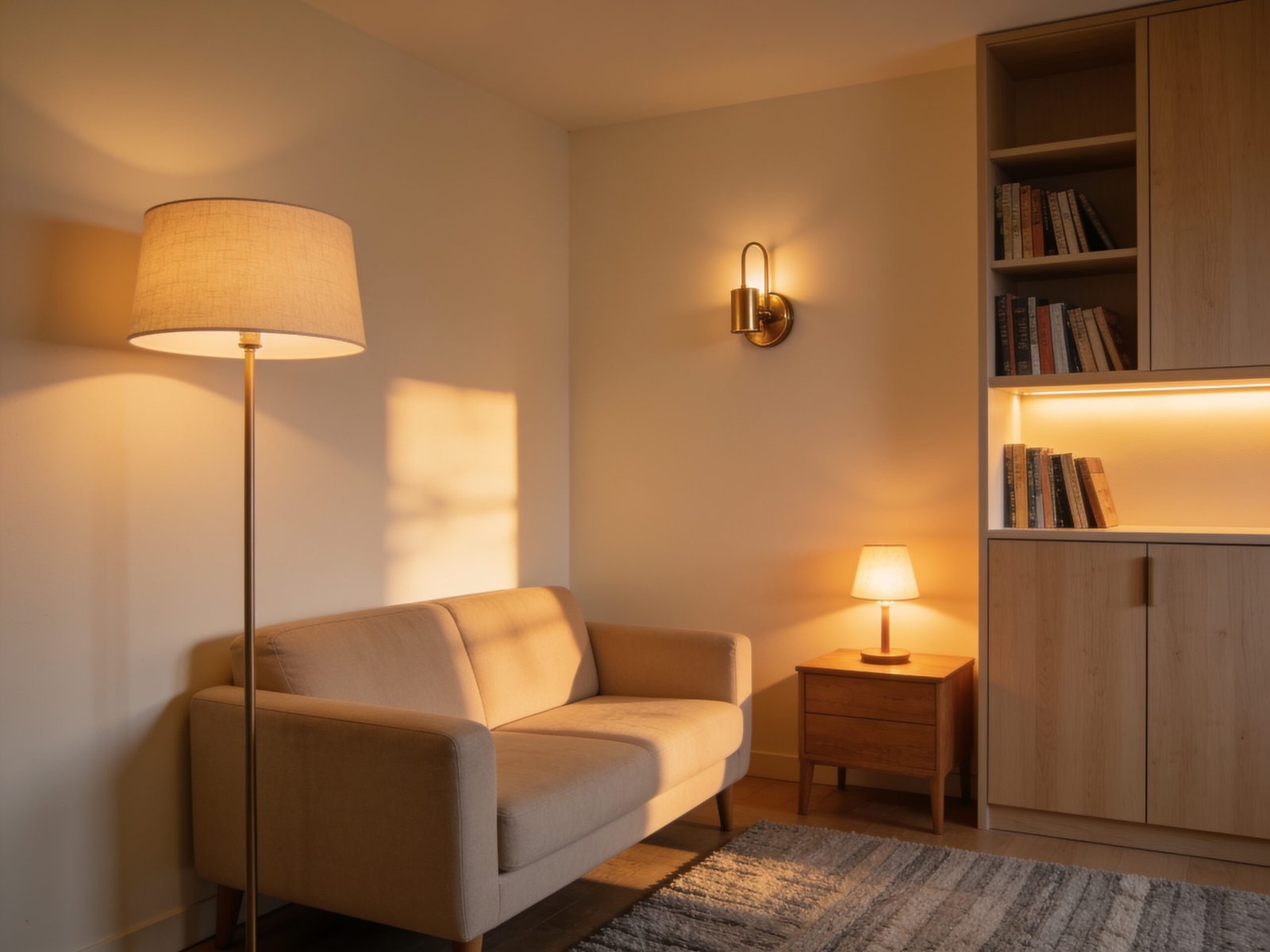
10. Stop Depending on One Ceiling Light
Lighting is one of the easiest ways to change how a compact living room feels.
One bright ceiling fixture can leave the corners dark while making the center feel harsh.
Instead, layer light at different heights.
Try combining:
- ceiling or pendant lighting
- a floor lamp beside the sofa
- a wall sconce
- a small table lamp
- shelf or cabinet lighting
This draws attention to several parts of the room instead of one central point.
Wall-mounted sconces are particularly useful because they provide light without sacrificing space to a large side table.
11. Keep the Color Palette Connected
White is not the only color allowed in a small living room.
Soft beige, warm greige, sage green, dusty blue, clay, and even deeper colors can work beautifully.
What matters more is avoiding too many unrelated colors competing for attention.
Choose:
- one main wall color
- one main furniture neutral
- one or two accent colors
Then repeat those accents in small doses through cushions, artwork, ceramics, and textiles.
A connected palette makes individual pieces feel like part of one room instead of separate objects squeezed into it.
If you prefer a calmer style, our guide to eco-friendly minimalism and sustainable decor has more ideas for creating warmth without excessive decoration.
12. Do Not Automatically Buy a Tiny Rug
One of the strangest decorating mistakes in small living rooms is putting a tiny rug in the center with furniture floating several inches away from it.
It visually breaks the room into even smaller pieces.
Choose a rug large enough to connect the main seating area whenever possible. At minimum, having the front legs of the main seating pieces on the rug usually creates a more unified appearance.
The rug should define the living zone, not look like an island beneath the coffee table.
13. Hang Curtains Higher
Small rooms benefit from vertical lines.
Mounting curtains closer to the ceiling and allowing them to fall toward the floor draws the eye upward.
For the most open feeling, let the curtains stack beside the window rather than covering large sections of glass when they are open.
Sheer or lightweight curtains can be especially useful when privacy allows because they soften the room without blocking much daylight.
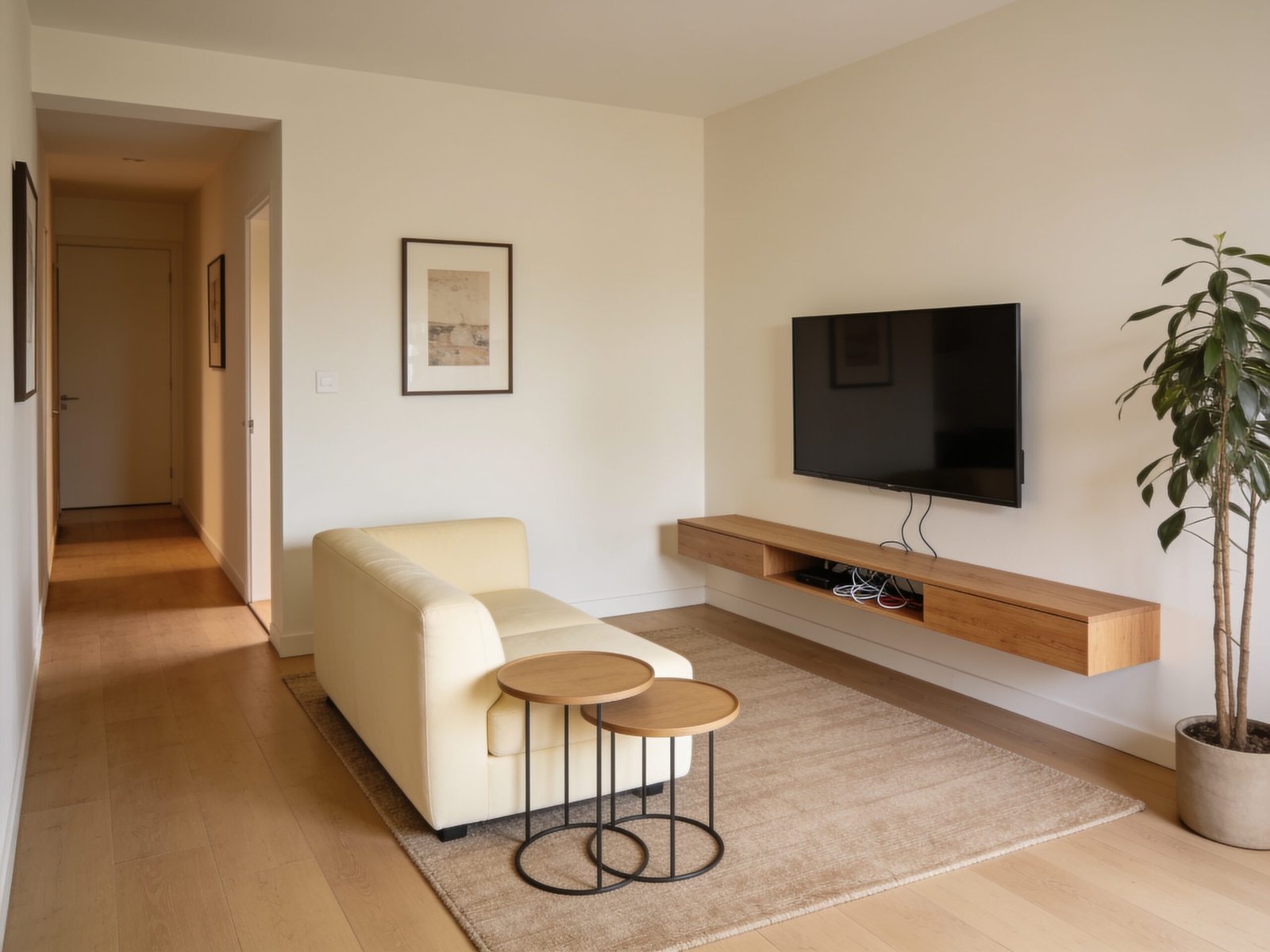
14. Treat the TV as Part of the Design
A small living room with TV often becomes awkward because the television, media console, speakers, cables, and storage create an entire second furniture zone.
Simplify it.
A wall-mounted TV can remove the need for a deep entertainment unit. If you use a console, choose a shallow model with closed storage and cable management.
Avoid surrounding the television with dozens of tiny decorative items.
Instead, use one simple composition, such as a low console, TV, two pieces of art, and a plant.
15. Match the Layout to the Shape of the Room
There is no single perfect small living room layout.
Long and Narrow Living Room
Place the sofa along one long wall or float it slightly inward. Use round or oval tables because sharp corners can interfere with the narrow walkway.
Avoid placing several pieces across the width of the room.
Small Square Living Room
Try one sofa plus two lightweight chairs instead of a large sectional plus extra furniture.
Angling the chairs toward the sofa can create a comfortable conversation area without requiring much space. A recent House Beautiful feature also highlights the practical balance of one sofa paired with two chairs.
Open-Plan Living Room
Use furniture rather than walls to create zones.
The back of a sofa, an open shelving unit, a rug, or a narrow console can visually separate living and dining areas while keeping the room open.
16. Try a No-Shopping Reset First
Before buying new furniture, completely reset the room.
Remove decorative objects, extra tables, unused chairs, floor baskets, piles of magazines, and anything that has slowly accumulated.
Then put back only the pieces you use.
Next:
- establish the main walkway
- position the sofa
- place the rug
- add necessary tables
- add lighting
- add storage
- return only your favorite decor
You may discover that the room needed less stuff, not more stuff.
This also helps you identify the real problem before spending money.
Maybe you do not need a smaller sofa. Maybe you need to remove two unnecessary side tables.
17. Leave Some Empty Space
One of the most overlooked small living room decorating ideas costs nothing.
Leave something empty.
An empty section of wall, a clear tabletop, or a visible patch of floor gives your eyes somewhere to rest.
You do not need to decorate every corner.
In fact, the smaller the room, the more valuable those quiet areas become.
A beautiful room usually contains both interesting objects and enough empty space for those objects to be noticed.
Small Living Room Mistakes to Avoid
Even a well-decorated room can feel cramped if a few key details are wrong.
Avoid:
- buying furniture before measuring
- filling every corner
- relying only on open shelving
- using several tiny rugs
- blocking windows with tall furniture
- adding too many small tables
- placing furniture directly in traffic paths
- relying on one ceiling light
- buying pieces because they are labeled “small space”
- decorating before solving storage
Remember, furniture being physically able to fit does not mean it fits comfortably.
Quick Small Living Room Checklist
Before calling your room finished, check these questions:
- Can you walk through the room easily?
- Does every large furniture piece serve a purpose?
- Is everyday clutter hidden?
- Is some of your storage vertical?
- Does the rug visually connect the seating?
- Are your windows receiving as much daylight as possible?
- Do you have more than one light source?
- Is the color palette connected?
- Can at least one furniture piece perform two jobs?
- Is there some empty visual space?
If most answers are yes, you are already solving the problems that make small living rooms difficult.
Final Thoughts
The best small living room ideas are not visual tricks alone.
A mirror can help. Light colors can help. Slim furniture can help.
But the biggest improvement comes from making the room easier to use.
Protect the walkway. Choose furniture based on function. Use the walls for storage. Hide everyday clutter. Layer your lighting. Let a few well-chosen pieces make the statement instead of filling every available inch.
Once the layout works, decorating becomes much easier.
And your living room does not have to look empty or minimal just because it is small. Architectural Digest’s small-space examples show that compact rooms can still handle texture, artwork, pattern, greenery, and personality when those elements are chosen with intention.
Next Step
Start with your biggest problem area today.
Measure the room, remove one piece of furniture that is not earning its space, and test a new layout before buying anything else.
Then explore more ideas in our Small Space Decorating collection to find storage, furniture, mirror, and organization solutions that can help you make every square foot work harder.
2 thoughts on “Small Living Room Ideas That Actually Work”