
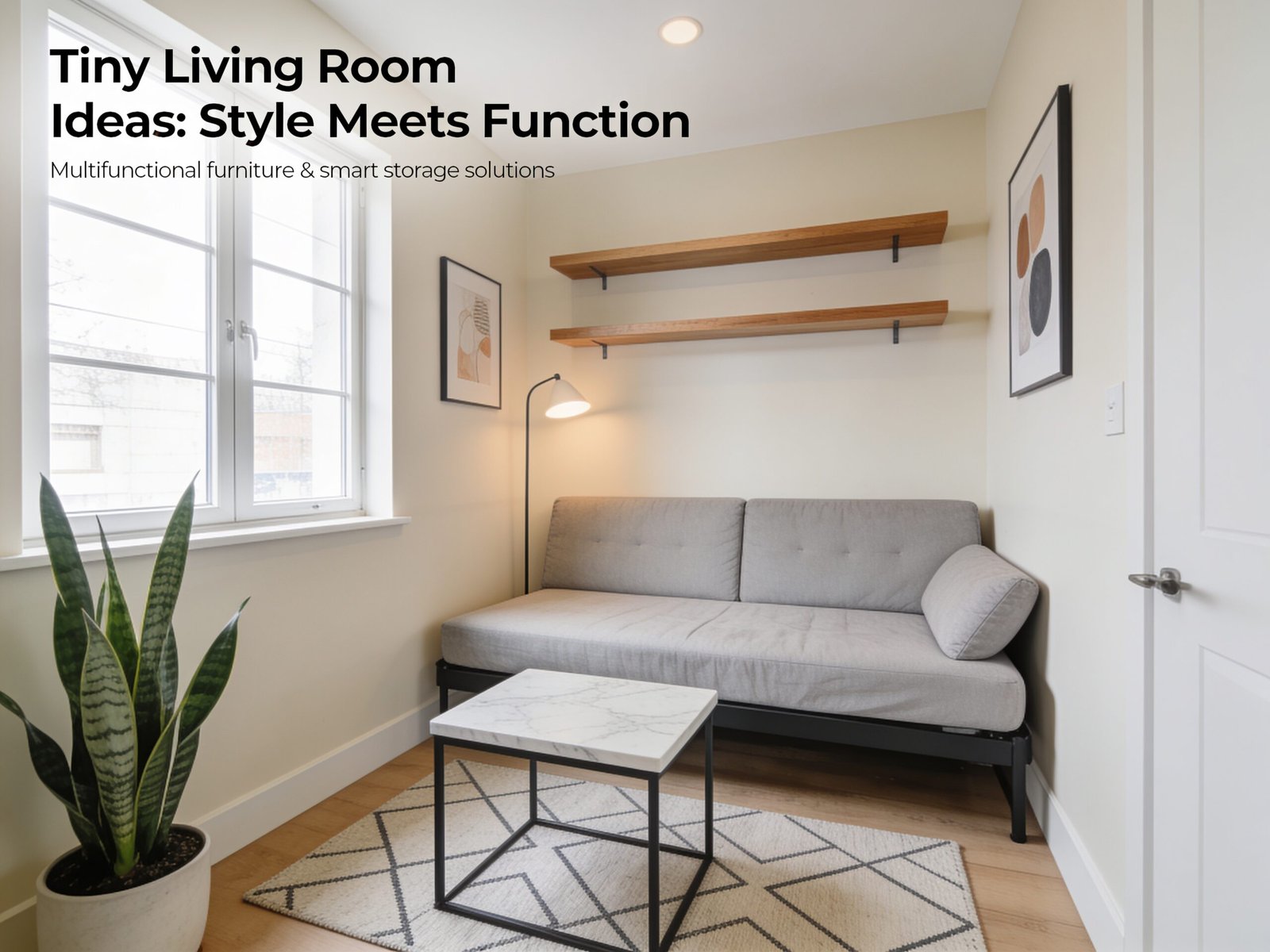
A tiny living room does not have to look like a stripped-down version of a larger one.
You certainly do not need a miniature sofa, a tiny rug, white walls, and almost no decor just because square footage is limited. In fact, some of the most memorable interiors are small spaces that make confident design choices.
The real challenge is deciding where to spend your visual and physical space.
Therefore, the best tiny living room ideas combine smart furniture placement, useful storage, comfortable seating, strong lighting, and enough personality to make the room feel like a home rather than a storage puzzle.
Architectural Digest notes that scale and proportion matter greatly in small rooms. However, designers also warn against assuming every furniture piece has to be tiny. Sometimes one larger, well-proportioned piece creates a calmer room than several small pieces fighting for attention.
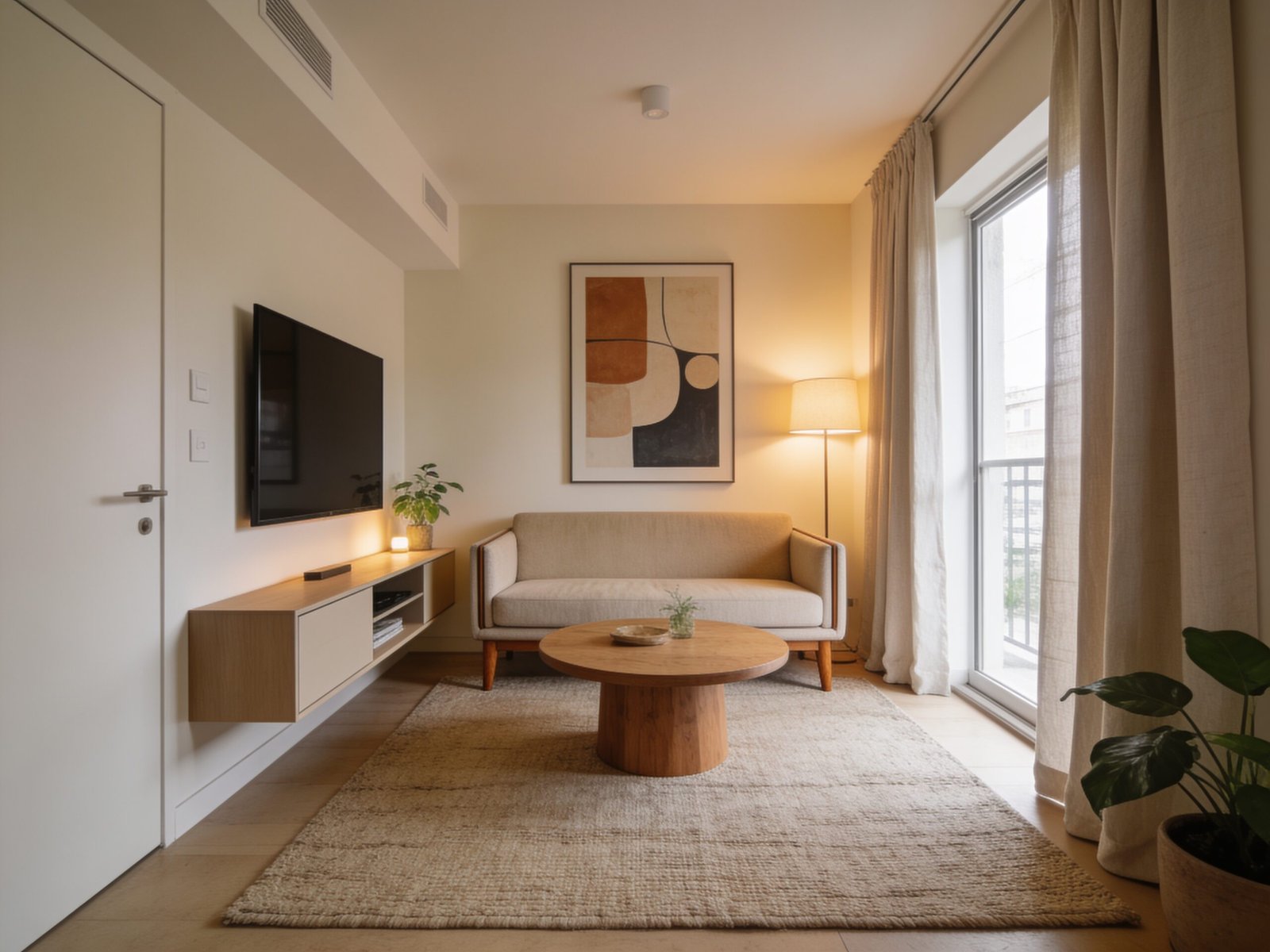
1. Start With One Strong Design Direction
Small rooms become visually messy faster than large rooms because almost everything can be seen at once.
Before choosing furniture or accessories, decide what you want the room to feel like. For example, you might choose:
- warm modern
- Scandinavian
- cozy minimalist
- modern farmhouse
- Japandi
- boho
- vintage-inspired
- colorful contemporary
Not every item has to match. Instead, you simply need enough repetition to make the room feel connected.
For instance, a warm modern room might repeat oak wood, cream upholstery, black accents, and muted olive green. Once those elements appear several times, the room starts to feel designed rather than randomly furnished.
This approach is especially useful in a tiny apartment living room where you may see the entire space from the front door.
2. Choose One Anchor Piece Instead of Lots of Tiny Furniture
One of the most common mistakes in a very small living room is buying miniature versions of everything.
A tiny sofa, a compact chair, a small coffee table, and several little side tables might sound practical. However, the room can quickly end up containing eight or nine separate furniture pieces.
Instead, choose one main anchor piece.
Usually, that will be the sofa.
A comfortable two-seat sofa or compact three-seater can actually look more intentional than a tiny loveseat surrounded by several extra chairs and tables. In addition, fewer pieces often make the room easier to move through.
Recent designer guidance also supports using fewer substantial pieces rather than filling a small room with many undersized items.
When shopping for a sofa, look for:
- slim arms
- low or medium backs
- raised legs
- simple silhouettes
- relatively shallow depth
- removable or washable covers
Visible floor beneath furniture reduces visual weight. As a result, a compact living room can feel less blocked and more open.
For more general layout and furniture planning, see our guide to Small Living Room Ideas That Actually Work.
3. Design the Small Living Room Layout Around Movement
Before decorating, think about how people actually move through the room.
First, identify the entrance and the main walking route. Then look at windows, doors, and any path leading toward a kitchen, balcony, hallway, or bedroom.
Protect that route before adding decorative pieces.
Apartment Therapy identifies layout, furniture scale, lighting, and movement through the room as major factors when designing compact living spaces.
In a tiny room, even a small obstacle in the wrong place can make the whole space feel cramped. Therefore, circulation should influence your layout from the beginning.
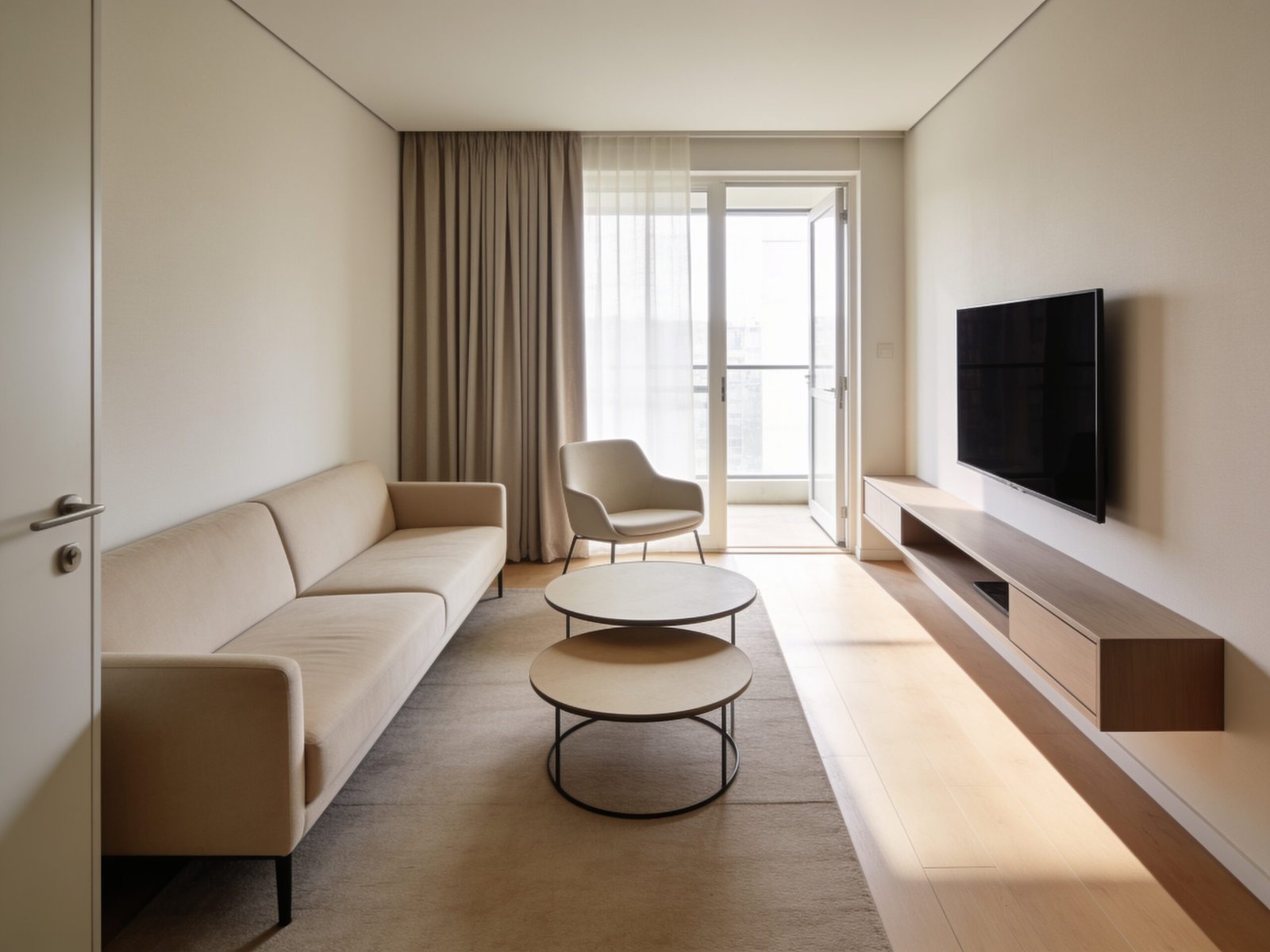
For a Long, Narrow Living Room
Place the sofa along one long wall. Meanwhile, keep the furniture opposite it relatively shallow.
Good choices include:
- wall-mounted TV
- floating media unit
- narrow console
- slim bench
- shallow bookcase
In addition, avoid putting a bulky coffee table directly in the main walking path.
For a Small Square Living Room
A single central conversation zone often works best.
For example, a sofa, one lightweight chair, and one round table may provide everything you need without overcrowding the room.
For a Studio Apartment
Use furniture to define the living zone rather than building visual walls everywhere.
For instance, the back of a sofa or an open shelving unit can subtly separate living and sleeping areas. As a result, the space feels organized without becoming boxed in.
4. Give Every Piece of Furniture More Than One Job
A tiny living room cannot afford much single-purpose furniture.
However, that does not mean everything needs to transform like a piece of futuristic machinery.
Simple multifunctional pieces often work better.
Consider:
- storage ottomans
- nesting side tables
- lift-top coffee tables
- sofa beds
- benches with hidden storage
- stools that double as tables
- consoles that double as desks
- modular seating
IKEA also recommends flexible and multipurpose furniture for small living spaces because the same area can support several activities.
For example, a storage ottoman can hold blankets, provide extra seating, and work as a coffee table when paired with a tray.
If your living room doubles as an office or guest room, see our multi-functional furniture ideas for studio apartments and our guide to foldable furniture for small spaces.
5. Consider Skipping the Traditional Coffee Table
A coffee table is not mandatory.
In extremely tight living rooms, it can occupy the most valuable piece of floor in the entire room. Instead, consider something more flexible.
Good alternatives include:
- two nesting tables
- a C-shaped sofa table
- a storage ottoman
- a small round pedestal table
- movable stools
- a tray on a pouf
Because these pieces are easy to move, you can quickly create more floor space when needed.
Rounded furniture is especially useful where circulation is tight. In addition, curved edges make moving around the room more comfortable.
6. Use One Large Rug to Make the Room Feel More Finished
People often assume a tiny living room needs a tiny rug.
However, the result can look like a small island floating in the middle of the floor.
Instead, choose a rug large enough to visually connect the main seating area.
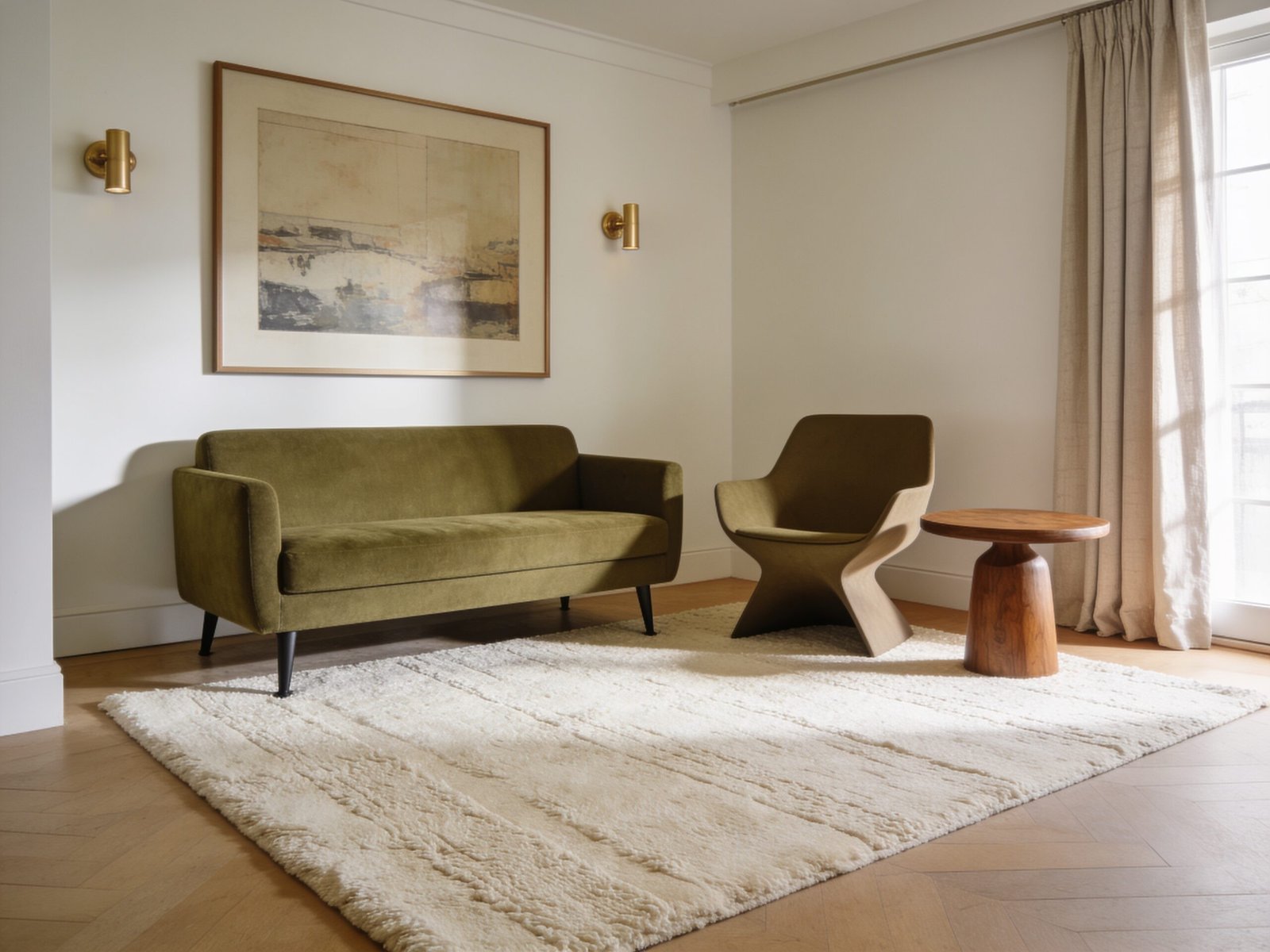
Ideally, at least the front legs of the sofa and nearby chairs should sit on or relate to the rug. As a result, the furniture reads as one intentional group.
A larger rug also creates a unified seating zone. By contrast, several tiny floor coverings can visually divide an already small room into even smaller sections.
If other elements in the room are already bold, keep the rug pattern relatively calm.
7. Take Storage Up the Wall
Floor space may be limited. However, most tiny living rooms contain large areas of unused wall space.
Therefore, use vertical storage rather than adding more cabinets across the floor.
Good options include:
- tall bookcases
- floating shelves
- wall cabinets
- picture ledges
- storage around the TV
- shelving above a desk
- slim corner shelving
The key is concentration.
For example, one organized storage wall generally looks calmer than five small storage pieces scattered across the room.
Use closed storage for chargers, paperwork, games, remotes, and other everyday clutter. Meanwhile, open shelves work better for books, plants, pottery, and decor worth displaying.
Renting? Our no-drill shelving ideas offer alternatives for spaces where major wall alterations are not practical.
8. Do Not Be Afraid of Color
White is useful, but it is not the only acceptable color for a tiny living room.
Deep green, muted blue, earthy terracotta, soft mushroom, and warm taupe can all work beautifully.
Architectural Digest features small spaces that successfully use both light palettes and stronger colors, including color-drenched rooms and bold accent treatments.
However, continuity matters more than simply choosing light or dark colors.
Too many unrelated color changes can visually chop up a small room.
One simple approach is:
60 percent: main wall or neutral color
30 percent: secondary furniture and textile color
10 percent: stronger accent color
As a result, the room gains personality without making every object compete for attention.
9. Make the Windows Look Taller
Window treatments can change the perceived proportions of a room.
Instead of hanging curtain rods directly above the window frame, position them higher when possible.
Long curtains draw the eye upward and emphasize ceiling height. In addition, curtains that reach the floor tend to look more polished than shorter panels.
Light-filtering linen or linen-look curtains are particularly useful if you want privacy while still allowing daylight into a small apartment.
Whenever possible, avoid covering valuable daylight with bulky furniture.
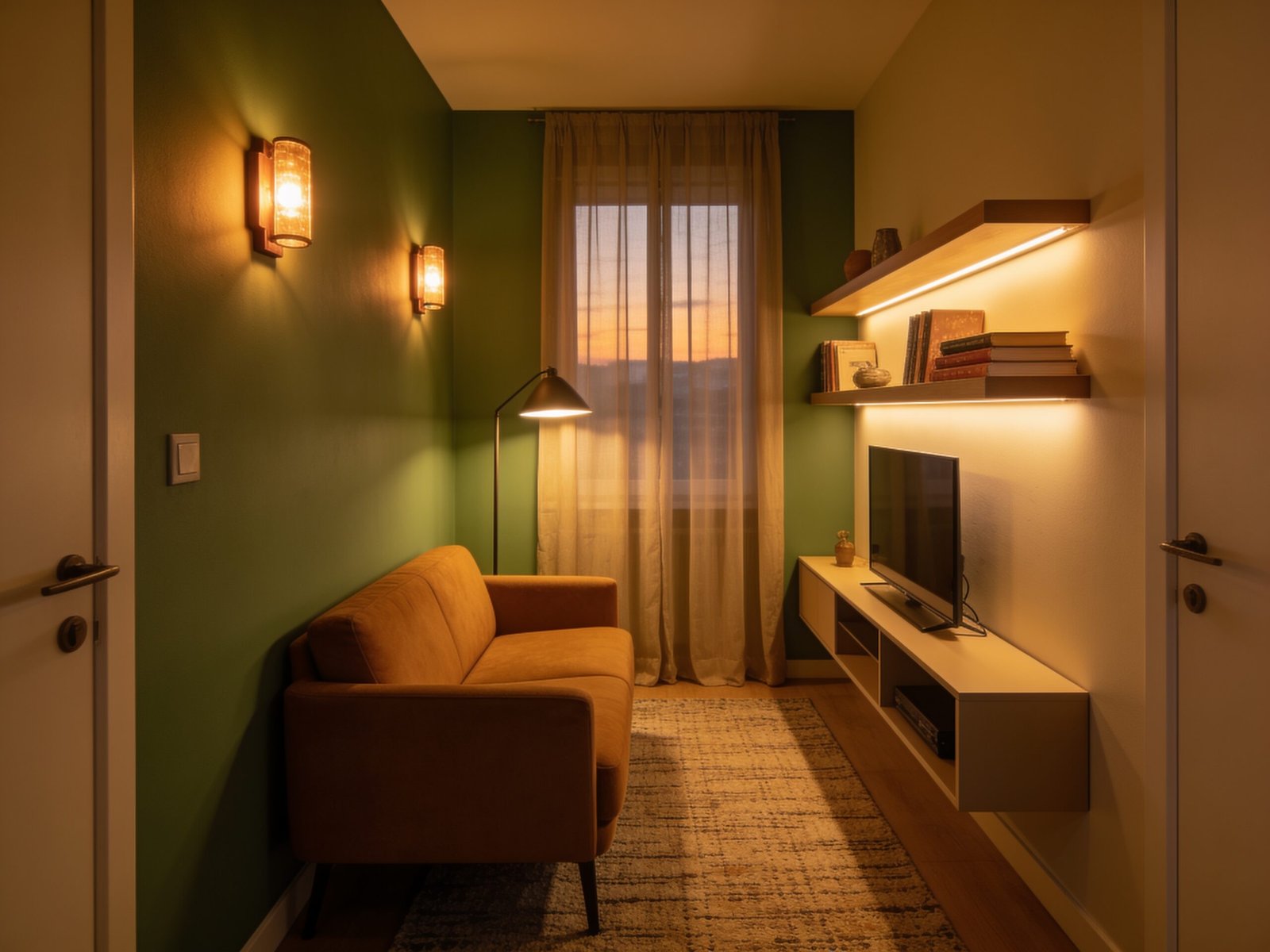
10. Use Three Types of Lighting
One ceiling fixture rarely makes a tiny living room feel inviting.
Instead, a better lighting plan combines several levels.
Use:
- Ambient lighting, for general room light.
- Task lighting, such as a reading lamp or adjustable wall light.
- Accent lighting, such as a small lamp or shelf light that creates atmosphere.
Wall sconces are particularly useful because they add light without requiring another side table.
In addition, layered lighting allows you to change the mood throughout the day. Bright general light may be useful in the morning, while smaller lamps make the room feel softer in the evening.
Warm, intentionally layered lighting can make compact rooms feel cozy rather than cramped.
11. Add Texture Instead of More Stuff
Style does not require dozens of accessories.
In a tiny room, texture often adds more visual richness than additional objects.
For example, mix materials such as:
- linen
- wool
- velvet
- natural wood
- woven baskets
- ceramics
- glass
- brushed metal
A cream room with linen curtains, a wool rug, oak furniture, and one velvet pillow can feel layered even when the color palette is simple.
Therefore, texture is one of the easiest ways to create a cozy small living room without adding clutter.
12. Go Bigger With Art
Another common tiny-space mistake is covering the walls with lots of very small decor.
Instead, one large artwork can often look cleaner.
A substantial piece above the sofa gives the eye a clear focal point. At the same time, it adds personality without taking up a single inch of floor space.
Architectural Digest designers similarly recommend larger artwork and statement pieces as a way to add character to compact rooms.
If you prefer a gallery wall, keep spacing and frame colors consistent. This way, the arrangement reads as one composition rather than many unrelated pieces.
13. Use Mirrors Strategically
Mirrors work best when they reflect something attractive.
Good locations include:
- opposite a window
- beside a window
- above a console
- behind a lamp
- opposite an attractive artwork or view
However, avoid placing a mirror where its main reflection is a cluttered shelf, television, or doorway.
The goal is not simply to add a mirror. Instead, use it to extend natural light and create another visual layer.
14. Hide the Everyday Visual Noise
One of the easiest ways to make a tiny living room look more polished is to hide the boring stuff.
For example:
- charging cables
- routers
- remote controls
- paperwork
- game controllers
- spare blankets
- extension cords
A beautiful room can still look chaotic when too many practical objects are visible.
Therefore, use baskets, cable channels, furniture with doors, boxes, and hidden compartments whenever possible.
You do not need an empty room. Rather, the goal is to make the items left on display feel intentional.
15. Leave Some Space Empty
This may be one of the most overlooked tiny living room ideas.
You do not need to fill every corner.
For example, an empty section of wall, a clear patch of floor, or a shelf that is only half styled gives the eye somewhere to rest.
Negative space is also part of the design.
When every wall, table, shelf, and corner contains something, even expensive decor can start to feel like clutter. Therefore, resist the urge to decorate every available surface.
Tiny Living Room Mistakes to Avoid
Before calling your room finished, check for these common problems:
- too many small furniture pieces
- furniture blocking the main walkway
- undersized rugs
- heavy furniture covering windows
- relying on one ceiling light
- too many open shelves
- buying storage without decluttering first
- placing everything against the walls automatically
- decorating every empty surface
- using furniture that only performs one minor function
Sometimes removing one unnecessary piece improves a tiny living room more than buying three new ones.
Frequently Asked Questions
How do I make a tiny living room look bigger?
Keep important sightlines open and choose fewer furniture pieces. In addition, use vertical storage, allow some visible floor beneath furniture, hang curtains higher, introduce multiple light sources, and reduce visual clutter.
Should a tiny living room have a sectional?
Yes, it can. In fact, a compact sectional may work better than a sofa plus several chairs because it provides substantial seating in one continuous piece.
However, measure carefully before buying. Most importantly, make sure the sectional does not block entrances or natural walking paths.
What colors make a small living room look bigger?
Warm whites, soft beige, greige, pale taupe, and muted natural colors can create an airy look.
However, darker colors can also work beautifully when used consistently. Therefore, a tiny room does not have to be white to feel stylish.
How much furniture should be in a small living room?
There is no ideal number.
Instead, start with the room’s main function and add only the pieces needed to support it. For many tiny living rooms, a sofa, movable table, useful storage piece, and one additional seat may be enough.
How can I make a tiny living room cozy without making it cluttered?
Focus on texture and lighting rather than adding lots of accessories.
For instance, a textured rug, curtains, a throw, two or three pillows, warm lamps, and a few meaningful decorative pieces can make a small room feel cozy without overwhelming it.
Final Thoughts
The best tiny living room ideas are not about disguising the fact that your room is small.
Instead, they are about making every part of the space feel intentional.
Choose one strong furniture anchor and keep movement easy. In addition, use walls for storage, layer your lighting, and select a rug that connects the furniture.
Then add personality through color, art, and texture rather than filling every available surface.
Most importantly, do not sacrifice the things you genuinely enjoy simply because the room is small.
A tiny living room can still be colorful, comfortable, dramatic, cozy, sophisticated, or completely unique.
Ultimately, it simply needs every square foot to have a purpose.
Next Step
Ready to keep improving your compact home?
Explore our Small Space Decorating ideas for more practical layouts, storage solutions, furniture ideas, and affordable ways to make a small home feel beautifully finished.
1 thought on “Tiny Living Room Ideas That Don’t Compromise on Style”