
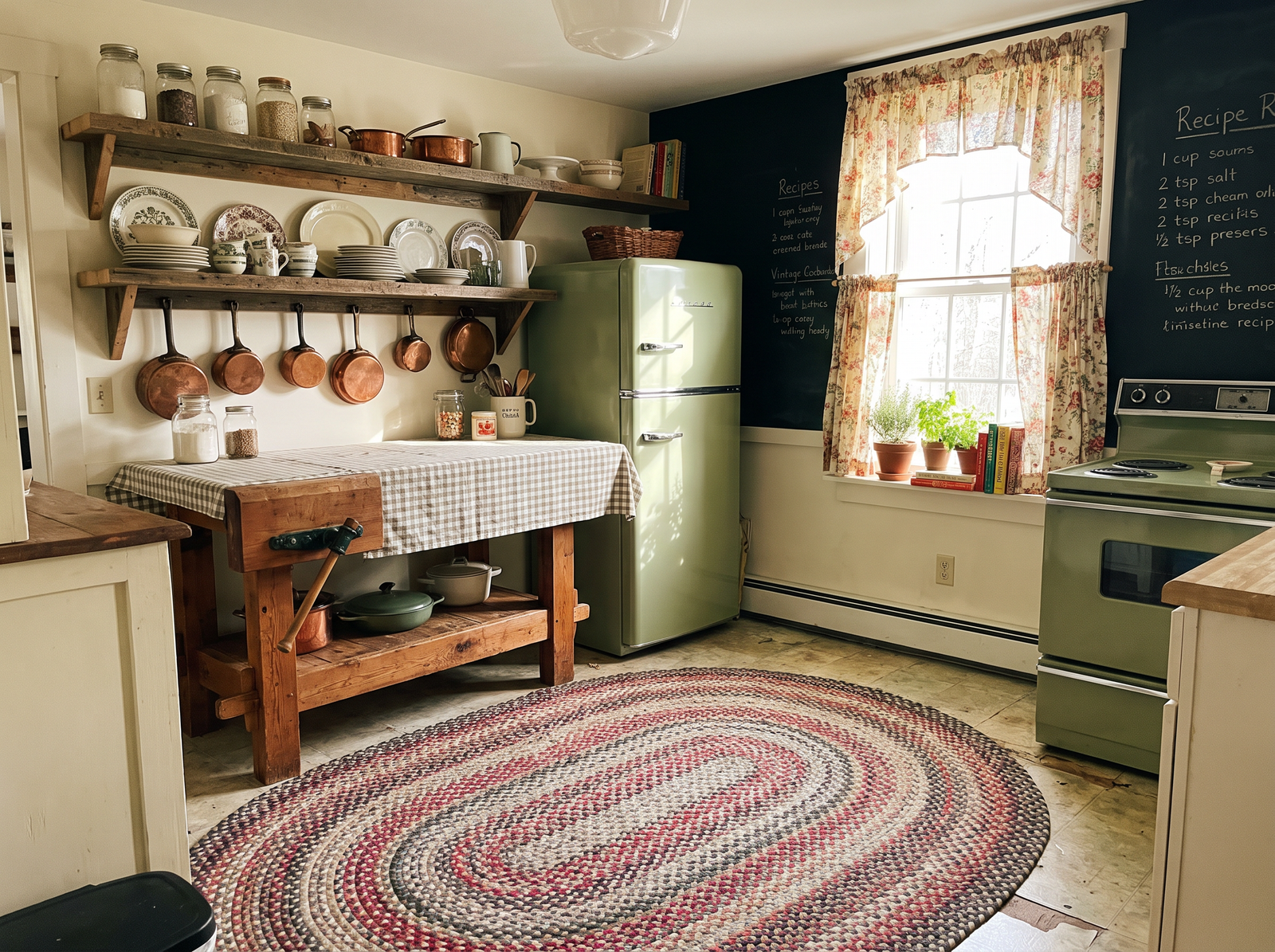
A cozy vintage kitchen does not need antique cabinets, an expensive range, or a century-old farmhouse.
In fact, some of the most convincing vintage kitchens are created by mixing an ordinary modern kitchen with a few carefully chosen older-looking details. Warm paint, secondhand wood, floral fabric, glass jars, aged metal, traditional lighting, and mismatched dishes can change the mood of a room without changing the entire kitchen.
That collected look is especially relevant now. Recent design coverage has highlighted a return to patina, traditional lamps, copper, vintage storage, glass-front cabinetry, warm colors, and interiors that look less perfect and more personal.
The key is not filling every surface with old objects. A good vintage kitchen feels as though it developed naturally over time.
Here are practical ways to get the look without turning your decorating project into a major renovation.
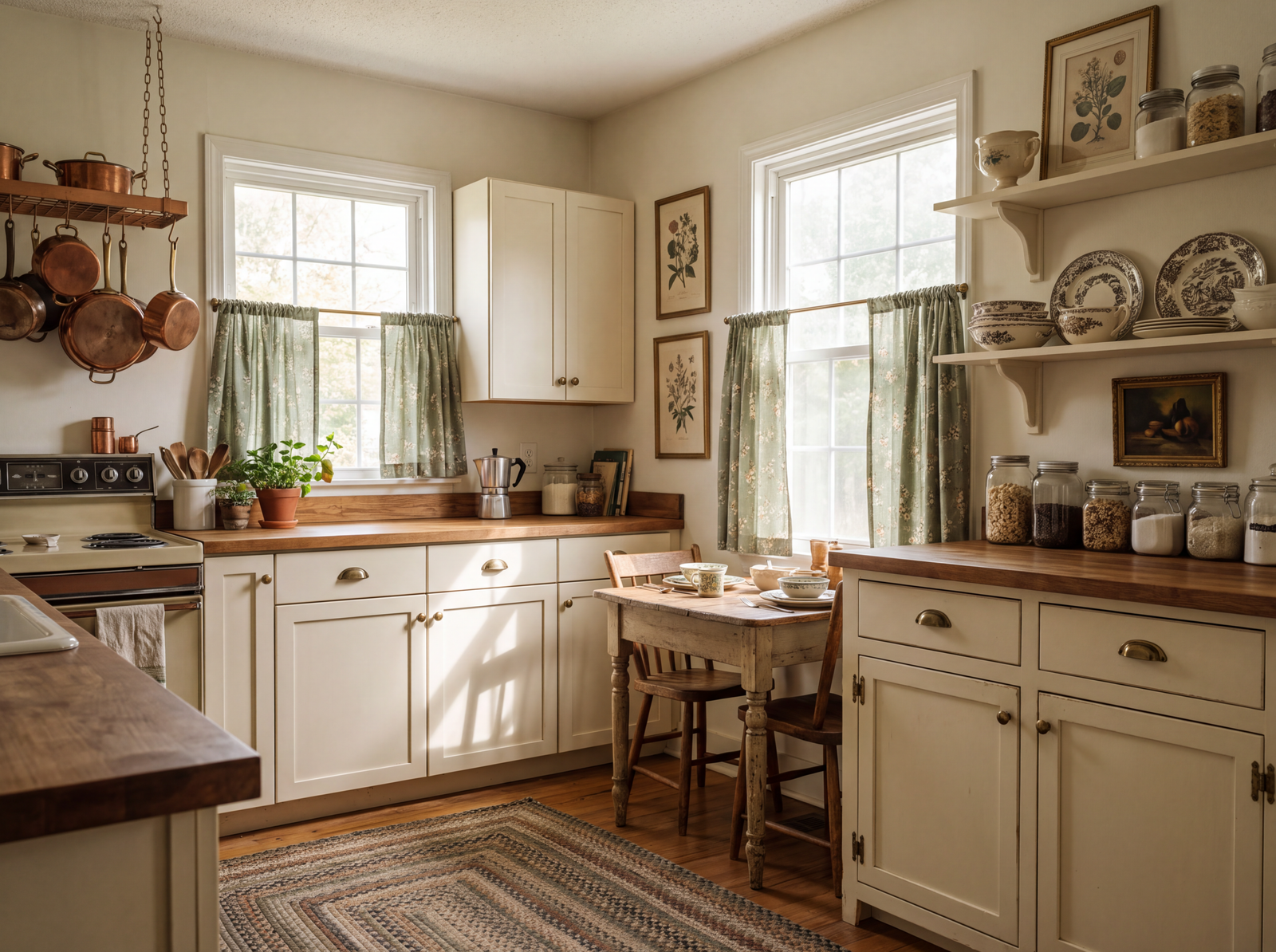
1. Start With a Warm Vintage Kitchen Color Palette
Color gives you one of the biggest transformations for the least structural work.
Instead of bright white, try shades that feel softer and slightly aged:
- Warm cream
- Butter yellow
- Muted sage
- Dusty blue
- Soft mushroom
- Faded terracotta
- Warm beige
You do not need to repaint the entire kitchen. Painting only the lower cabinets, an island, a pantry door, or even the back of a glass-front cabinet can introduce enough color to change the room.
Warm whites and muted greens work particularly well because they pair naturally with wood, brass, copper, pottery, and patterned textiles.
If your cabinets are structurally sound but the finish feels too modern, see this guide to painting kitchen cabinets without sanding before replacing them.
Keep the Palette Slightly Imperfect
Avoid matching every color exactly. Vintage rooms rarely look as though everything was purchased from one collection.
For example, combine cream cabinets, slightly darker ivory walls, medium wood, faded green fabric, and brass hardware. Small variations create depth.
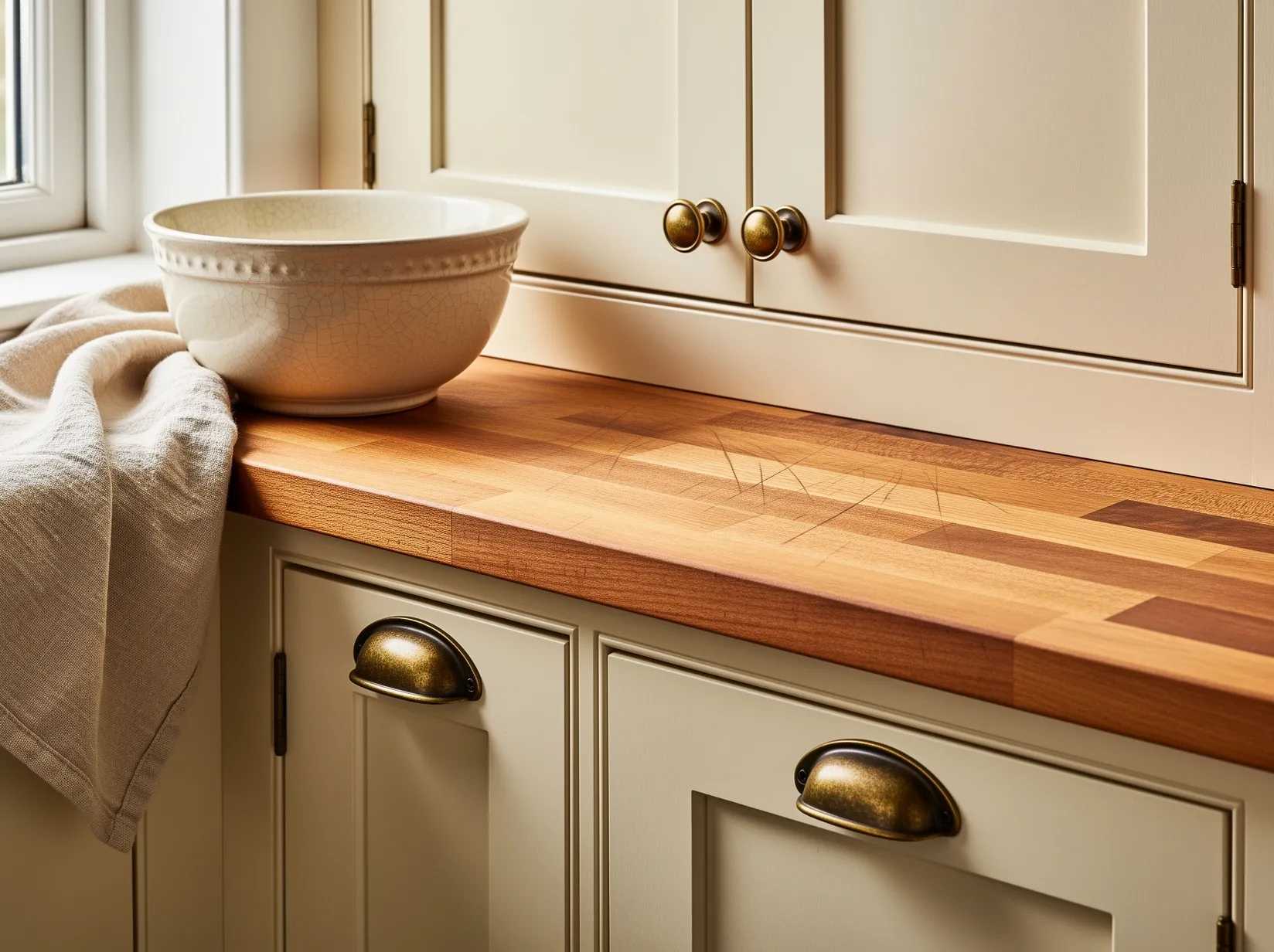
2. Replace Modern Hardware With Vintage-Inspired Details
Cabinet hardware is one of the easiest budget vintage kitchen upgrades.
Look for:
- Aged brass knobs
- Antique bronze cup pulls
- Porcelain knobs
- Simple black iron handles
- Unlacquered brass finishes
You can often keep the existing cabinets and change only the hardware.
The same idea works with switch plates, hooks, towel bars, shelf brackets, and curtain rods. Repeating one aged metal finish around the kitchen helps separate intentional vintage style from random thrift-store clutter.
3. Add Open Shelves Without Remodeling the Kitchen
A couple of shelves can create more vintage character than a wall full of new cabinets.
Use wood shelves for everyday items such as:
- White or floral plates
- Vintage-style mugs
- Glass jars
- Small framed artwork
- Cookbooks
- Mixing bowls
- Wooden boards
The trick is leaving some empty space. If every inch is packed, the kitchen can quickly feel messy rather than collected.
Renters can also explore no-drill shelving solutions for less permanent ways to add vertical storage.
Open shelving is not the only option. Glass-front cabinets are also enjoying renewed attention because they provide the display quality of shelving while keeping dishes more protected from kitchen dust and grease.
4. Shop Your Kitchen Before Shopping the Store
One of the cheapest vintage kitchen decor ideas costs nothing.
Look through cabinets and cupboards for attractive items that are currently hidden:
- Wooden cutting boards
- Mixing bowls
- Old cookbooks
- Ceramic pitchers
- Glass bottles
- Cake stands
- Serving trays
- Baskets
Move a few of them into view.
A cutting board leaning against the backsplash, three bowls stacked on an open shelf, and an old cookbook on a stand can give a kitchen more personality without adding unnecessary decor.
This is also useful in small kitchens, where every visible item should ideally have a purpose. For more space-saving ideas, see these small kitchen organization ideas.
5. Use Thrifted Pieces as Furniture
You do not need traditional fitted cabinetry everywhere.
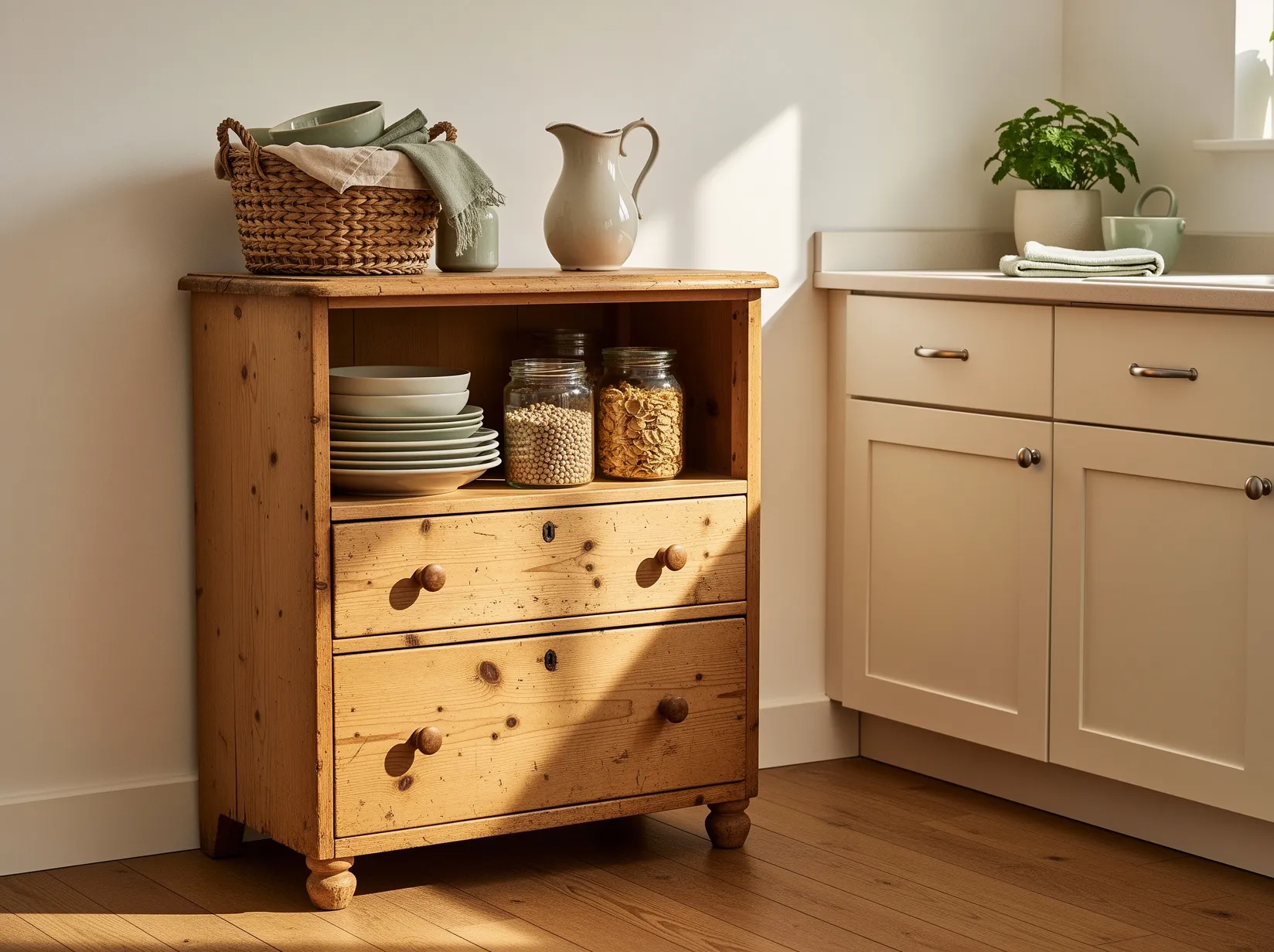
An old dresser, small hutch, freestanding cupboard, butcher-block cart, or narrow side table can become extra kitchen storage.
This approach has historical roots, since older kitchens commonly relied more heavily on freestanding furniture. It is also a great way to add age and texture to a kitchen filled with newer cabinets.
Contemporary designers use the same idea to create what Architectural Digest has described as a more collected look, mixing new cabinetry with vintage or furniture-like pieces rather than making every section identical.
What to Look For Secondhand
Prioritize:
- Solid construction
- Useful storage
- A size that works in your room
- Interesting wood grain
- Simple shapes
Minor scratches can actually help. A vintage kitchen usually looks better when every piece is not perfectly pristine.
6. Add Cafe Curtains for Instant Cottage Charm
Full-length curtains can overwhelm a kitchen window. Cafe curtains cover only the lower section, keeping privacy while allowing daylight into the room.
They also add softness to kitchens dominated by hard surfaces.
Good fabrics include:
- Small florals
- Gingham
- Linen
- Ticking stripe
- Simple checks
You can even make cafe curtains from thrifted fabric, old cotton tablecloths, or unused curtain panels.
Use a simple brass, black, or wood-toned rod and avoid overly complicated window treatments.
7. Display Vintage Dishes Instead of Buying More Decor
Plates, bowls, cups, and pitchers can be both useful and decorative.
Try combining two or three related colors instead of buying a perfectly matching set. Blue-and-white dishes, cream pottery, brown stoneware, floral plates, or milk glass all work well in cozy vintage kitchens.
Place them in a glass-front cabinet, open hutch, plate rack, or shelf.
This is where restraint matters. Architectural Digest designers often recommend mixing old and new rather than trying to turn every object into an antique. That balance keeps traditional interiors feeling fresh.
8. Bring Back Glass Jars and Old-Fashioned Pantry Storage
Glass containers are especially effective because they combine storage and decoration.
Use them for foods you regularly buy in bulk, such as flour, sugar, oats, pasta, rice, or baking ingredients.
You can also use smaller jars for wooden spoons, flowers, or utensils. These mason jar decor ideas include several ways to style jars without making the kitchen look overly themed.
Stick with a small number of container styles. Twelve different jar shapes can look chaotic, while several similar jars create a calmer pantry display.
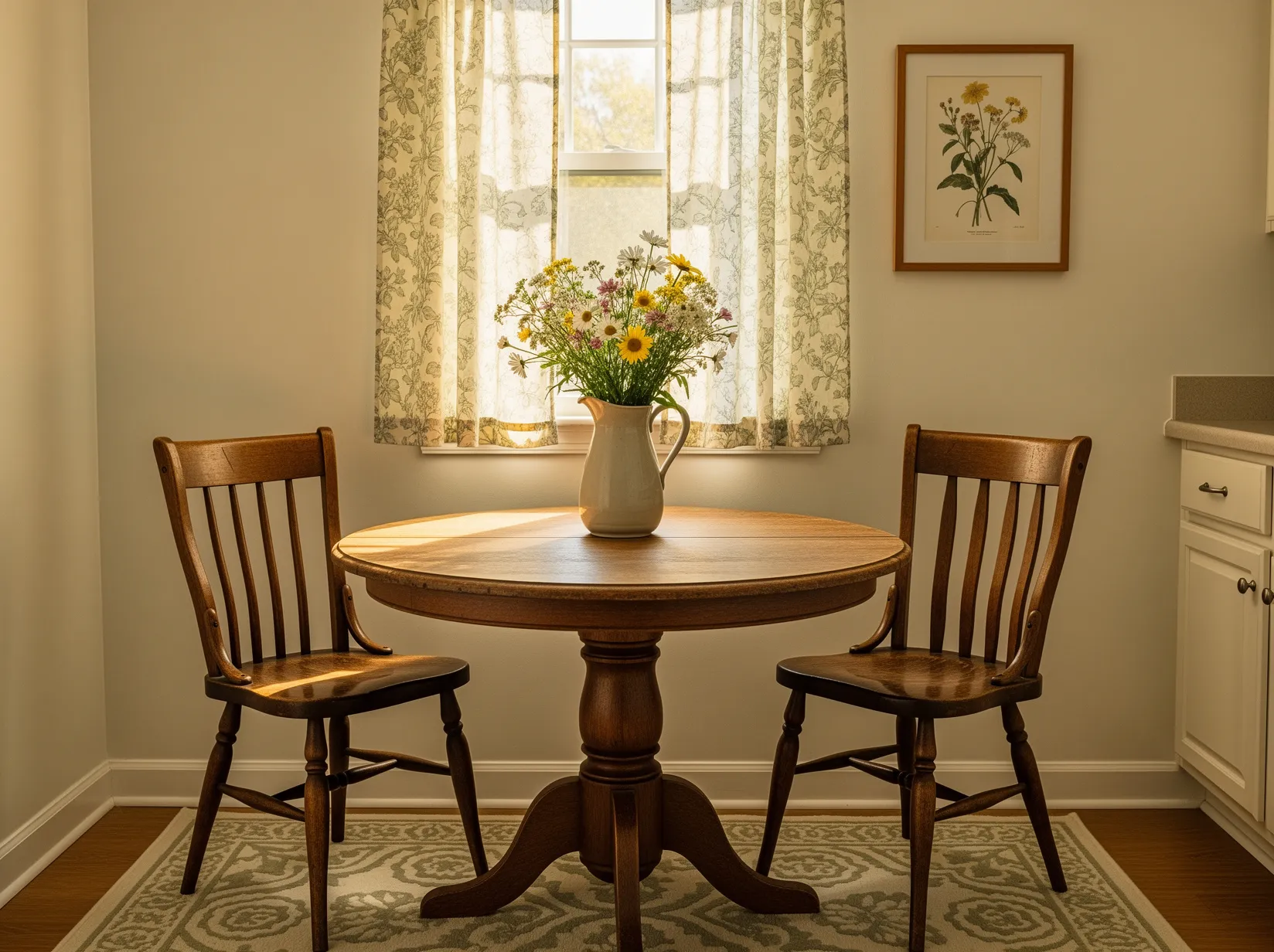
9. Create a Vintage Breakfast Nook
If you have an empty kitchen corner, turn it into a small breakfast spot.
You might use:
- A thrifted round table
- Two mismatched wooden chairs
- A small washable rug
- A vase or ceramic pitcher
- Framed botanical art
- Cafe curtains
- A pendant or wall light
Do not worry about matching the chairs perfectly. Paint them the same color if you want more consistency, or leave different wood finishes visible for a collected cottage look.
10. Use Vintage Artwork in Unexpected Places
Kitchen walls are often forgotten.
Small artwork can make the space feel much more personal.
Look for:
- Botanical prints
- Fruit paintings
- Old recipe illustrations
- Landscape art
- Food advertising reproductions
- Floral paintings
- Vintage-style typography
Thrift stores are especially useful for frames. Even when you dislike the existing picture, an older wood or brass frame can be reused.
If you enjoy DIY projects, you can also make your own rustic wooden signs rather than buying mass-produced vintage-style wall decor.
11. Add Warm Lighting Instead of Relying on One Ceiling Light
A cozy kitchen needs more than functional overhead lighting.
Try layering the room with:
- A small table lamp on a safe, dry section of counter
- Under-cabinet lighting
- A pendant above the table
- A wall sconce
- A vintage-inspired ceiling fixture
Traditional lamps have recently appeared again in vintage and country-inspired kitchen design, partly because they make kitchens feel more like comfortable living spaces.
Lighting can also be one of the easiest features to change later, making it a sensible place to experiment with stronger vintage character.
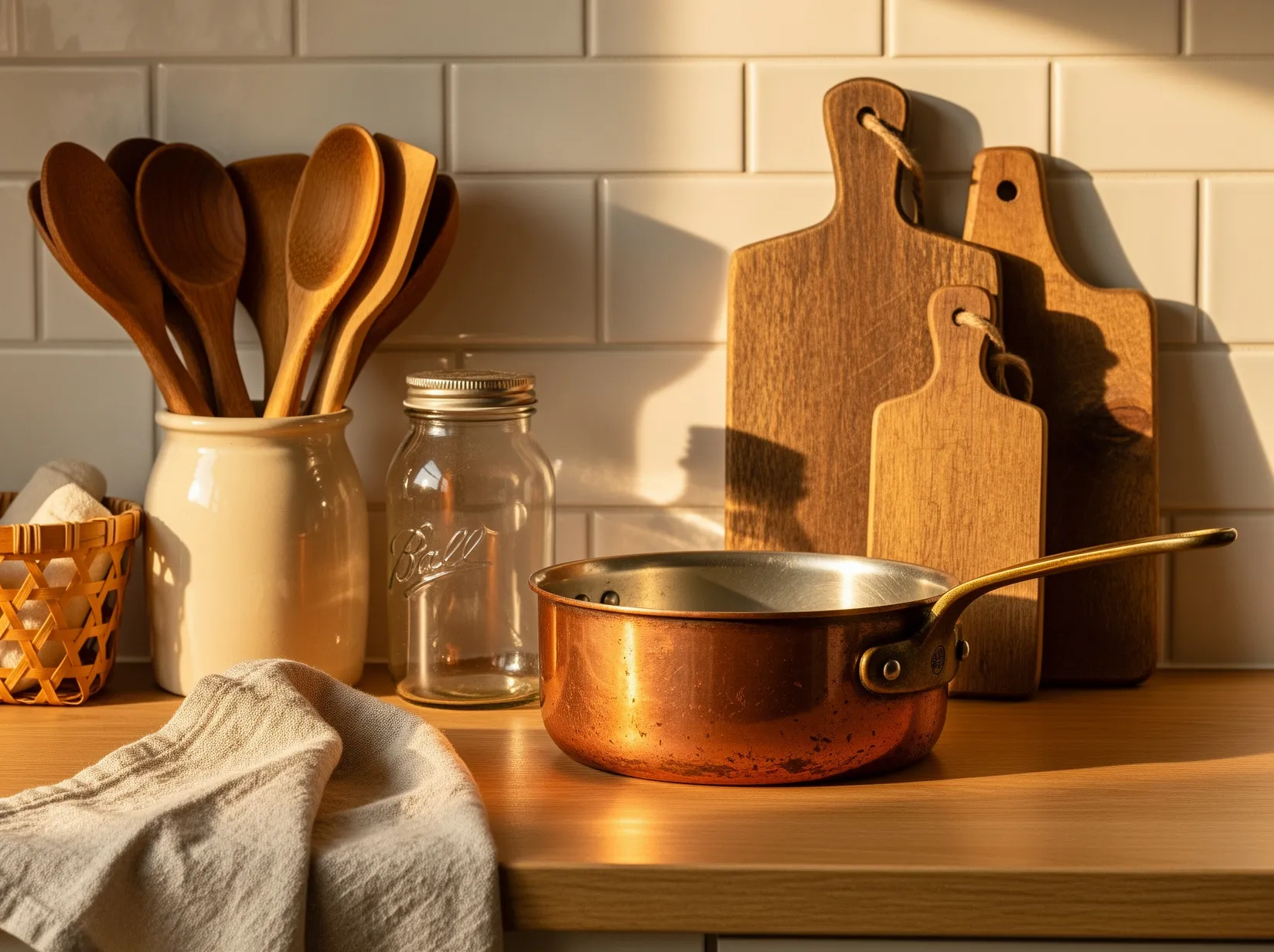
12. Bring in Copper, Wood, Linen, and Woven Texture
Texture stops a vintage kitchen from looking flat.
Instead of adding another decorative sign, try adding another material.
Combine:
- Wooden cutting boards
- Copper pans
- Linen towels
- Woven baskets
- Ceramic crocks
- A washable runner
- Rattan or cane
- A wooden fruit bowl
Copper is especially effective in a warm kitchen because its color works beautifully with cream, green, wood, and aged brass. It has also returned strongly in recent vintage-inspired kitchen styling.
A Simple Vintage Kitchen Formula That Prevents Clutter
One common mistake is adding too many decorative objects.
Instead, use this simple formula:
1 vintage furniture piece + 1 warm metal + 1 wood tone + 1 soft pattern + 3 to 5 useful vintage-style accessories
For example:
- Pine hutch
- Aged brass hardware
- Medium oak cutting boards
- Small floral cafe curtains
- Ceramic pitcher, glass jars, framed print, vintage bowl
That is usually enough to establish the style.
You can always add more later.
What Should You Buy Vintage, and What Should You Buy New?
Not everything in a vintage kitchen needs to actually be old.
Good things to buy vintage:
- Artwork
- Frames
- Baskets
- Tables
- Chairs
- Decorative bowls
- Shelves
- Hutch cabinets
- Non-food storage pieces
Often better purchased new or vintage-inspired:
- Electrical appliances
- Frequently used food-contact containers
- Cookware with unknown materials
- Damaged painted pieces used around children or food
- Lighting with questionable wiring
There is an important safety reason for this distinction. EPA guidance notes that older painted furniture can contain lead, and disturbing lead-based paint during refinishing can create hazardous dust. The agency recommends lead-safe practices when working with potentially affected older materials.
Be particularly cautious about using unknown antique pottery or cookware for food. USDA notes that the FDA oversees safety issues involving cookware materials, and EPA guidance also warns that some older lead-glazed pottery can contaminate stored food or liquids.
In other words, an old crock can be beautiful holding wooden spoons even when you would not trust it for soup.
Budget Vintage Kitchen Makeover: Where to Spend First
If your budget is limited, make changes in this order:
- Declutter and restyle what you already own.
- Change cabinet hardware.
- Add fabric, especially cafe curtains and tea towels.
- Thrift artwork, baskets, dishes, and wood pieces.
- Paint cabinets or a small focal area.
- Add shelves or a freestanding storage piece.
- Upgrade lighting when the budget allows.
This order works because the early changes create visual impact without requiring structural work.
Before buying anything, browse more budget-friendly decorating ideas and decide which existing pieces in your kitchen can be reused.
Final Thoughts
The best cozy vintage kitchen ideas are not about making a brand-new kitchen look like a movie set from another decade.
They are about adding warmth, usefulness, age, and personality.
Start with one area. Change the hardware. Hang cafe curtains. Put your wooden boards on display. Bring home an old framed print. Find a secondhand table that looks better with a few scratches.
Then stop and live with it for a while.
A convincing vintage kitchen should feel collected rather than decorated all at once, which is also why this style works so well on a budget. The imperfections, mismatched pieces, old wood, and personal finds are part of what makes the room feel comfortable.
Next Step
Choose three ideas from this guide and use them to create your first kitchen mood board. Save the colors, furniture, hardware, textiles, and vintage pieces you want to look for before you start shopping.
That simple plan makes it much easier to spot useful thrift-store finds instead of buying random decor that never quite works together.