

A beautiful japandi living room should feel calm the moment you walk in. But calm does not mean an empty room where nobody wants to sit. The most welcoming spaces have soft light, warm wood, comfortable seats, and enough breathing room to move around without bumping into furniture.
Japandi combines the simplicity associated with Japanese interiors and the welcoming, practical spirit of Scandinavian design. It favors useful objects, natural materials, thoughtful proportions, and pieces that feel good to live with. If you love the look but worry that low sofas and minimalist rooms might be uncomfortable, there is a happy middle ground.
Here is how to create a living room with that quiet Japandi character while keeping movie nights, afternoon naps, and visits from friends in mind.
Start with Warm Wood, Not an Empty White Room
Wood sets the mood before you add anything decorative. Pale oak and ash create a light, airy atmosphere, while walnut brings depth and warmth. You do not need matching furniture from one collection. A lighter coffee table can sit beside a medium-tone sideboard if their undertones feel related.
Pick one wood tone to repeat in larger pieces, then let a second finish appear in small accents. For example, pair a warm oak media cabinet with a rounded oak coffee table and a darker wooden frame. Avoid filling the room with wood slats on every wall. One textured feature is usually enough.
If you are choosing new furniture, consider the grain, finish, and quality of construction rather than shopping only by color. A beautiful table that wobbles will never feel serene. A durable, easily maintained piece is far more valuable than an impressive photo.
Choose a Sofa for the People Who Actually Use It
Many Japandi inspiration photos feature very low, sculptural couches. They look elegant, but they are not automatically the right choice for everyday life. Sit on a sofa before committing when possible. Can you stand up without pushing hard on the arms? Does the seat depth support your back, or do you need extra cushions just to sit upright?
A clean-lined sofa in oatmeal, stone, or warm cream fits the look beautifully. Choose upholstery that suits your household, including washable or durable fabrics if you have children or pets. Supportive cushions, a practical seat height, and a comfortable backrest matter more than getting the lowest silhouette.
For extra seating, consider an oak-framed lounge chair with padded arms rather than a purely decorative stool. The goal is a peaceful room where everyone can relax.
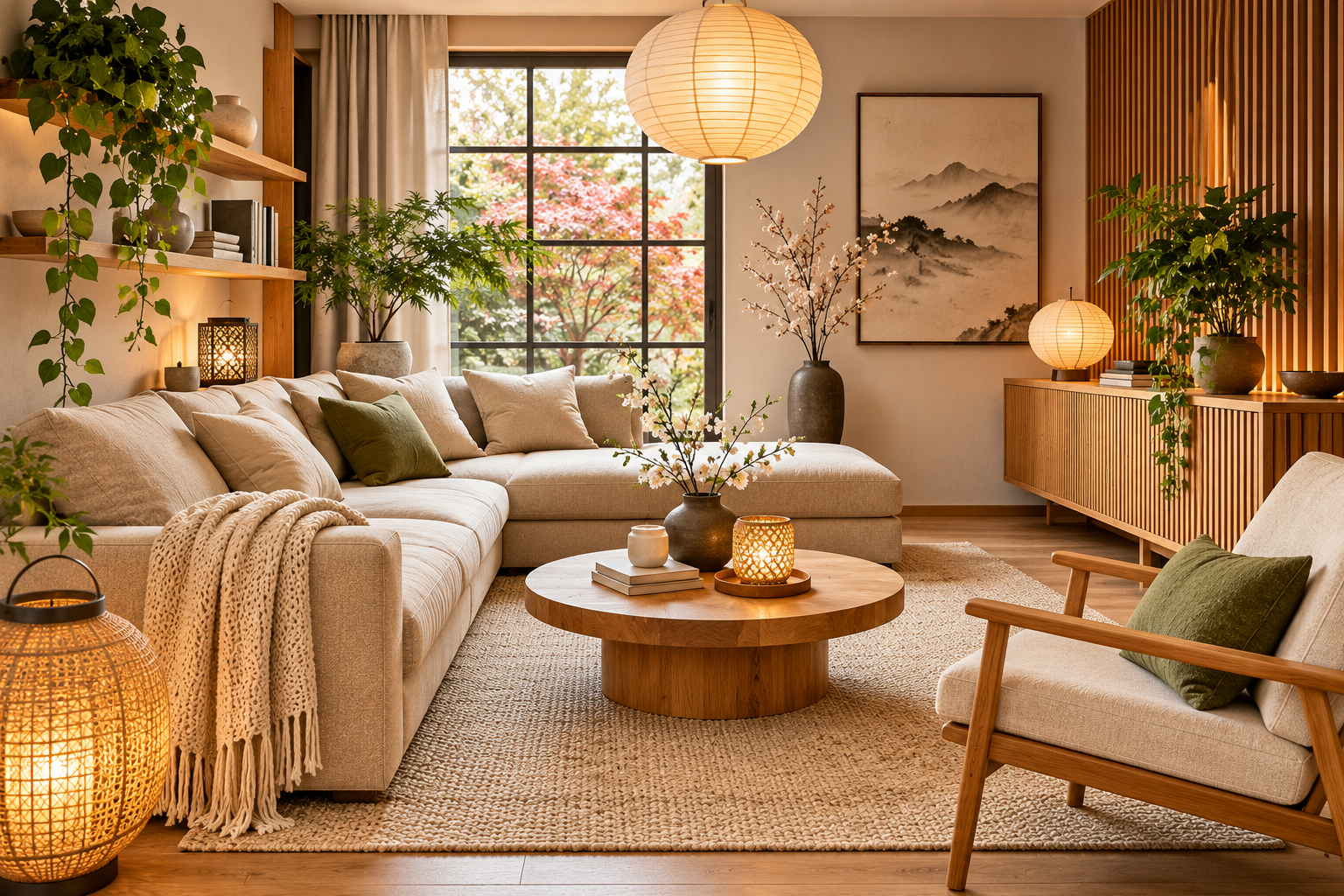
Arrange the Seating Around Conversation and Movement
Before styling a table or hanging artwork, think about how people use the room. Place the sofa where it works for the main activity, whether that is talking, reading, or watching TV. Angle a second chair toward the sofa so guests are not sitting in a straight row. A rug can visually connect the seats.
As a starting point, interior designers often recommend roughly 14 to 18 inches between a sofa and coffee table, enough to reach a drink while leaving space for knees. Main walking routes commonly benefit from about 30 to 36 inches of clearance where the floor plan allows. These are planning guides, not rigid rules; test the distances in your own room. See the living room spacing guide from Homes & Gardens for more detail.
Round or oval coffee tables can soften a square room and avoid sharp corners near seating. Keep the table close enough to be useful, but not so close that it blocks anyone from getting up.
Low Furniture Looks Lovely, but Comfort Comes First
Japandi often includes low tables, floor cushions, and relaxed seating arrangements. These can be lovely for tea or a quiet reading corner, yet they are not ideal for everyone. If sitting on the floor feels awkward, do not force it. A standard-height chair in a simple wood frame delivers the same understated mood.
A firm pouf can provide occasional extra seating or a place to rest your feet. Choose one that is stable and easy to move. In a small room, that flexibility can be more useful than a second bulky armchair.
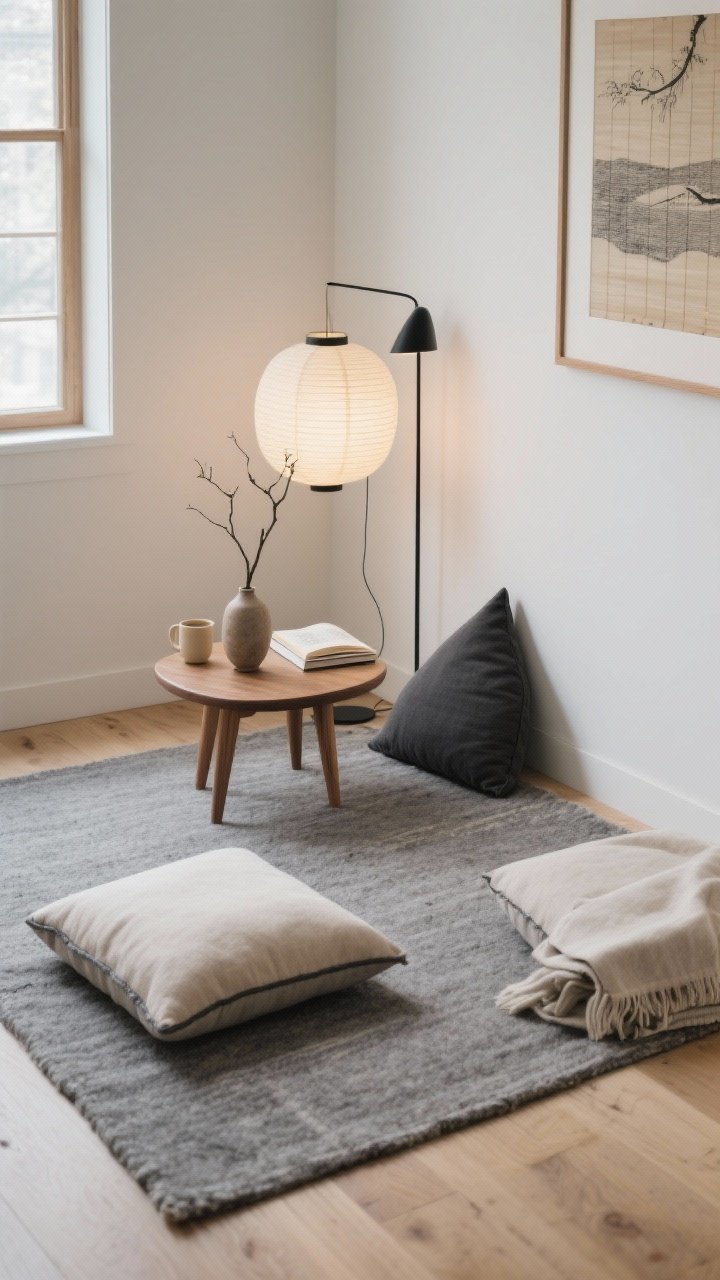
Use Texture to Keep Minimalism from Feeling Cold
A neutral color palette needs texture to feel inviting. Combine linen-like upholstery, a wool or cotton rug, a soft throw, and a few handmade-looking ceramics. Cream, oatmeal, mushroom, greige, and gentle olive tones sit comfortably alongside warm wood.
Keep patterns subtle. A woven rug or pillow with a quiet stripe can bring interest without making the room busy. Contrast matters, too. A matte black lamp or dark ceramic bowl can sharpen a light palette, while a leafy branch adds movement.
Japandi does not require expensive specialty pieces. One well-chosen secondhand cabinet and a lovely neutral blanket can contribute more than a set of matching novelty decorations.
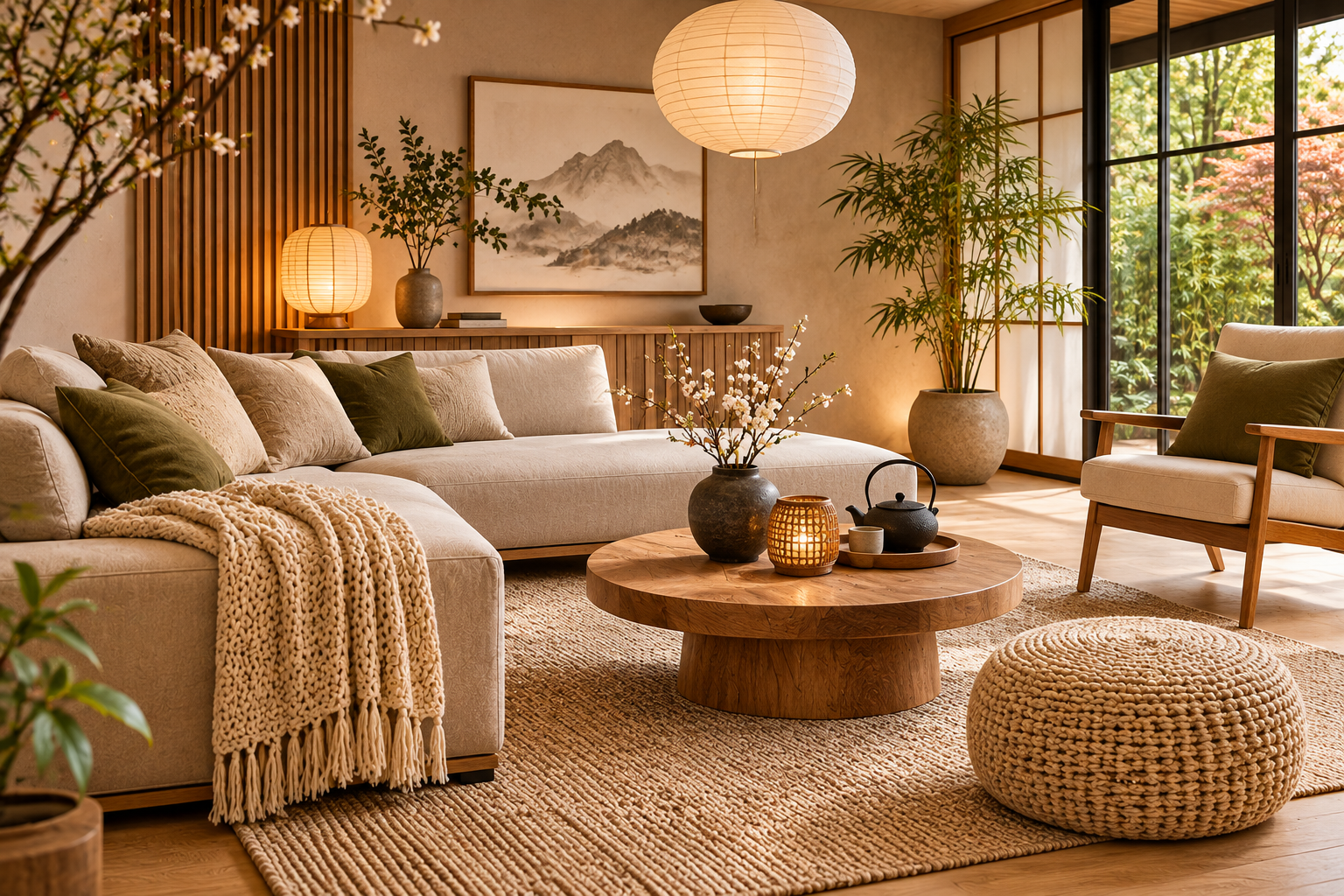
Make Storage Quiet but Easy to Reach
Real living rooms contain remote controls, charging cables, games, and books. The trick is to give them convenient homes. A low sideboard with closed drawers keeps visual clutter down, while one open shelf can display a favorite vase or book.
Consider where you reach for everyday items. If the remote lives beside the sofa, give it a drawer or shallow tray nearby. If children play in the room, use baskets or low cabinets they can access. Minimalism is easier to maintain when storage supports your habits instead of fighting them.
Our small-space furniture guide offers more ways to combine practical storage with a clean appearance.
Layer the Light for a Softer Evening Mood
Daylight makes warm wood glow, so use light curtains where privacy allows. At night, avoid relying only on a bright ceiling fixture. Place a shaded lamp beside the sofa, add a focused reading light near an armchair, and use a small accent lamp on a cabinet.
Paper-inspired shades, linen lampshades, and simple ceramic bases suit the style. Warm light makes beige walls and oak furniture feel welcoming, but reading areas still need enough illumination to be useful. Choose safe, properly rated fixtures and keep cords out of walking paths.

Adapt Japandi to a Small or Shared Living Room
You do not need high ceilings or a large open floor plan. Choose a sofa that fits the wall without taking over the room, then add one adaptable chair or pouf. A rounded coffee table and a low media unit can help preserve clear sightlines.
Use the lightest wood tones on larger pieces if the room receives limited daylight, and add warmth through textiles instead of piling on extra decor. Leave the walkway to the doorway clear, and make sure furniture does not stop cabinet doors from opening.
For more layout inspiration, visit our tiny living room ideas. A calm look feels better when the room remains comfortable to move through.
A Weekend Refresh Without a Full Makeover
Begin by clearing one cluttered surface and moving furniture into a more comfortable conversation layout. Keep the sofa and main storage if they already work. Add a warm wood tray or small table, swap a few pillow covers for neutral textured ones, and bring in a lamp that makes the evening light softer.
Then stop and use the room for a few days. Notice what is missing. Perhaps you need a reading lamp, a side table beside the chair, or better storage for cables. Buying only what improves the way the room works keeps the result intentional.
Common Questions About a Japandi Living Room
Can I mix different wood tones?
Yes. Repeat one main tone and introduce another in smaller pieces. Pay attention to whether the woods feel warm or cool so the mix looks considered.
Does Japandi require a low sofa?
No. A comfortable sofa with simple lines, natural-looking fabric, and good proportions is a better choice than an impractically low one.
What if my living room has a TV?
Keep it. A low cabinet with closed storage can make the screen feel less dominant, while thoughtful seating placement keeps viewing comfortable.
A Calm Room You Will Actually Want to Use
The best Japandi living room is not a showroom. It is a welcoming space with furniture that fits your life, warm wood you enjoy looking at, and enough quiet detail to feel personal. Choose comfort first, keep what is useful, and let the materials do the decorating.