
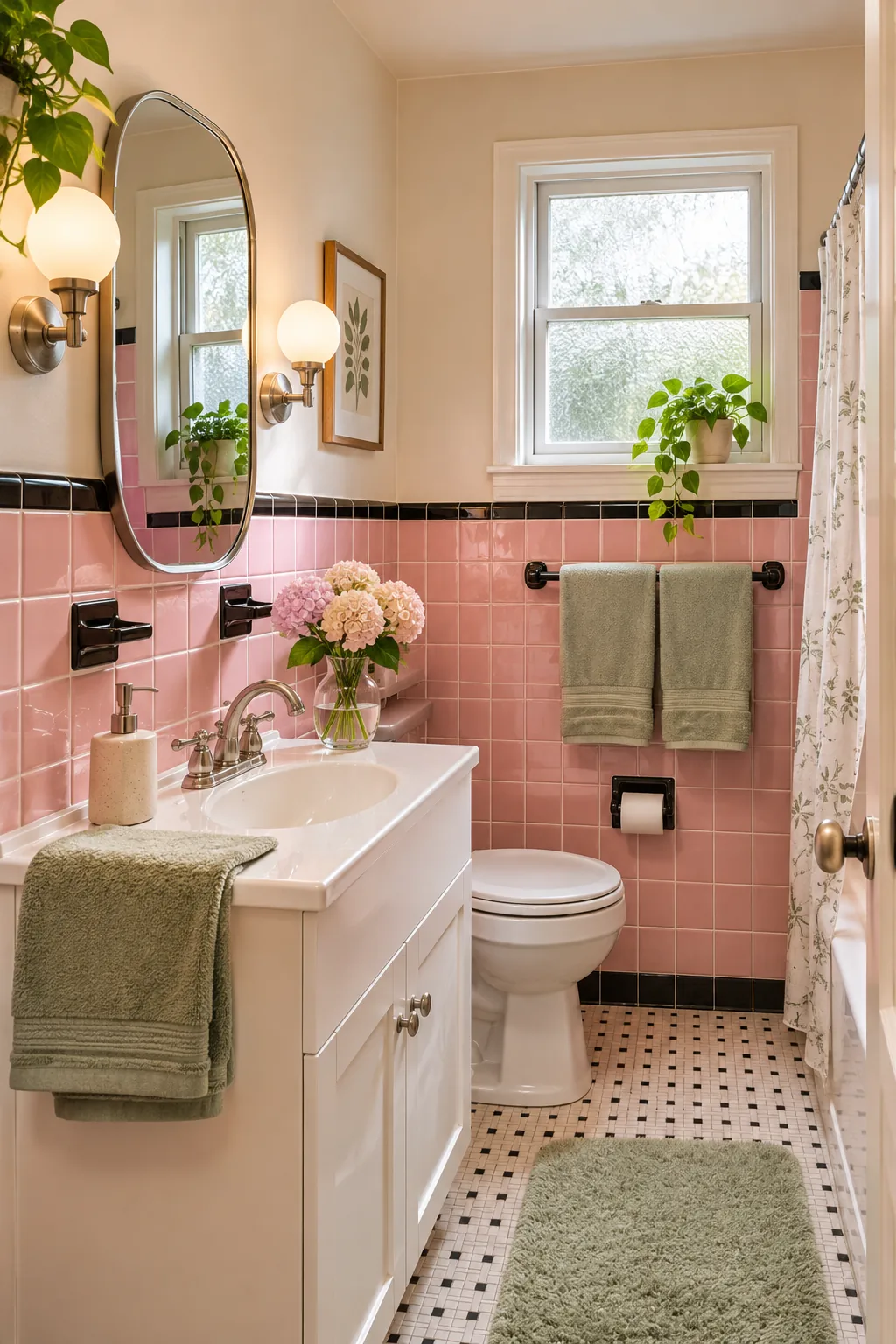
You walk into a bathroom with glossy pink tile, a black border, and fixtures that may have been there since the 1950s. The tile is still solid, but the room doesn’t quite feel like yours. It’s tempting to think the only answer is tearing everything out. Before you reach for a demolition plan, look at what surrounds the tile.
A mismatched wall color, dull grout, tired caulk, harsh bulbs, and cluttered counters can make beautiful old tile feel dated. The right changes can tell a different story. These pink tile bathroom ideas focus on preserving sound vintage surfaces while giving the room cleaner lines, more useful storage, and colors that actually work with the pink.
Think of this as a practical refresh, not a makeover that hides every sign of the past. You’ll learn what to check, what to repair, which design decisions make the biggest difference, and when keeping the tile is no longer the sensible option.
Is the Original Pink Tile Worth Keeping?
Start with condition, not color. Well-bonded ceramic tile can remain useful for many years, but a good-looking surface doesn’t prove that everything behind it is sound. Check how the bathroom handles water before spending money on paint or hardware.
Signs the Tile Is Still in Good Condition
- Tiles sit firmly in place and don’t shift when gently touched.
- The glaze remains intact, with no widespread chips or cracks.
- Grout may look stained but isn’t crumbling or missing across large areas.
- Walls and floors feel stable rather than soft, swollen, or uneven.
- You don’t see recurring damp patches, unexplained staining, or persistent mold.
Warning Signs That Need Professional Attention
Loose or hollow-sounding tiles, recurring grout cracks, damp walls, a soft subfloor, or stains that return after cleaning deserve more than a cosmetic fix. Repeated mold can also point to a ventilation or leak problem. The U.S. Environmental Protection Agency emphasizes controlling moisture and improving ventilation instead of repeatedly covering the symptoms.
A Safety Note for Pre-1978 Homes
Many original pink bathrooms are in houses built before 1978. Disturbing painted walls, trim, or cabinets during renovation may create lead dust. Before scraping, sanding, or cutting coated surfaces, consult the EPA’s lead-safe renovation guidance. When applicable, use a lead-safe certified contractor. The age of the tile alone doesn’t tell you whether painted surfaces contain lead.
Start With Cleaning, Grout, and Caulk
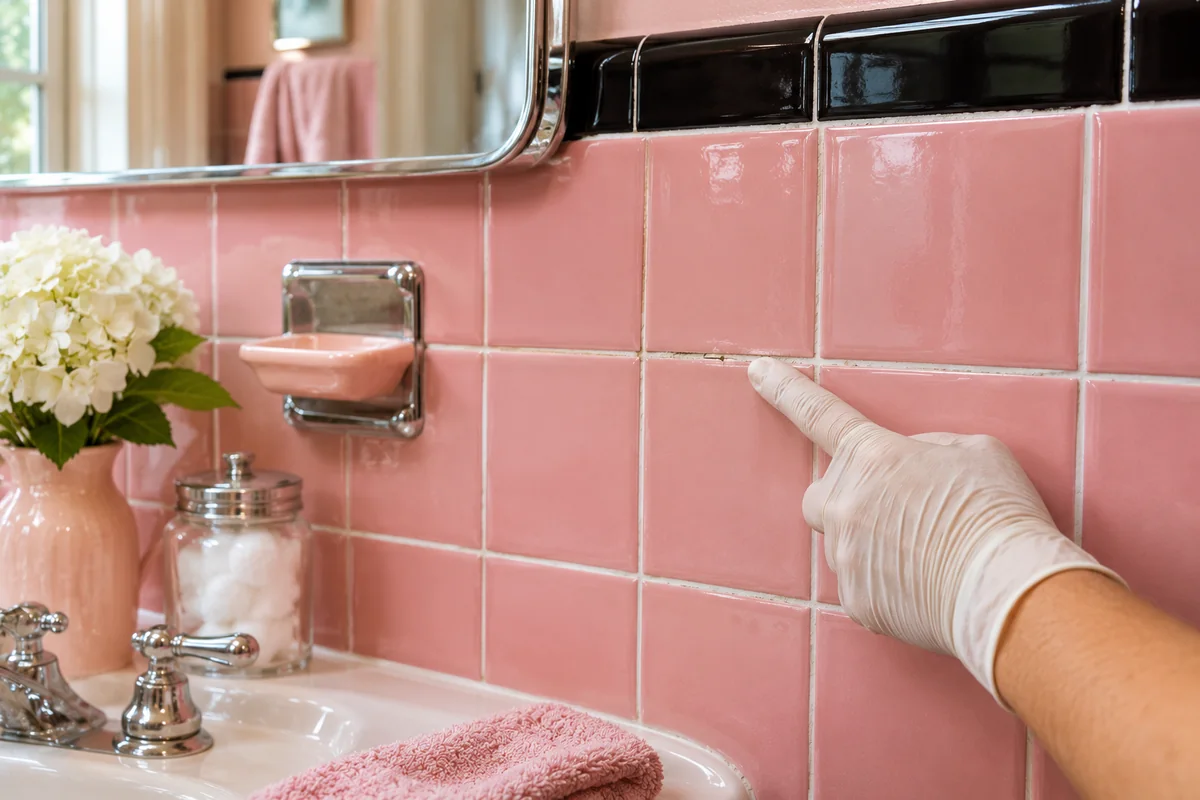
Sometimes the best pink tile bathroom makeover begins with a soft cloth, not a shopping cart. Soap film and buildup can mute the shine, while discolored grout makes an otherwise orderly wall look patchy. Clean a small hidden area first and reassess the tile in daylight before deciding which changes you need.
Clean Without Damaging the Glaze
Check any available manufacturer guidance and identify the tile and grout as closely as you can. Start with a mild product approved for that surface, a soft cloth, and careful rinsing. Avoid aggressive scrubbing pads or harsh chemical combinations, especially when you don’t know how earlier repairs were made. The Tile Council of North America offers additional grout-cleaning guidance.
Know When Grout Needs Repair
Stained but firm grout is different from grout that’s crumbling, missing, or repeatedly cracking. If cleaning doesn’t help, a qualified tile professional can assess whether local repair or regrouting makes sense. Consistent grout lines give square pink tiles a crisp rhythm. You don’t need to change the color of the tile to make the wall look more intentional.
Refresh Worn Caulk at Corners and Fixtures
Old caulk around a tub, sink, or wall transition can turn yellow, split, or pull away. Replacing failing caulk with a suitable bathroom product improves the finish, but it won’t solve a leak hidden behind the wall. Address moisture problems first, then choose neat joints that respect the original tile layout.
Choose a Color Direction Before Buying Decor
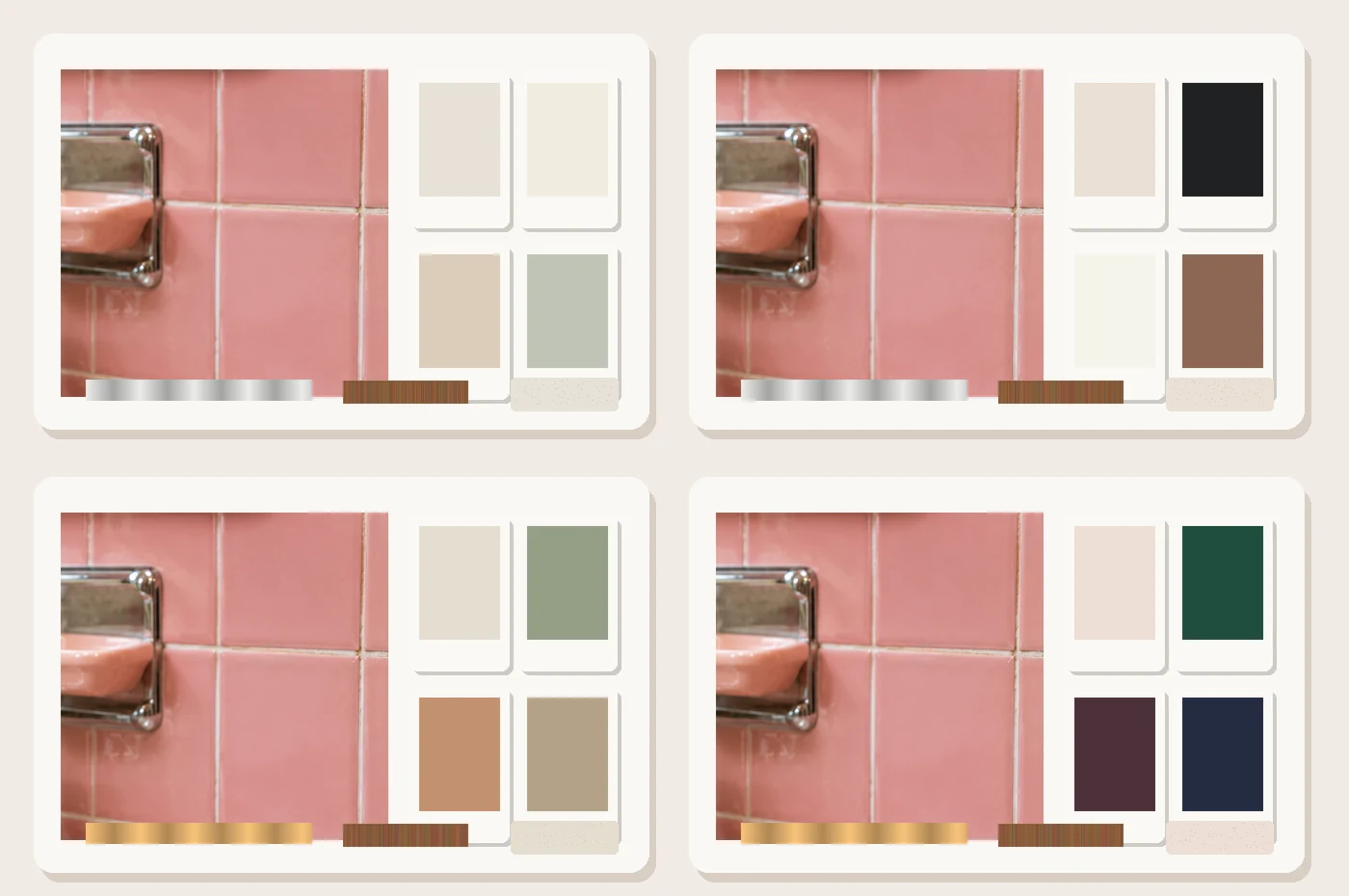
Pink tile can lean peach, salmon, dusty rose, or cool bubblegum. Look at it in morning and evening light before choosing paint. Bring home samples and place them next to both the pink tile and any original black border. Here are four useful pink bathroom color schemes for different moods.
Light and Quiet: Warm White, Cream, and Oak
Soft white, pale greige, cream towels, and light wood can calm a busy bathroom. Polished nickel adds a gentle shine without competing with the pink. This palette works especially well when the tile covers most of the walls and you want the remaining surfaces to feel open and restful.
Classic Midcentury: Pink, Black, and Crisp White
If your bathroom already has a black tile border, consider making it a feature. Repeat black in a thin mirror frame or a simple accessory, then let white walls and clean textiles balance the contrast. A walnut tray or a vintage-inspired light can finish the look without turning the room into a 1950s theme set.
Earthy and Relaxed: Sage, Olive, and Terracotta
Muted greens are an easy partner for many dusty pink tiles. Add sage towels, a little warm wood, and perhaps a terracotta pot outside the splash zone. Use off-white to keep everything connected. This direction feels collected and natural, especially with plants near a window.
Rich and Dramatic: Deep Green, Burgundy, or Navy
Dark colors can make a vintage pink bathroom feel deliberate. Try one deep shade on an untiled wall or vanity, then use simpler accessories elsewhere. Test samples first. The room’s light, size, and exact tile tone matter more than any blanket rule about dark paint in small rooms. Daltile’s pink-tile design guidance also explores bold and neutral pairings.
Update the Fixtures Without Erasing the Period Character
Select One Main Metal Finish
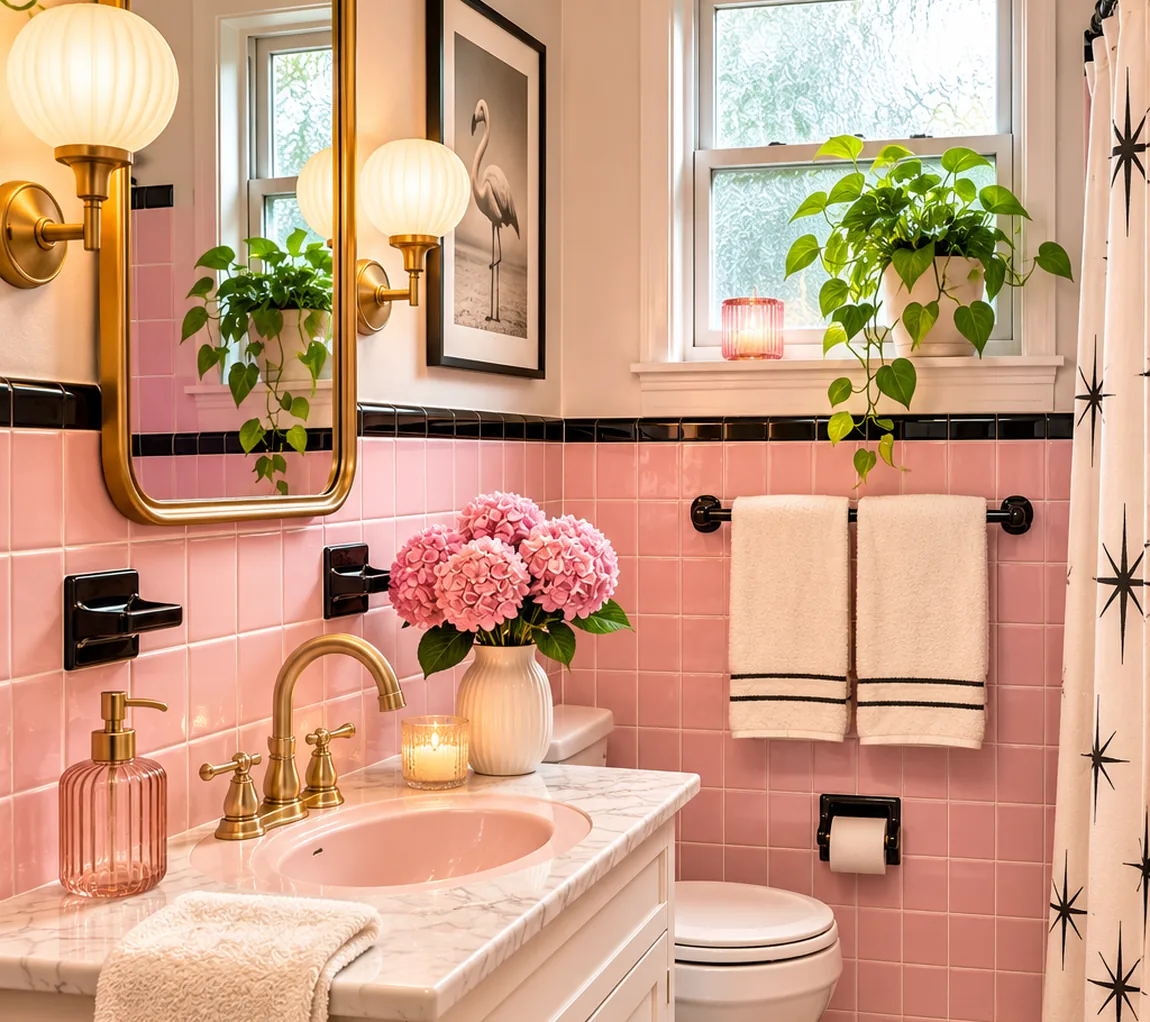
Chrome and polished nickel sit comfortably with many midcentury bathrooms. Brushed brass brings warmth, while matte black strengthens a graphic pink-and-black scheme. You don’t need every piece to match, but repeating the main finish across the faucet, mirror, sconces, and visible hardware creates a calmer result. If you’re comparing warm metals, see our brushed gold versus polished brass guide.
Choose a Mirror That Works With Square Tile
A rounded rectangle, pill-shaped mirror, or slim-framed medicine cabinet can soften walls full of small squares. Choose a size that fits the vanity and leaves enough space for lighting. Reusing an existing medicine cabinet is also worth considering when its storage still serves you well.
Improve the Lighting, Then Check the Tile Color Again
Old, harsh bulbs can make warm pink look oddly cold or too intense. Try diffused lighting near the mirror and compare a few bulbs in the room. Good color rendering helps the tile look more natural. Avoid choosing a bulb solely by its advertised warmth; test how it works with your window light, wall paint, and exact shade of pink.
Use Textiles and Accessories to Control the Amount of Pink
Let the Shower Curtain Set the Palette
A shower curtain is often the largest changeable surface in a small bathroom. A solid cream waffle weave feels quiet and clean. Thin stripes can echo black tile trim. A restrained botanical print brings in sage or olive without overwhelming the room. Choose one option that supports your color plan rather than another competing pattern.
Repeat One or Two Accent Colors
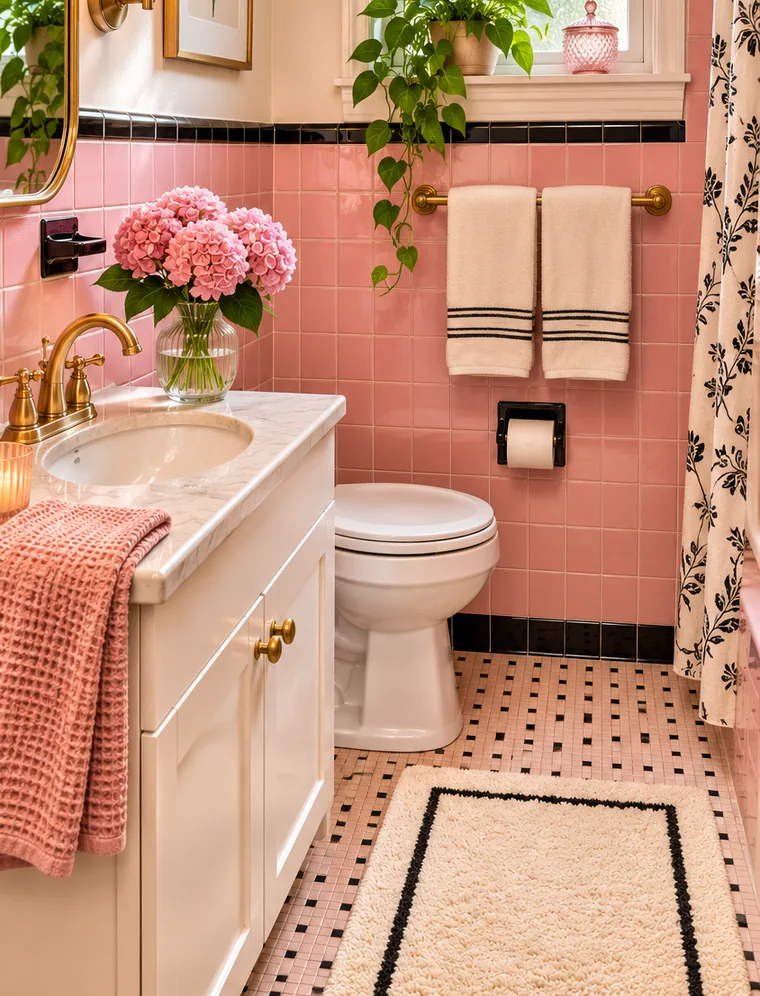
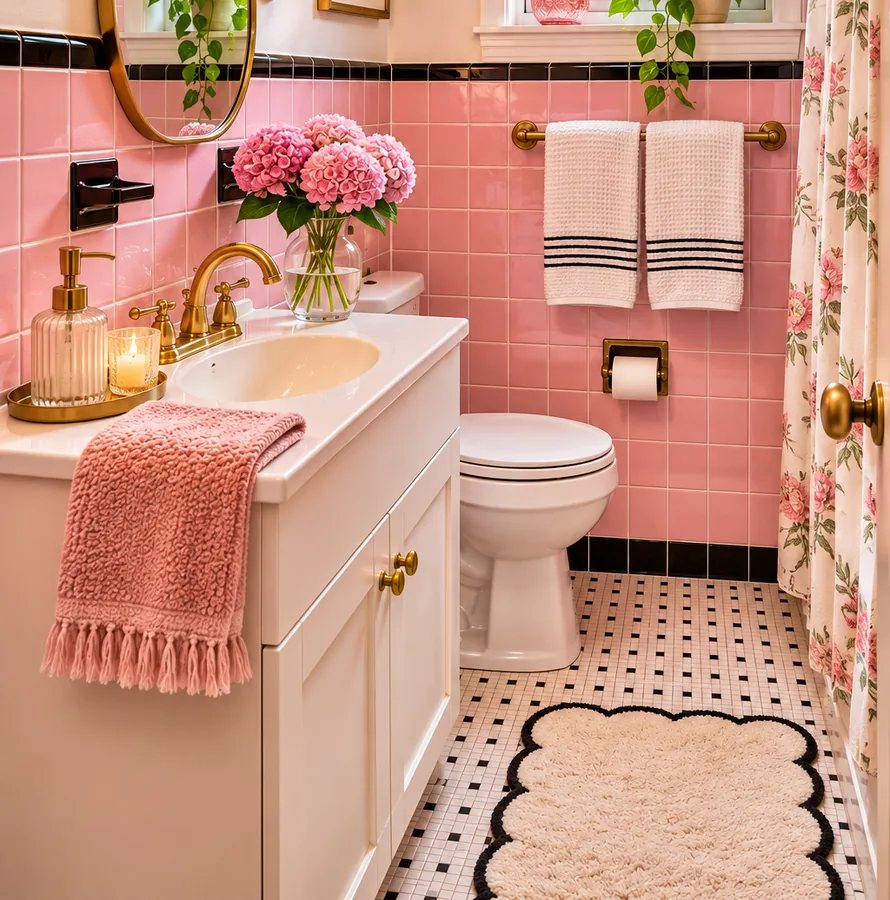
Once you choose a palette, carry it through the towels, bath mat, artwork, and countertop tray. For example, sage towels can connect with a small botanical print and a plant. A black-edged rug might repeat the tile border. This simple repetition helps the pink feel like part of a designed room.
Bring in Natural Texture
Cotton towels, a linen-look curtain, a sealed wood tray, and a ceramic soap dispenser add interest without creating clutter. Use washable textiles and moisture-tolerant materials, and keep woven baskets out of direct splash areas. You want the room to feel lived in, not crowded with retro decorations just because the tile is old.
Add Storage Without Covering the Tile
Storage can make the biggest everyday difference, especially in a narrow 1950s bathroom. Start by looking for existing mounting points rather than drilling new holes through original tile. Then choose pieces that leave doors, drawers, and walkways clear.
Use the Storage You Already Have
A working medicine cabinet, a vanity drawer organizer, or a simple tray beside the sink may solve more problems than an extra shelf. Keep daily items near their point of use and move rarely needed products out of sight. A clear countertop makes the original tile easier to appreciate.
Try Freestanding Options
Where there is enough room, a slim cabinet, narrow rolling cart, or small stool can add useful storage without touching the walls. Measure the available width and allow space for doors to open. A piece that fits on paper but blocks a cabinet or bathroom entry won’t be worth it.
Be Careful With Adhesive Products
Some removable organizers work on smooth tile, but moisture, texture, finish, and weight limits affect the result. Follow the maker’s surface and removal guidance. Don’t put an adhesive product in the shower unless the manufacturer specifically approves that location. For more possibilities, see our no-drill shelving guide and vertical bathroom storage ideas.
Renter-Friendly Ways to Work With Pink Tile
If you rent, concentrate on changes you can undo. Replace a shower curtain, towels, bath mat, countertop accessories, or framed art first. Use a freestanding organizer where space allows. Ask for written permission before painting, replacing hardware, drilling, or altering the tile. Photograph any original parts you remove and store them in labeled bags so they can go back later.
Removable hooks aren’t automatically safe on every vintage surface. Test only where the product instructions allow, and avoid delicate glaze, damaged grout, and persistently damp areas. When in doubt, choose a freestanding solution instead of risking a surface you don’t own.
When Preservation Is Not the Right Choice
Keeping pink tile isn’t a rule. A room with widespread cracking, moving tiles, water-damaged backing, inaccessible failing plumbing, unsafe fixtures, or an impractical layout may need more substantial work. A licensed professional can help distinguish a sound vintage installation from a surface that’s hiding serious problems.
It’s worth separating two questions: Do you dislike the pink color, or does the bathroom have a technical problem that needs repair? The first is a design decision. The second needs an inspection and a realistic project plan. Colorful, personal bathrooms also have a place in today’s design conversation, as reflected in the NKBA 2026 Bath Trends Report. Old pink tile doesn’t have to be treated as a flaw simply because it isn’t neutral.
A Simple Order for Planning the Refresh
- Inspect tile, grout, caulk, ventilation, and any signs of moisture.
- Resolve leaks, unsafe materials, or structural concerns before decorating.
- Clean the tile gently and look at the room again in daylight.
- Choose one color direction that works with the actual pink tone.
- Select a main metal finish and keep visible hardware fairly consistent.
- Review lighting, mirrors, and fixtures before replacing items that still work.
- Add textiles, storage, and a few accessories that serve daily life.
- Live with the refreshed bathroom before making any demolition decision.
Frequently Asked Questions
What Colors Go With Vintage Pink Bathroom Tile?
Warm white, cream, sage, olive, black, walnut, and some deep greens can all work. The right choice depends on whether your pink tile is warm or cool and how much natural light the room receives. Bring samples into the bathroom before committing.
How Can I Make Pink Bathroom Tile Look Modern?
Start with clean grout and neat caulk. Then try simpler accessories, a consistent metal finish, a better mirror, and flattering light. The goal is to make the vintage tile look intentional instead of hiding it.
Can Old Pink Bathroom Tile Be Painted?
Specialty tile coatings exist, but they don’t suit every surface or wet area. Painting can change the texture and may need ongoing maintenance. Check the product’s approved uses and preparation requirements, and seek professional advice before altering a sound original installation.
Is Original 1950s Bathroom Tile Worth Keeping?
Often, yes, when the installation is stable, the glaze is sound, and water isn’t getting behind it. Age alone isn’t a reason to demolish. Active moisture, movement, failing plumbing, and household needs may change that decision.
What Metal Finish Looks Best With Pink Tile?
Chrome and polished nickel often feel period-friendly. Brushed brass adds warmth, while matte black adds contrast, especially with black border tile. Choose the finish that works with your lighting and other fixtures instead of following a single trend.
Let the Original Pink Tile Be Part of the Design
The best refresh doesn’t make a vintage bathroom pretend to be brand new. It gives the original details some breathing room. Clean lines, thoughtful colors, useful storage, and the right light can turn pink bathroom tile into the feature that makes the space memorable.
If you’re still exploring period-inspired details, visit our retro bathroom styles guide for more ideas you can adapt to your own room.

