

Christmas feels wonderful in a small apartment until the decorations start competing with your furniture. A full-size tree takes over the walkway, garlands crowd the shelves, and suddenly you have nowhere to put your coffee. The goal is not to squeeze an entire holiday store into your home. It is to make the space you already have feel warm, festive, and comfortable.
If you are wondering how to decorate a small apartment for Christmas, start with a simple plan rather than a shopping trip. One focal point, a consistent color palette, and decorations that stay out of the way can transform even a compact studio. Here is how to put that plan together.
Look at Your Apartment Before You Decorate
Walk through your home and notice where you move every day. Which path leads from the door to the kitchen? Where do you work or eat dinner? Those spaces need to remain usable once the decorations go up.
Now choose spots that can handle something festive. A clear corner beside the sofa, an unused section of a bookshelf, or a wide windowsill may be enough. Measure any space where you are considering a tree, including the height and room needed for branches and a stand. This prevents the frustrating task of rearranging everything later.
If your furniture already does several jobs, keep it flexible. Our small-space furniture guide explains why adaptable pieces work well in compact homes.
Choose One Christmas Focal Point
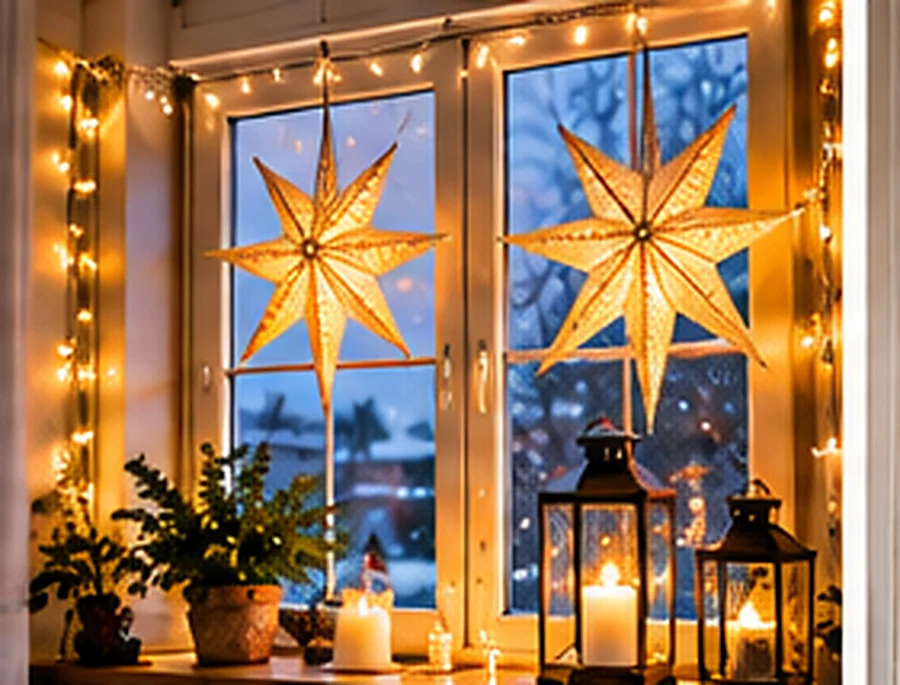
Every room does not need an elaborate display. Decide what you want to notice first when you come home. It could be a softly lit tree, a paper star in the window, or an arrangement on your entryway cabinet. Give that feature some breathing space.
In a studio apartment, one Christmas scene can connect the living and sleeping areas without making them look crowded. Keep nearby surfaces quieter. You are aiming for a cozy atmosphere, not a competition between ornaments.
Find a Christmas Tree That Fits Your Floor Plan
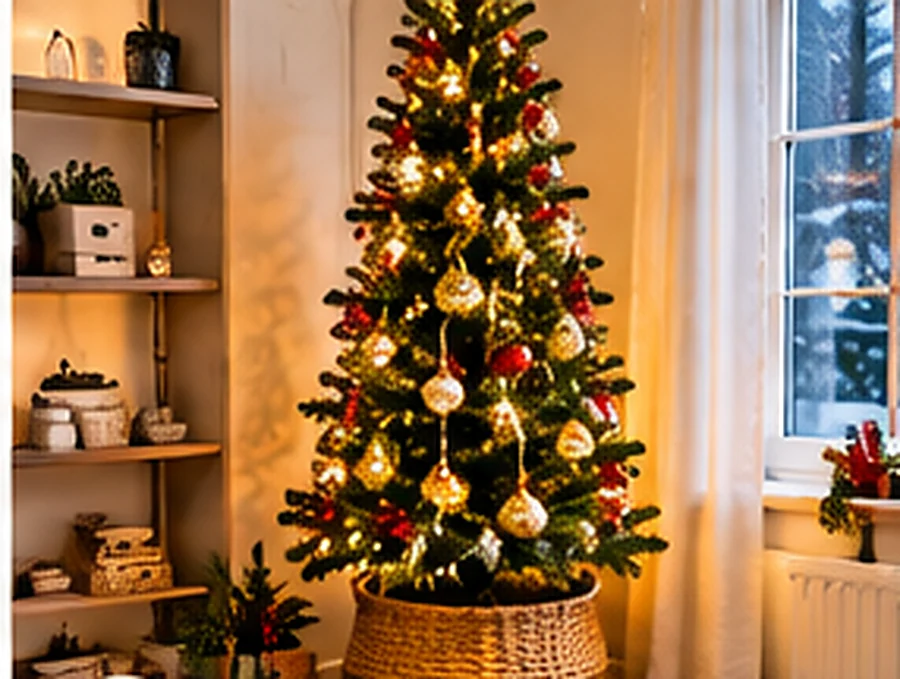
A traditional tree can work in an apartment, but its footprint matters more than its height. A slim artificial tree may fit neatly between a sofa and a window, while a tabletop tree suits a dresser or sturdy cabinet. Leave space to open doors, close curtains, and walk around it.
If floor space is limited, make a flat wall display from lightweight decorations or arrange a few branches in a stable vase. Keep wall decor away from heaters and use mounting methods suited to your surfaces. A smaller tree with warm lights and meaningful ornaments often feels more personal than a larger one squeezed into the wrong corner.
Use Colors That Work with Your Existing Furniture
Before buying red and green everything, look at your sofa, curtains, and rugs. A cream apartment may look beautiful with pine green, warm white, and gold accents. Darker furniture works with burgundy, forest green, and soft brass. Scandinavian-inspired rooms suit natural wood, ivory, and muted greenery.
Repeat your chosen colors in a few places rather than introducing a new combination in every corner. You can create a festive mood with fewer decorations when the colors already work together.
Let Christmas Lighting Do the Work
Soft light can create more holiday atmosphere than a shelf full of ornaments. Start with warm-white LED lights in one or two locations. A window display and Christmas tree may be all you need. Turn on an existing table lamp and see how cozy the room feels before adding more.
Use lights rated for their intended location, follow product instructions, and keep cords clear of walkways. Battery-operated LED candles suit a small table or shelf. Avoid placing light strings against flammable fabric, near heaters, or where furniture can pinch their cords.
Keep Your Living Room Comfortable
Instead of filling the sofa with seasonal cushions, swap two pillow covers and add one warm throw. A compact tray can hold a little greenery and a few ornaments on the coffee table. Move it away when you need the surface for dinner or work.
A short garland across a sturdy shelf can be pretty, but leave room for everyday items. Our tiny living room ideas offer layout tips if seating is already tight. The Christmas version of your home should still be somewhere you want to relax.
Make the Dining Area Festive but Flexible
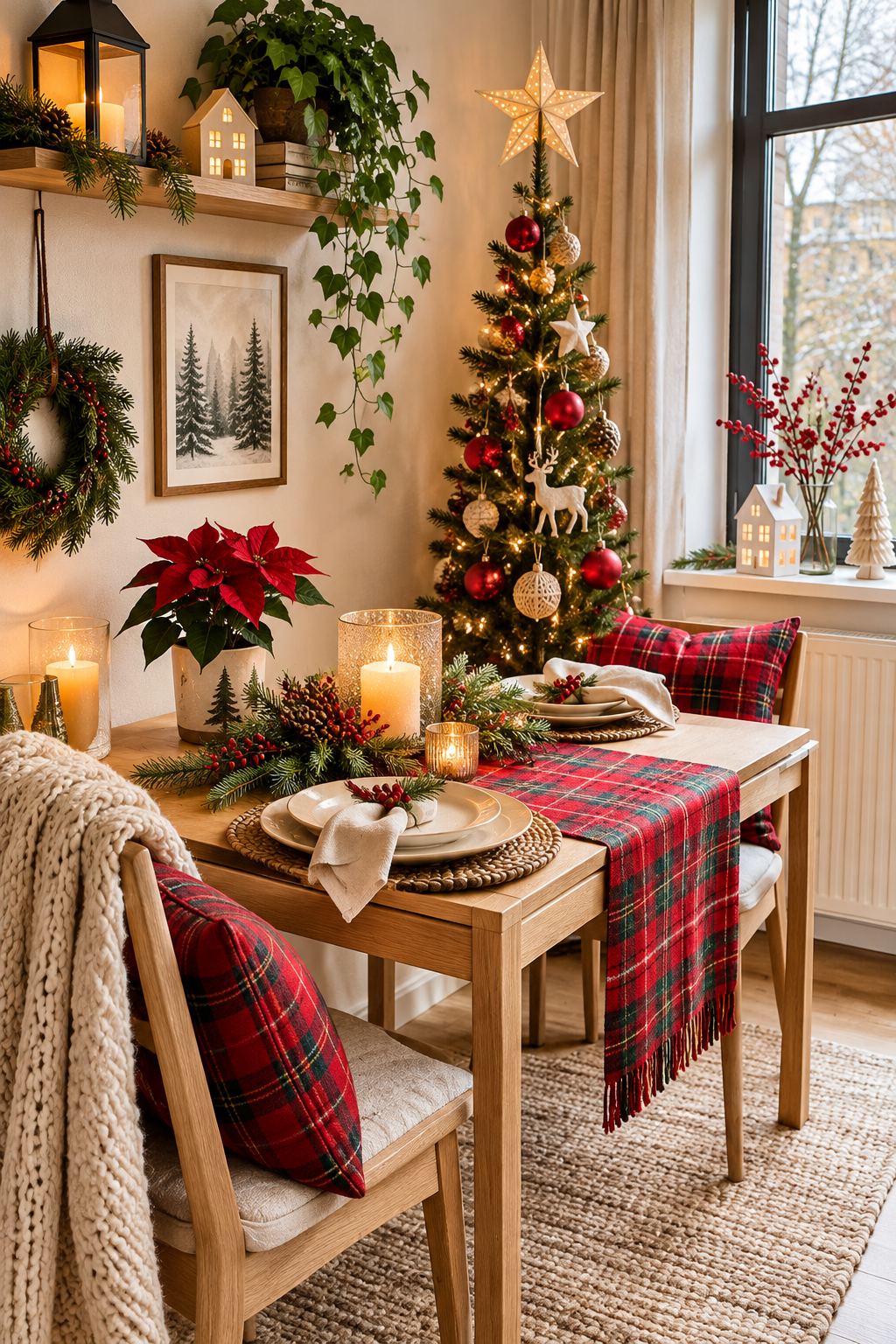
Many apartments have a dining nook instead of a separate dining room. Keep the table practical with a narrow runner, seasonal napkins, and a low centerpiece that can be lifted away. A small vase of evergreen stems or a battery-lit lantern provides a seasonal touch without interfering with meals.
If the table folds or doubles as a desk, store the decorations together on one tray. You can switch from a festive dinner to an ordinary workday quickly. Use the same colors as the living room so the areas feel connected.
Decorate the Kitchen Without Losing Counter Space
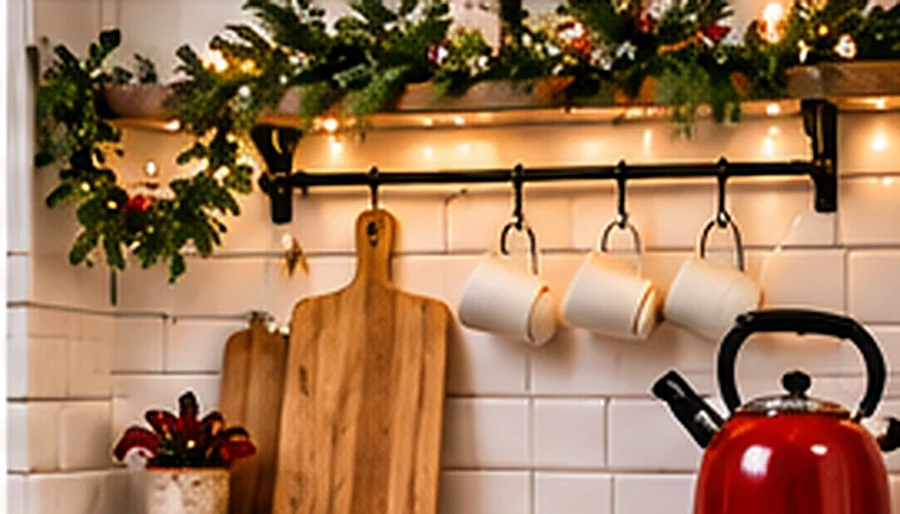
Kitchen counters are usually the last place to add clutter. Keep space around the stove, sink, and food preparation area clear. Instead, choose a holiday tea towel, a seasonal mug on an existing shelf, or a short piece of greenery away from heat.
If the kitchen is visible from the living room, matching colors tie the spaces together. One small detail can make morning coffee feel festive without making cooking harder.
Give the Bedroom a Quiet Holiday Feel
The bedroom should still feel restful. Change one pillow cover, add a cozy blanket, or place a small winter print on an existing shelf. If space is tight, skip the extra tree and let your bedside lamp provide the evening glow.
Keep nightstands free for essentials. Avoid draping lights or decorations across bedding. The best bedroom additions feel comfortable throughout winter, not only on Christmas morning.
Use Renter-Friendly Decorations
Many apartment dwellers cannot drill into walls or alter doors. Lightweight paper stars, tabletop arrangements, removable hooks, and decor placed on existing furniture can make a big difference. Check building rules before hanging anything on shared doors, corridors, or balconies, and test adhesive products on a hidden spot first.
Never block exits, smoke alarms, or walkways. If you choose a real tree, water and care for it according to guidance and keep it away from heat. Secure fragile decorations where children or pets might reach them.
Spend Money on Things You Will Reuse
A small budget goes further when you shop in the right order. Start with a suitable tree or one strong focal piece, then choose reliable lights. Next, look for decorations that store flat, such as pillow covers, paper stars, ribbons, and a table runner. Reuse baskets, vases, and trays whenever possible.
Decide what to skip before shopping. You do not need matching holiday bedding or an ornament-filled shelf in every room. For more examples after following this plan, browse our Christmas apartment decor ideas for small spaces.
Think About Storage Before January
Small homes have limited storage, so consider where decorations will go when the season ends. Keep packaging for fragile ornaments, label a compact storage bin, and avoid bulky pieces that cannot be packed away. Fold seasonal pillow covers instead of storing another set of full cushions.
When everything has a place, next year’s decorating feels easier. You get the excitement of Christmas without months of clutter afterward.
Frequently Asked Questions
What if I have no room for a Christmas tree?
Try a tabletop arrangement, illuminated paper star, or festive shelf display. A tree is lovely, but it is not required for a cozy Christmas atmosphere.
How do I keep a small apartment from looking crowded?
Choose one main display, warm lighting, and coordinated textiles. Leaving some surfaces clear makes the decorations you keep feel more special.
What is the easiest place to start?
Start in the area you use most, usually the living room. Add lights or a seasonal accent, then decide whether the rest of the apartment needs anything else.
A Festive Home That Still Feels Like Home
You do not need more square footage to create Christmas memories. With a clear layout, a sensible tree choice, thoughtful lighting, and decorations that work with your furniture, even a tiny apartment can feel welcoming. Start with the corner that matters most, then stop when the room feels just right.