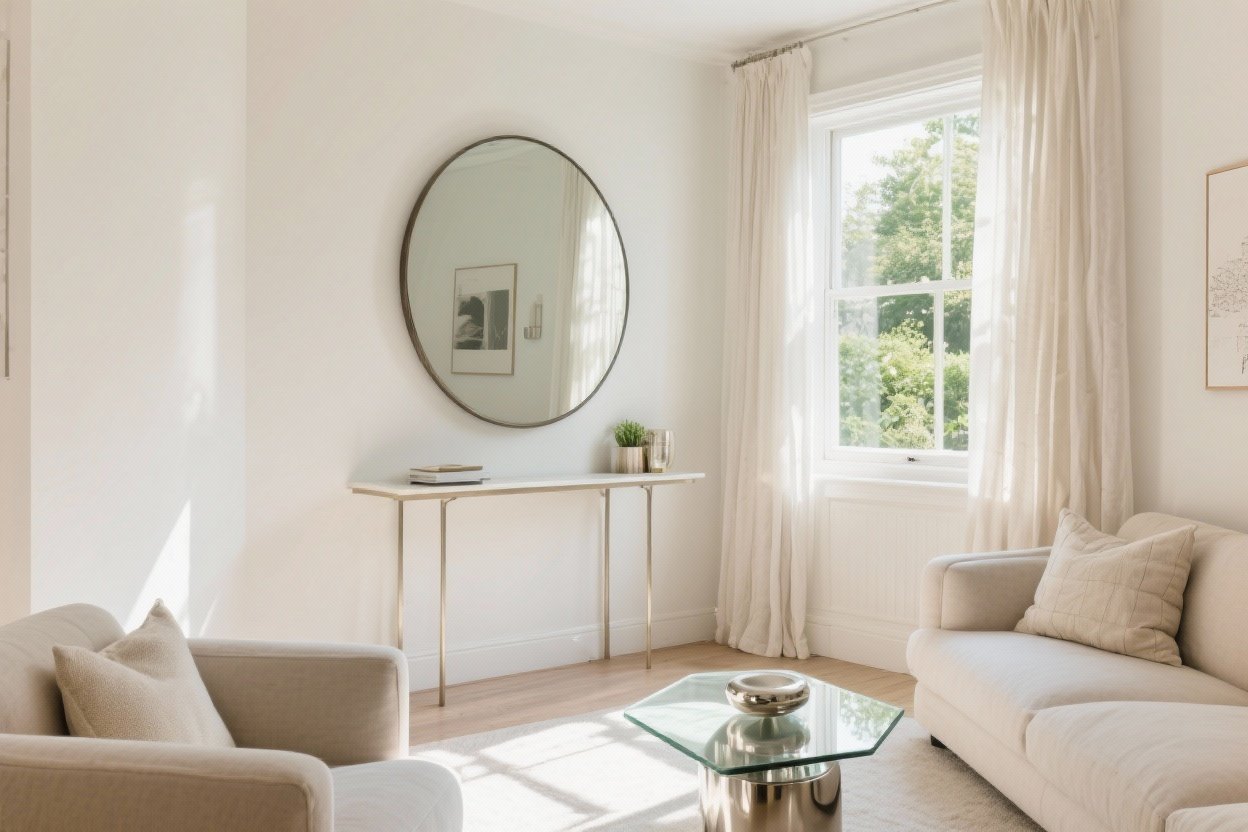
You don’t need a sledgehammer to make a tiny room feel bigger. You just need mirrors—placed smartly, sized right, and styled like you meant it. Ready to trick the eye and double your space (or at least make it feel like you did)? Let’s play with light, angles, and a little strategy.
1. Mirror Placement That Works Like Magic
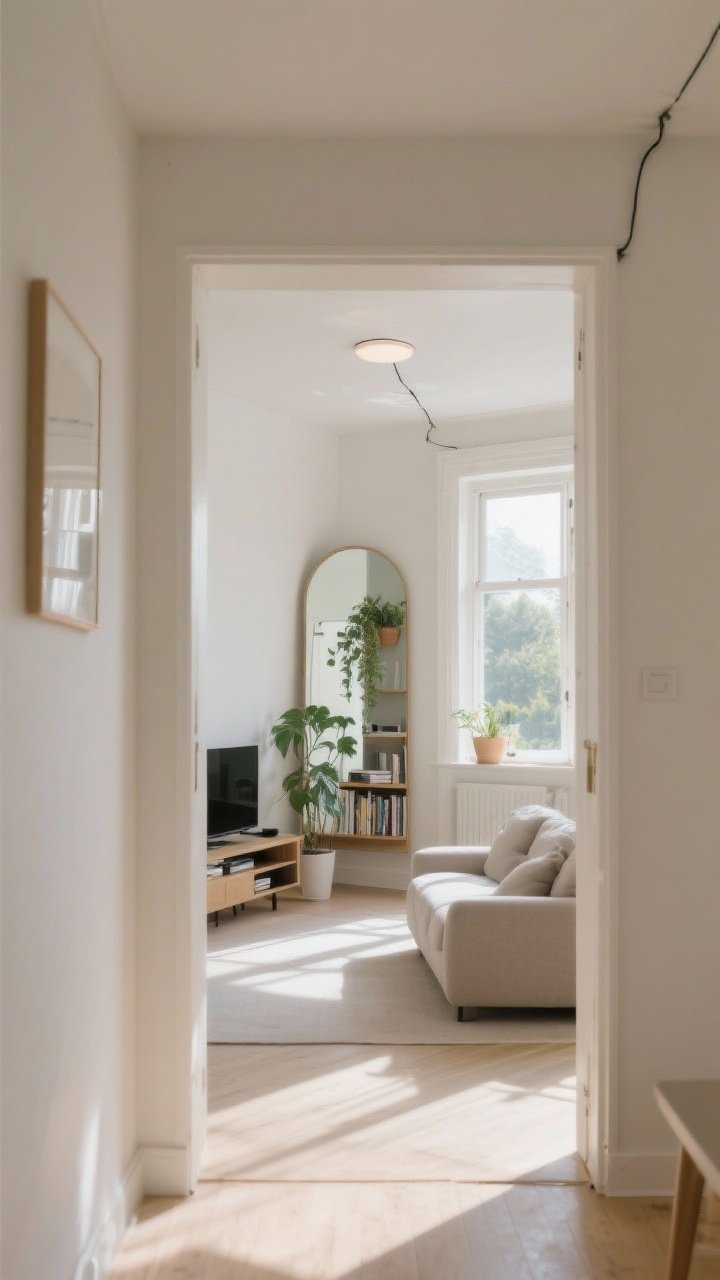
Mirror placement is everything. Put one in the wrong spot and you’ll reflect a clutter pile. Put one in the right spot and boom—instant visual square footage.
Reflect Light, Not Chaos
- Opposite a window: Place a mirror directly across from your biggest natural light source. It bounces daylight deeper into the room and makes it feel brighter (aka larger).
- Adjacent to a window: If opposite isn’t an option, try 90 degrees to the window. You’ll still catch that glow without harsh glare.
- Angle it slightly: Tilt or offset the mirror to avoid reflecting ceiling lights or random cords. You want views, not visual noise.
Create Sightlines
- Across from the doorway: Place a mirror where it’s visible as you enter. It tricks your brain into perceiving depth right away.
- Facing a focal point: Got a fireplace, bookshelf, or cool plant corner? Reflect it to double the impact. FYI: this is the fastest way to make a room feel “styled.”
Pro tip: Keep mirrors out of direct line with TVs or cluttered desks. Otherwise, you’ll double the distraction.
2. Size, Shape, And Frame: Pick The Right Mirror
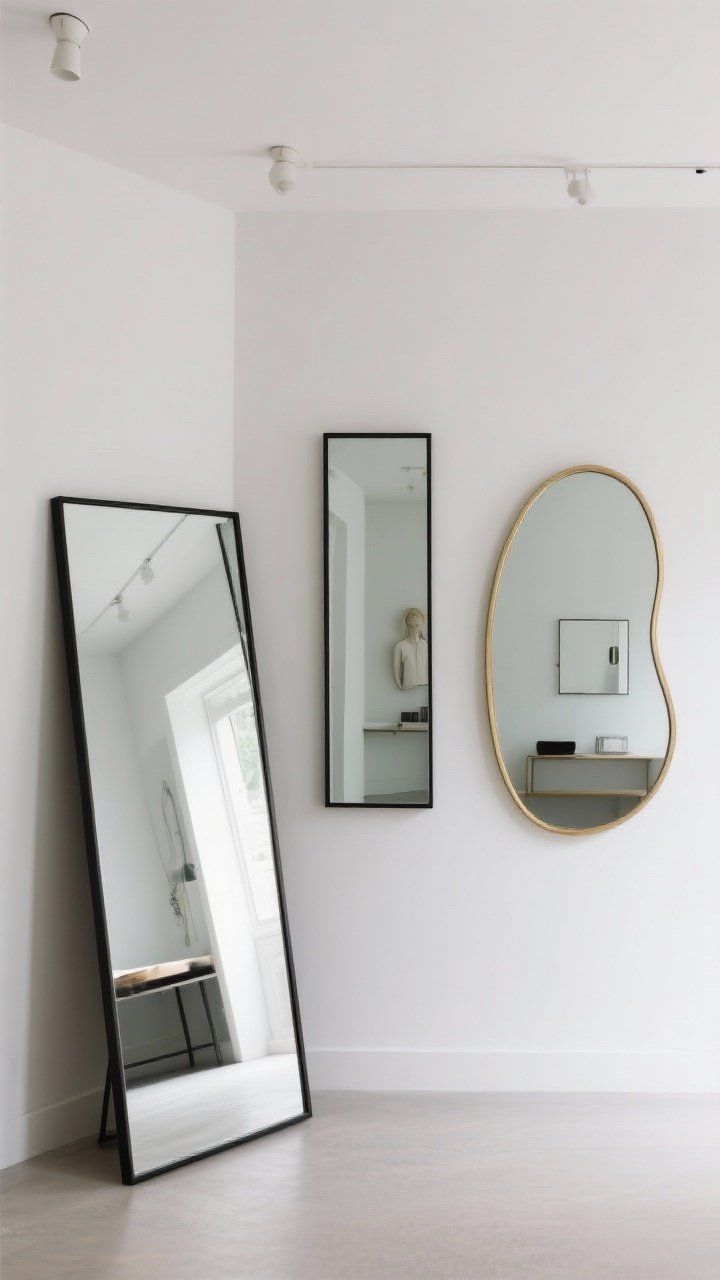
Not all mirrors are created equal. The wrong silhouette can chop up your walls; the right one creates flow. Here’s how to choose like you’ve done this before.
Go Big (Even In Small Rooms)
- Oversized floor mirrors: A tall leaning mirror makes ceilings feel higher and adds depth. Perfect for bedrooms and tiny living rooms.
- Full-length verticals: If floor space is tight, hang a long mirror to pull the eye upward. Vertical lines elongate.
- Think scale, not size: The mirror should reflect a meaningful chunk of the room, not just your torso. IMO, bigger is almost always better.
Shape That Supports The Vibe
- Arched or rounded: Soften boxy rooms and add “architectural” vibes without renovating.
- Rectangular and clean-lined: Great for modern spaces and renters who want a crisp, gallery feel.
- Organic blobs: Fun in eclectic rooms, but keep one large piece instead of several small ones to avoid visual clutter.
Frame Decisions Matter
- Minimal frames: Slim black, brass, or frameless mirrors disappear into the wall and feel airy.
- Statement frames: Carved wood or antique gold adds depth and texture—just don’t go too chunky in a very small room.
- Match or mix metals: Echo hardware finishes for cohesion or mix one contrasting finish for interest.
Pro tip: Frameless mirrors with a beveled edge keep things light but still polished.
3. Strategic Spots: Entryways, Living Rooms, Bedrooms, And Beyond
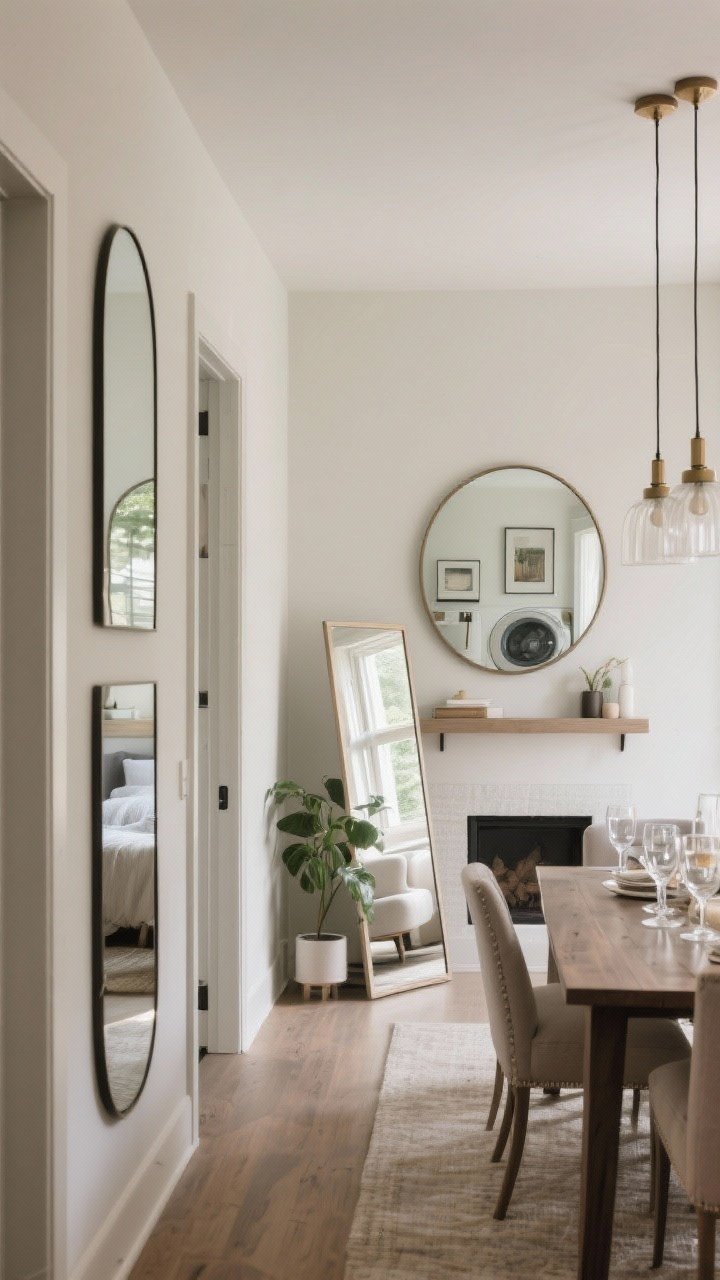
Different rooms need different mirror strategies. Let’s place them like a stylist would.
Entryway
- Console + mirror combo: Hang a large mirror above a narrow console to make a small entry feel intentional, not cramped.
- Round mirrors: Great for softening tight corridors and adding an inviting curve as you walk in.
- Height check: Hang so the center is about 57–60 inches from the floor. Yes, even if you’re tall. Consistency beats neck strain.
Living Room
- Over the sofa or mantle: Reflects the room’s best angles—avoid reflecting the kitchen sink if your spaces are open concept.
- Across from a window: Maximizes light, especially if your living room faces shade.
- Floor mirror in a corner: A leaning mirror behind a plant or lamp adds drama without taking up “visual” space.
Bedroom
- Full-length near closet: Function meets form—angled slightly so it reflects the bed or window, not piles of laundry.
- Over a dresser: Choose a shape that contrasts the dresser—round with a rectangular dresser is always a win.
- Avoid directly facing the bed if it bugs you: Some people find it distracting at night. Listen to your sleep brain.
Dining Room Or Kitchen
- Opposite the dining table: Doubles the sense of gathering and sparkle from glassware or pendant lighting.
- In small kitchens: Try a mirrored backsplash or a petite mirror on a blank wall to bounce light—clean frequently to avoid smudgy chaos.
Hallways And Nooks
- Gallery-style mirrors: Mix two or three coordinating mirrors instead of artwork to open up narrow spaces.
- Slim verticals: Stagger a pair to create rhythm and stretch the hallway visually.
Pro tip: If a mirror faces a door, make sure it reflects something pretty: a plant, art, or a styled shelf. No one wants a doubled view of shoes.
4. Light It Right: Pair Mirrors With Smart Lighting
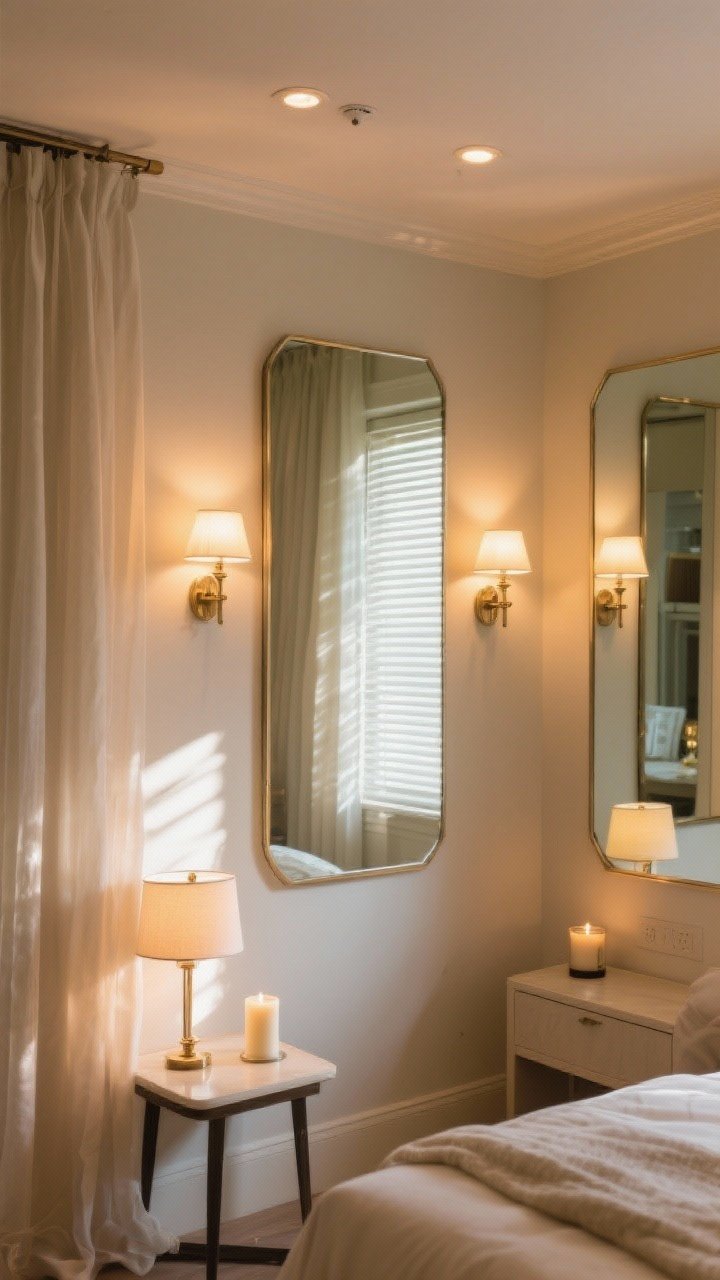
Mirrors amplify light—but only if they have good light to work with. Think of them as your lighting’s hype team.
Work With Natural Light
- Sheer curtains: Use airy fabrics to soften glare while still letting sunlight flood the room. Your mirror will do the rest.
- Layered windows: If you have blinds, angle them to direct light toward your mirror for daytime glow without harsh stripes.
Choose The Right Fixtures
- Sconces + mirror moment: Flank a mirror with sconces to create an instant focal point that feels luxe.
- Avoid spotlighting: Downlights shining directly onto a mirror can create glare. Aim for diffused, side lighting.
- Warm bulbs win: 2700–3000K is cozy and flattering. Cooler light can feel clinical (unless you’re going full art gallery).
Use Reflection To Multiply Light
- Table lamps opposite mirrors: A small lamp reflected in a mirror can light two corners at once—sneaky and effective.
- Candles + mirrors: Instant ambience. Just keep flames a safe distance and avoid placing candles where kids or pets can reach.
Pro tip: If your room is north-facing and naturally dim, a mirror opposite a layered light source (ceiling + sconce + lamp) will feel bright but balanced.
5. Style Without Clutter: Layer Mirrors Into Your Decor
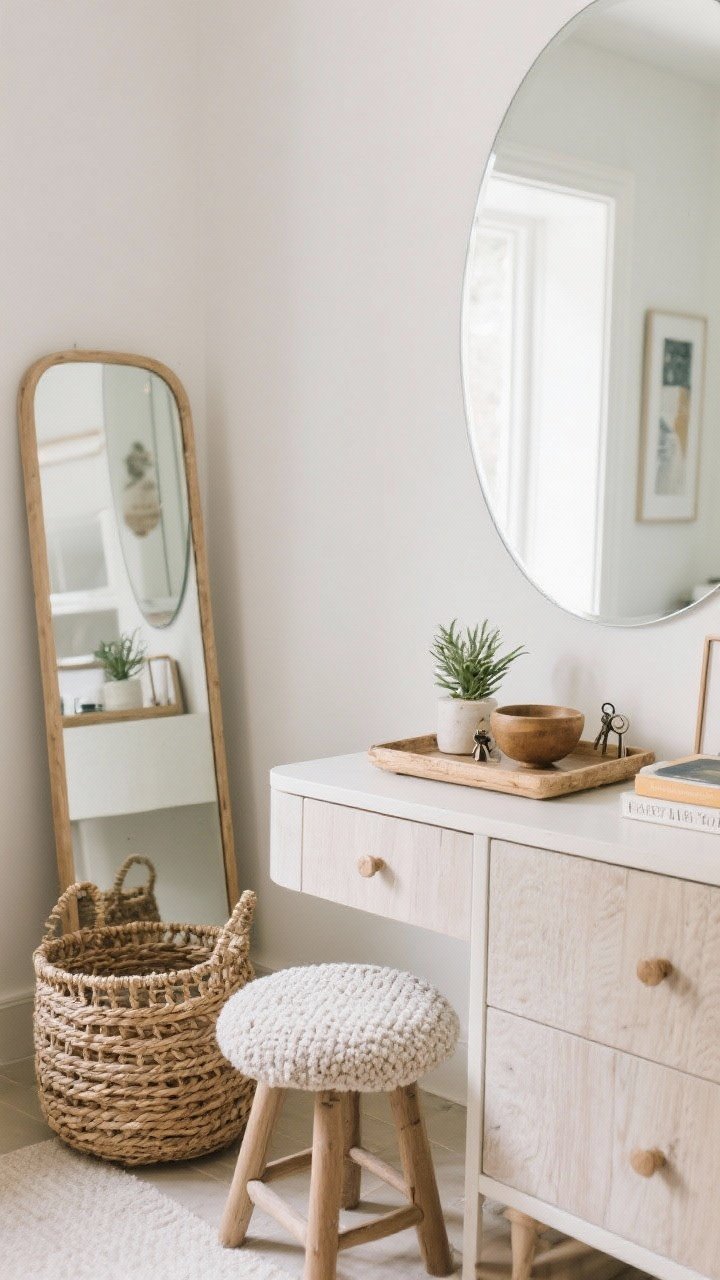
Mirrors should blend into your design—not hijack it. The goal is airy and intentional, not “funhouse chic.”
Balance With Texture
- Mix reflective and matte: Pair mirrors with linen, wood, or boucle to keep things grounded. Shiny + soft = chef’s kiss.
- Plants love mirrors: Reflect greenery to bring the outside in and add life to small spaces.
- Art and mirrors together: Hang a mirror near artwork to bounce color around without competing.
Layer Thoughtfully
- Leaning mirror + basket or stool: Add a low object in front to create depth without blocking reflection.
- Tray mirrors on surfaces: Use a mirrored tray on a coffee table or dresser to add sparkle and corral clutter.
- Avoid mirror overdose: One large mirror per wall is plenty. Too many and you’re in a maze. FYI, your brain hates that.
Keep It Clean And Safe
- Microfiber cloth only: Paper towels can scratch—don’t do it.
- Secure heavy mirrors: Use wall anchors or French cleats, especially over sofas or in earthquake-prone areas.
- Mind the edges: In high-traffic areas, rounded corners save hips and hallways.
Pro tip: If your room is small and busy, go frameless or thin-framed to reduce visual weight. If your room is minimal, a bolder frame can anchor the space.
Quick Styling Recipes
- Scandi Small Living Room: Large round mirror above a pale wood console, one sculptural lamp, one plant, neutral rug. Done.
- Cozy Bedroom: Tall arched mirror near the window, sheer curtains, linen bedding, brass sconce. Soft and bright.
- Modern Entry: Rectangular mirror, black frame, slim console, bowl for keys, art book stack. Minimal but warm.
Bonus tip (because I like you): If you rent, removable picture-hanging strips can handle lighter mirrors. For heavier pieces, ask your landlord or use existing studs—your deposit will thank you.
Using mirrors isn’t just about seeing your outfit from head to toe (though, yes, that too). It’s about shaping light, creating sightlines, and adding depth so your small room feels intentional and inviting. Start with one statement mirror, place it where it reflects something beautiful, and let the room breathe. You’ve got this.
