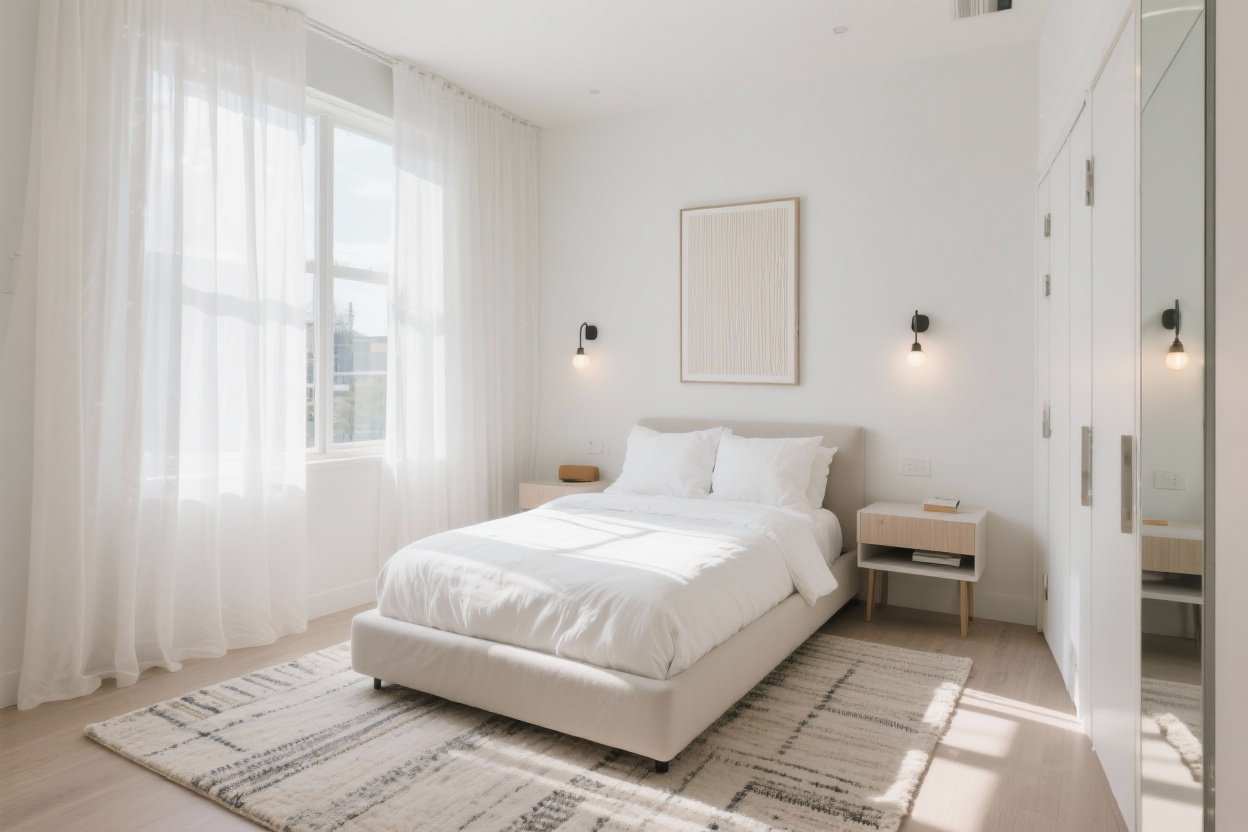
Your bedroom is tiny, not tragic. Promise. With a few clever moves, you can trick the eye, steal back floor space, and make your small bedroom feel bright, airy, and—dare I say—luxurious. Ready to play design Tetris? Let’s stretch those square feet like a yoga instructor.
1. Go Light, Bright, And Tall
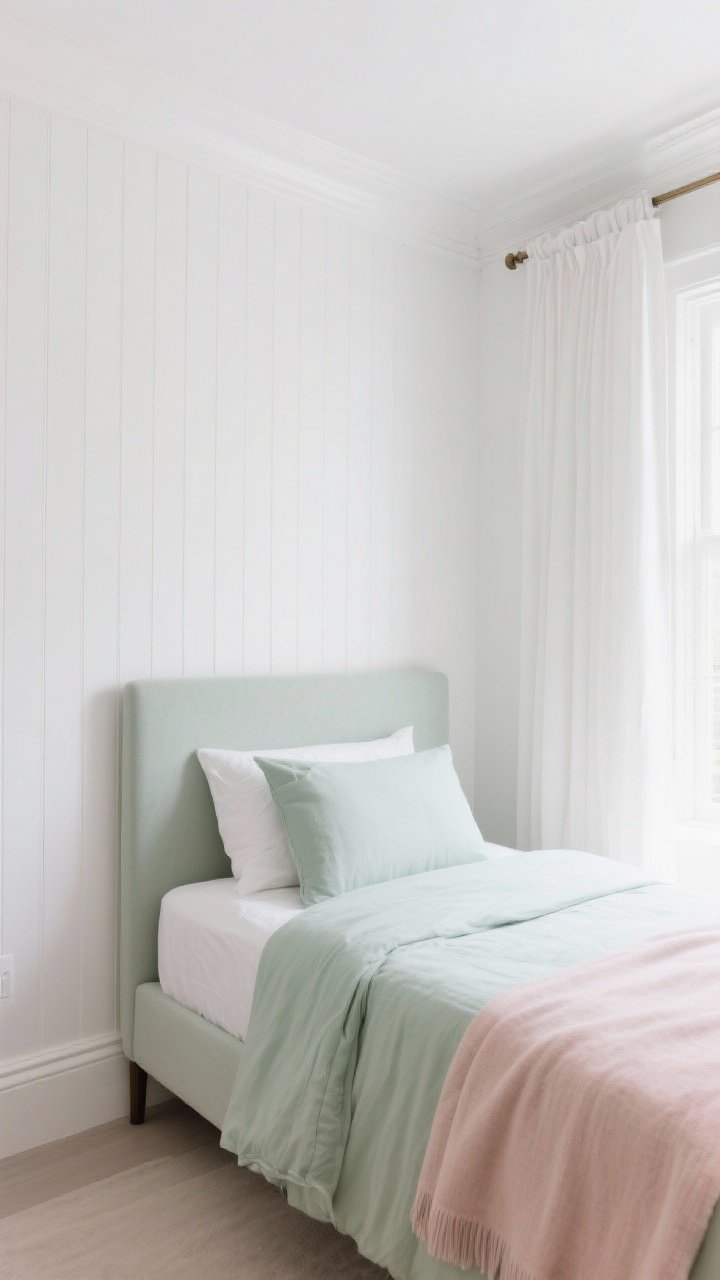
Color and height are your secret weapons. Light tones bounce light around, and vertical lines pull the eye up. Together, they make your room feel taller, wider, and basically bigger than it is.
Choose A Light-Forward Palette
- Walls: Soft whites, warm creams, pale sage, or dusty blush. High-LRV (light reflectance value) paints are your BFF.
- Ceiling: Paint it one shade lighter than your walls or a true white to visually “lift” it.
- Trim: Crisp white or the same color as the walls for a seamless, less choppy look.
Stretch The Eye Upward
- Hang curtains high: Mount the rod 2–6 inches below the ceiling and let panels kiss the floor.
- Vertical stripes or paneling: Thin, subtle stripes or skinny beadboard can make walls look taller.
- Tall headboard, slim profile: A tall, narrow headboard adds height without bulk.
Pro tip: Keep your color palette tight—2–3 main hues max. The fewer visual “breaks,” the larger the space feels, IMO.
2. Edit Like A Stylist, Not A Hoarder
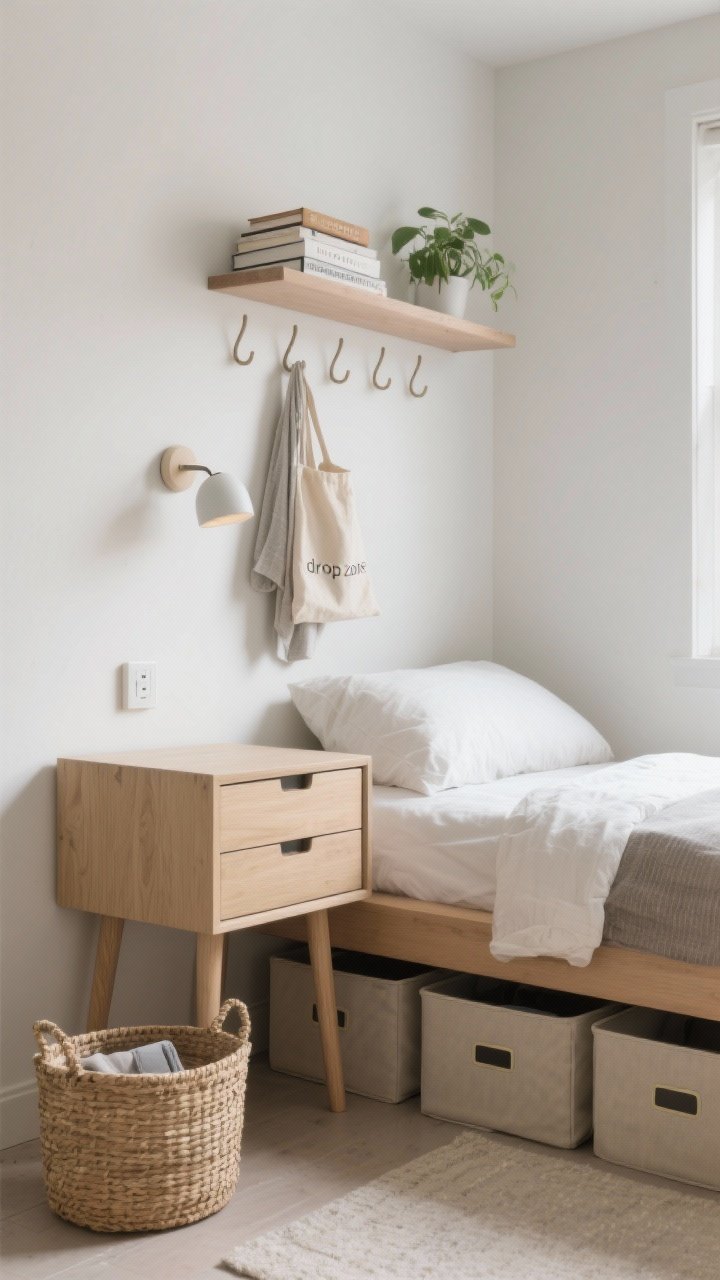
Small rooms hate clutter. Every object either adds calm or chaos. Guess which one we’re choosing?
Smarter Storage, Less Stuff
- Under-bed storage: Go for bins with lids or a lift-up storage bed to hide seasonal clothes and extra bedding.
- Floating shelves: Mount two slim shelves above the bed or dresser for books and decor without losing floor space.
- Wall hooks and pegs: Perfect for bags, robes, and hats—aka the things that always end up on the chair.
Nightstand Ninja Moves
- Choose closed storage: A drawer keeps the mess out of sight. Open shelves = visual clutter.
- Downsize the lamp: Swap bulky table lamps for plug-in sconces or slim wall lights to free up surface area.
Declutter ritual: Keep a pretty basket for nightly “drop zone” items (charger, lip balm, random receipts). Empty it weekly. FYI, your future self will be grateful.
3. Use Mirrors And Light Like A Magician
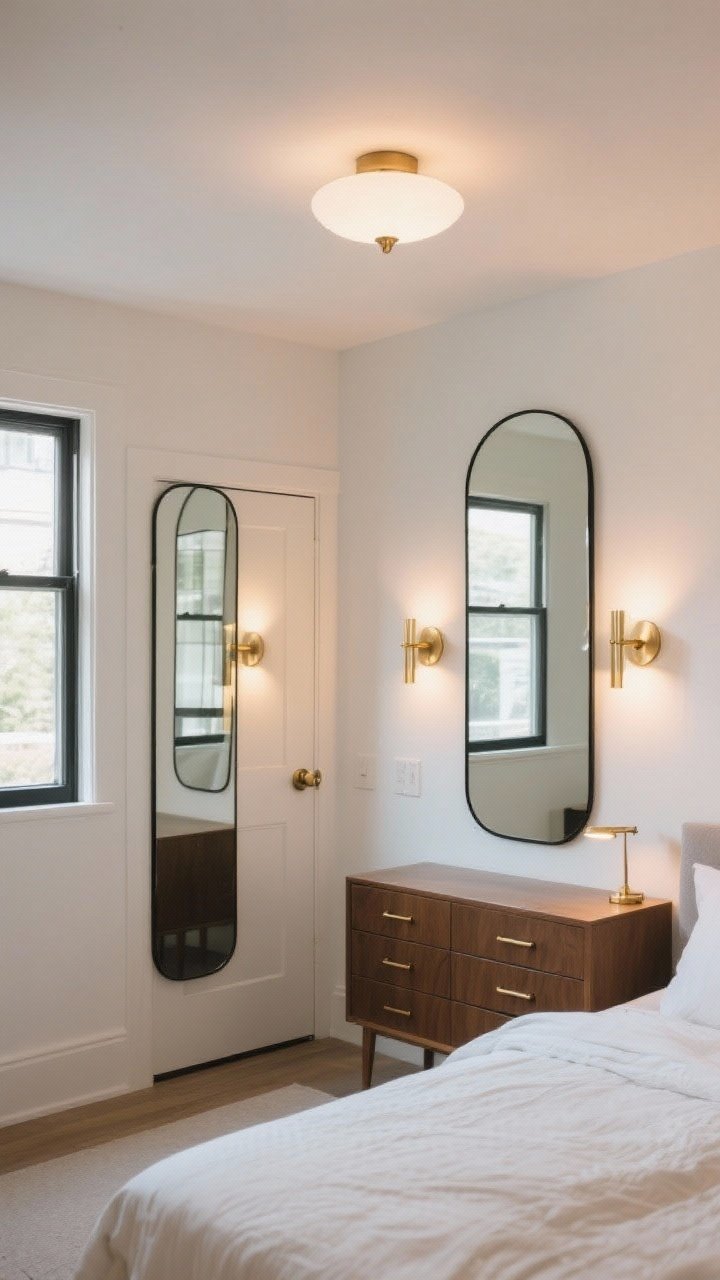
Mirrors don’t just reflect you—they double your space (visually, not literally, sadly). Pair them with layered lighting and you’ve got instant expansiveness.
Mirror Placement That Actually Works
- Opposite a window: Reflect natural light to brighten the room throughout the day.
- Full-length mirror on a door: Over-the-door or back-of-door installs save wall space and add functionality.
- Large mirror above the dresser: Go big and simple—thin metal frame or frameless for less visual weight.
Layer Your Lighting
- Ceiling light + two wall sconces + a tiny task light: Spread the glow to minimize shadows in corners.
- Warm bulbs: 2700–3000K keeps things cozy without going cave-like.
- Clear the surfaces: Wall-mounted reading lights free up your nightstands and look designer-level chic.
Bonus: Metallic accents (brass, polished nickel) bounce light subtly without turning your room into a disco ball.
4. Choose Furniture With Airy Profiles
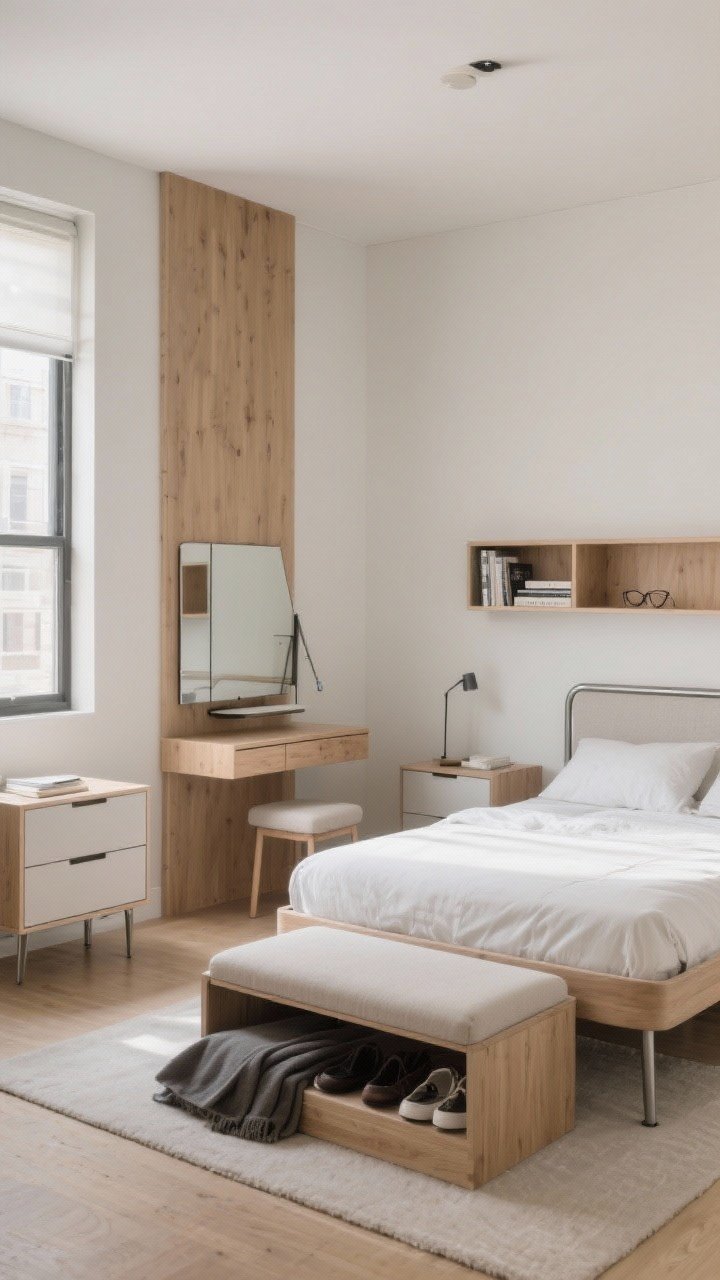
Chunky furniture eats small rooms for breakfast. You want pieces that feel light and lifted—literally and visually.
Go Leggy And Low-Contrast
- Bed frame: Opt for slim legs and a lower profile. Avoid heavy footboards that block sightlines.
- Nightstands: Narrow and tall beats short and wide. Look for open bases or floating designs.
- Dresser: Slim depth (16–18 inches) with vertical storage wins. Tallboy > wide, squat dresser.
Multitaskers For The Win
- Storage ottoman bench: At the foot of the bed for blankets, shoes, and those rogue yoga props.
- Fold-down desk or wall-mounted vanity: Great for micro rooms; tuck a stool underneath.
- Headboard with shelves or hidden cubbies: Keeps books and glasses off your nightstand.
Keep finishes cohesive: Matching or closely related wood tones and metals read calmer and less busy, which equals a bigger feel.
5. Style With Intention: Lines, Layers, And Negative Space
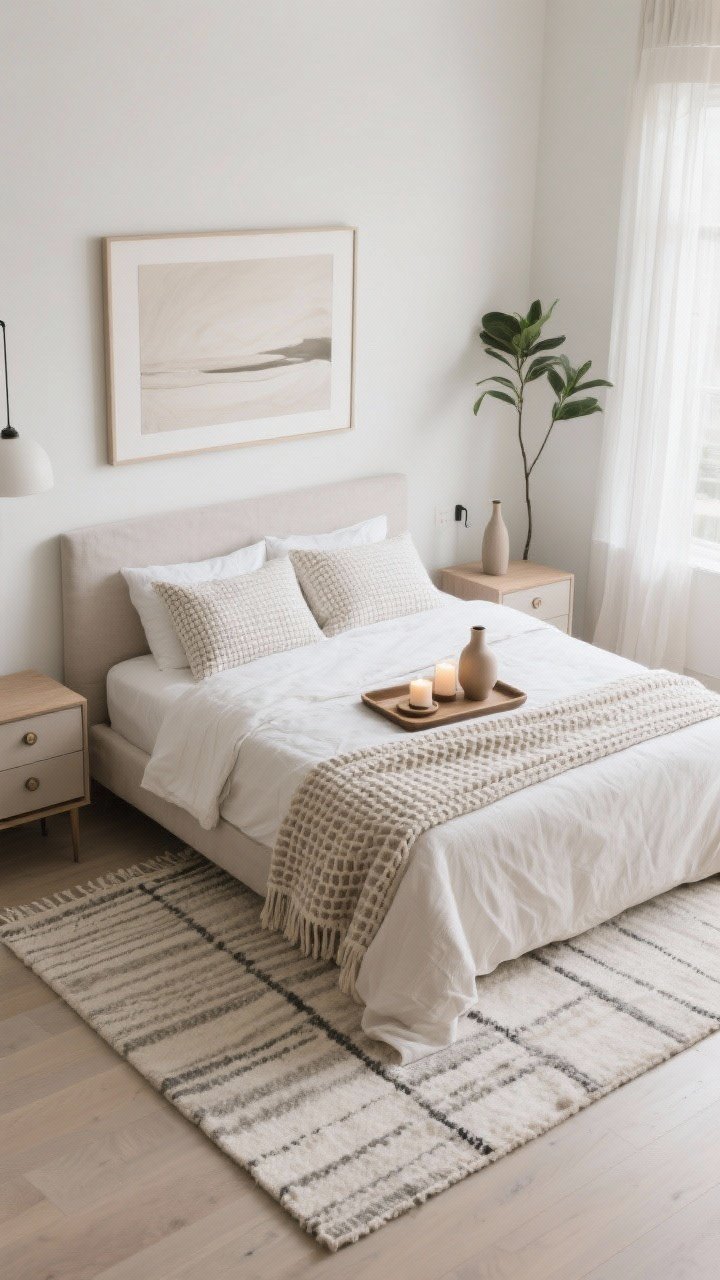
Decor isn’t just “stuff.” It’s strategy. Think of your room as a composition—lines guide the eye, layers add depth, and empty space lets the room breathe.
Lean Into Clean Lines
- Rug size matters: Get one large enough to sit under the front two-thirds of the bed and nightstands. Tiny rugs make rooms feel smaller.
- Bedding basics: Solid or micro-patterns in soft tones. Add texture with a waffle blanket or linen duvet instead of loud prints.
- One focal point: Choose either an art wall above the bed or a statement light—not both at once.
Curate, Don’t Crowd
- Rule of three: Group decor in threes with varying heights—tray, candle, small vase. Done.
- Be selective with art: One oversized piece often looks cleaner than a busy gallery wall.
- Leave negative space: Not every wall needs art. Not every surface needs an object. Breathe.
Smart Finishing Touches
- Sheer window panels: They soften light and add height without blocking precious daylight.
- Consistent hardware: Matching knobs and hooks create quiet cohesion.
- Greenery: One tall plant in a corner or a small succulent on the nightstand adds life without clutter.
Final styling check: Stand in the doorway. Are the sightlines clear? Do your eyes stop at bulky items or drift smoothly around? Edit until your brain says ahhh.
Quick Room Recipe (Copy-Paste Worthy)
- Light walls + slightly lighter ceiling
- High-hung curtains in a solid, airy fabric
- Leggy bed frame + tall, slim nightstands
- Large area rug that extends beyond the bed
- One big mirror opposite the window
- Layered lighting: ceiling + sconces + task
- Clutter-proof storage: under-bed bins, closed nightstand drawer
That’s it—no sledgehammer needed. Start with paint and curtains, then upgrade lighting and storage. Your small bedroom is about to punch way above its square footage, FYI. Now go make that cozy little box feel like a suite.
